Downtown
Must-See RVA! — Eskimo Pie Building
A look into the history of Richmond places that are still part of our landscape.

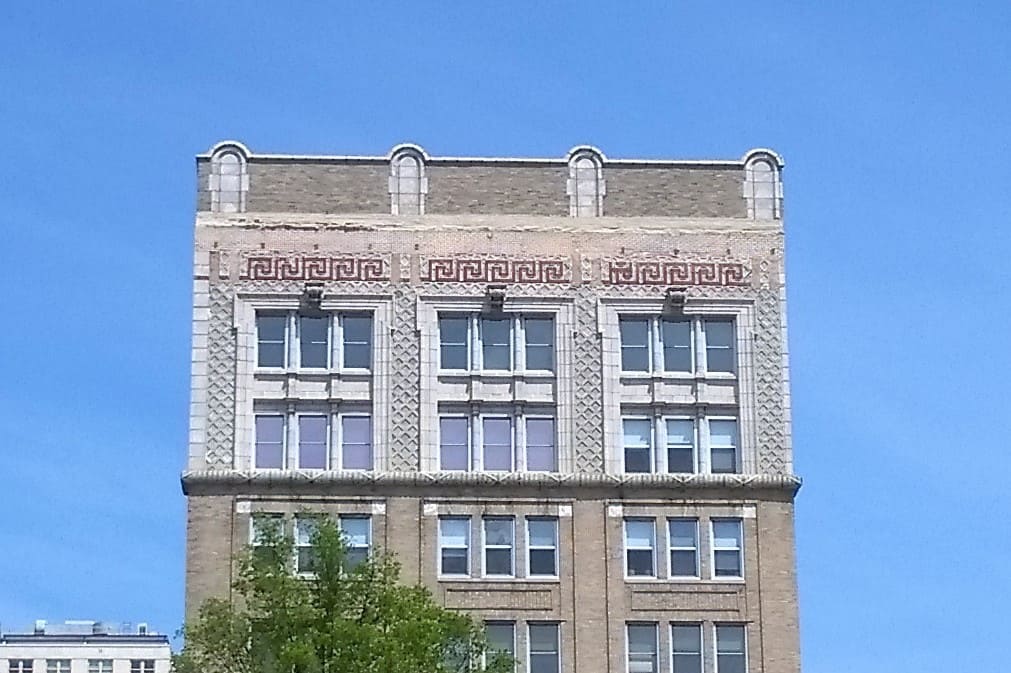
AKA, Atlantic Life Insurance Company Building, Eskimo Building, Chamber of Commerce Building
530 East Main Street
Built, 1912
Architects, Carneal & Johnson
This former headquarters building was not the only thing to get roughed up.
Well composed, the most notable feature is the colored terra cotta decoration used on the top two floors. The crowning cornice has been removed leaving a bad scar and destroying a major element of the original construction. [ADR]
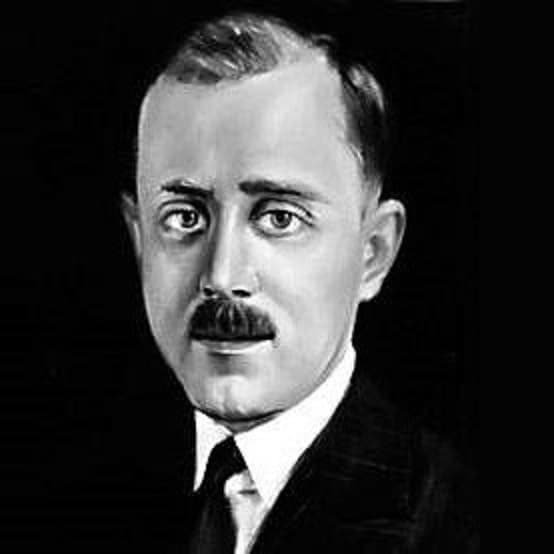
The famous Eskimo Pie was created in Iowa by Christian K. Nelson, a high school Latin teacher who ran an ice cream parlor in summers.
Company legend has it that he launched the frozen novelty industry in 1921 in response to a young customer’s indecision. The oft-repeated story recounts that eight-year-old Douglas Ressenden only had enough money for one treat, but could not decide between an ice cream sandwich and a chocolate candy bar. Nelson, too, soon found himself confounded over the dilemma and started to wonder, “why not combine the two treats?” The teacher with the heart of an inventor spent the next few months formulating a mixture of cocoa butter and chocolate that would cling to a core of vanilla ice cream.
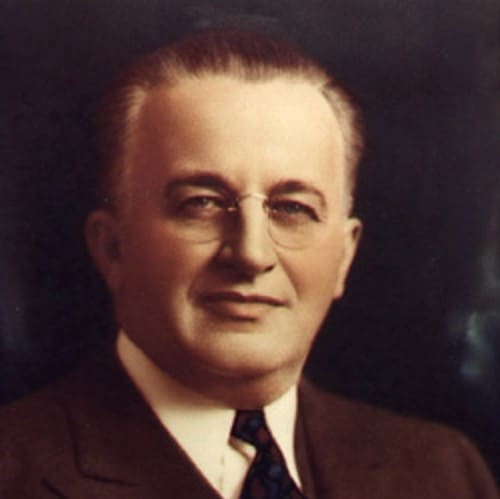
(Emporia State University) — Russell Stover
Nelson introduced his “I-Scream Bar” at the local Fireman’s Tournament that summer to accolades, but had trouble licensing the concept to the area’s ice cream manufacturers. Nelson presented his new product to seven regional dairies, but was rejected by every one. In July, the 25-year-old called on Russell Stover, then plant manager of the Graham Ice Cream Co. Infected with Nelson’s entrepreneurial aspirations, Stover agreed to pay half the fee to patent the confection in exchange for a half-interest in the new enterprise. They received their patent for “an ice cream confection containing normally liquid material frozen to a substantially hard state and encased in a chocolate covering to maintain its original form during handling” early in 1922. Stover has been credited with changing the name of the novelty to the now-famous Eskimo Pie.
It didn’t take long for the Eskimo Pie to become a national hit. Or to attract competitors.
Eskimo Pie’s resounding success soon drew unlicensed imitators, and the partners found themselves spending thousands every day to defend their patent in court. A devastating blow came in 1923, when rival producers convinced the courts to rescind Eskimo Pie’s patent. A disaffected Russell Stover sold his interest in the embattled business to attorney Clem T. Wade for $30,000. The Stovers moved to Denver and founded what would become one of America’s largest manufacturers of boxed confections, Russell Stover Candies, Inc. In 1924, Nelson also conceded a measure of defeat, selling his company to R.S. Reynolds’s U.S. Foil Co. that same year. Later renamed Reynolds Metals Co., the foil company would continue as Eskimo Pie’s parent until 1992.
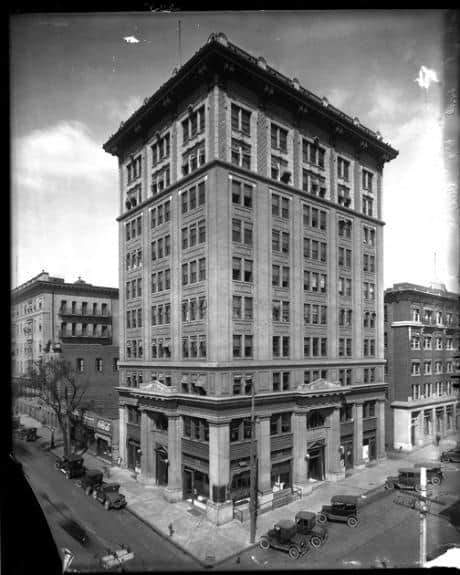
(Library of Virginia) — Eskimo Pie Building, showing original cornice
The new parent moved its subsidiary’s headquarters to Kentucky in 1926. Christian Nelson continued to work at Eskimo Pie throughout much of its near 70-year interim under Reynolds Metals, concentrating primarily on research and development. Packaging for delivery was a concern throughout the 1920s. Late in the decade, Nelson designed shipping and display cases that incorporated dry ice to keep Eskimo Pies “hard as bricks.” After a seven-year “retirement,” the inventor returned to Eskimo Pie in 1935, this time acting as a traveling spokesman in charge of franchisee relations. Turning once again to research in the post-World War II era, Nelson assisted in the development of a proprietary ice cream extrusion process to automate the production of ice cream novelties.
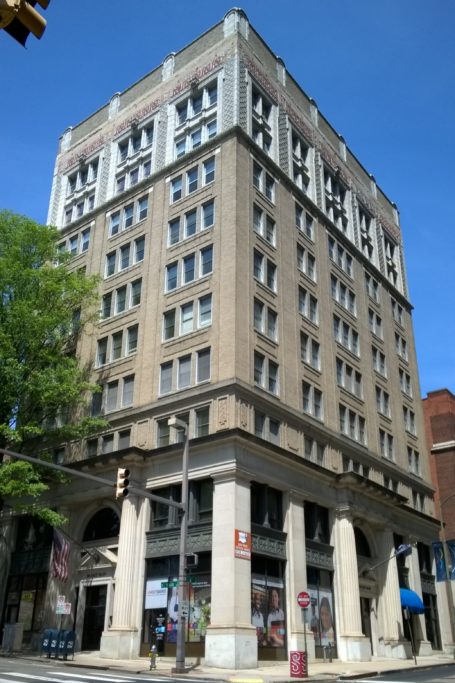
April 2017
The company continued throughout this period to operate much as it had; one observer later quipped that it was “frozen in time.” It maintained consistent quality throughout the nation by selling ingredients (notably its special “Midnite Sun” chocolate coating), production equipment, and packaging to licensees and collecting royalties. Problems began to surface by the 1970s, however. Straying into manufacturing and distribution, the company soon found itself in an unhealthy competition with its own licensees. Consolidation in the formerly regionalized dairy industry also meant that Eskimo Pie increasingly dealt with margin-squeezing conglomerates like Borden and Safeway. Furthermore, mergers and acquisitions in the food industry in general gave competing novelties the backing of global food manufacturers like Nestlé S.A., Unilever N.V., and M&M Mars Co. (Funding Universe)
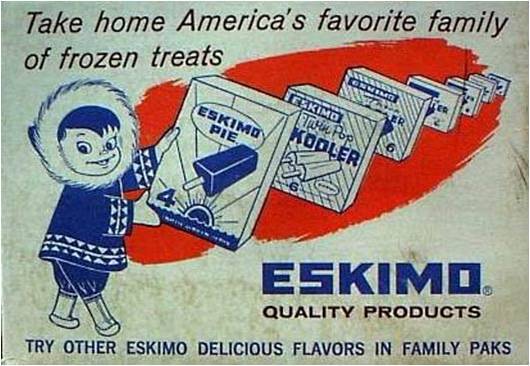
[PicPhotos]
Nestle tried to buy Eskimo Pie, but Reynolds didn’t go for it. Instead, they took the company public, with an IPO in 1992. That didn’t do so well, and a 2 million dollar net loss in 1996 was the beginning of the end. The company was sold to CoolBrands International in 2000, who in turn sold it to Nestle in 2007.
Since its day as a confectionery headquarters, the Eskimo Pie Building has been renovated, and serves as an office building. Pity they didn’t fix the cornice scar.

Must-See RVA! is a regular series
appearing on rocket werks – check it out!




Savory Grain Closing this Sunday

Virginia Opera brings Pagliacci to the Carpenter Theatre on Nov. 13 and 15

Photo of the Day: Where Eagles Dare

The War on Cars Strikes on Election Day

Squirrel-O-Ween Flies into CarMax Park on Friday

Richmond musicians pay tribute to Dolly Parton at Get Tight Lounge on Oct. 10

University of Richmond lands record $150 million gift as it launches $600 million campaign

Hardywood and Starr Hill are officially one company, and neither brand is going anywhere

Richmond region visitor spending hits a record $4.1 billion in 2025

The Byrd Theatre screens the 1925 ‘Phantom of the Opera’ with a live Wurlitzer score on Oct. 25