History
Must-See RVA! — Belgian Building
A look into the history of Richmond places that are still part of our landscape.

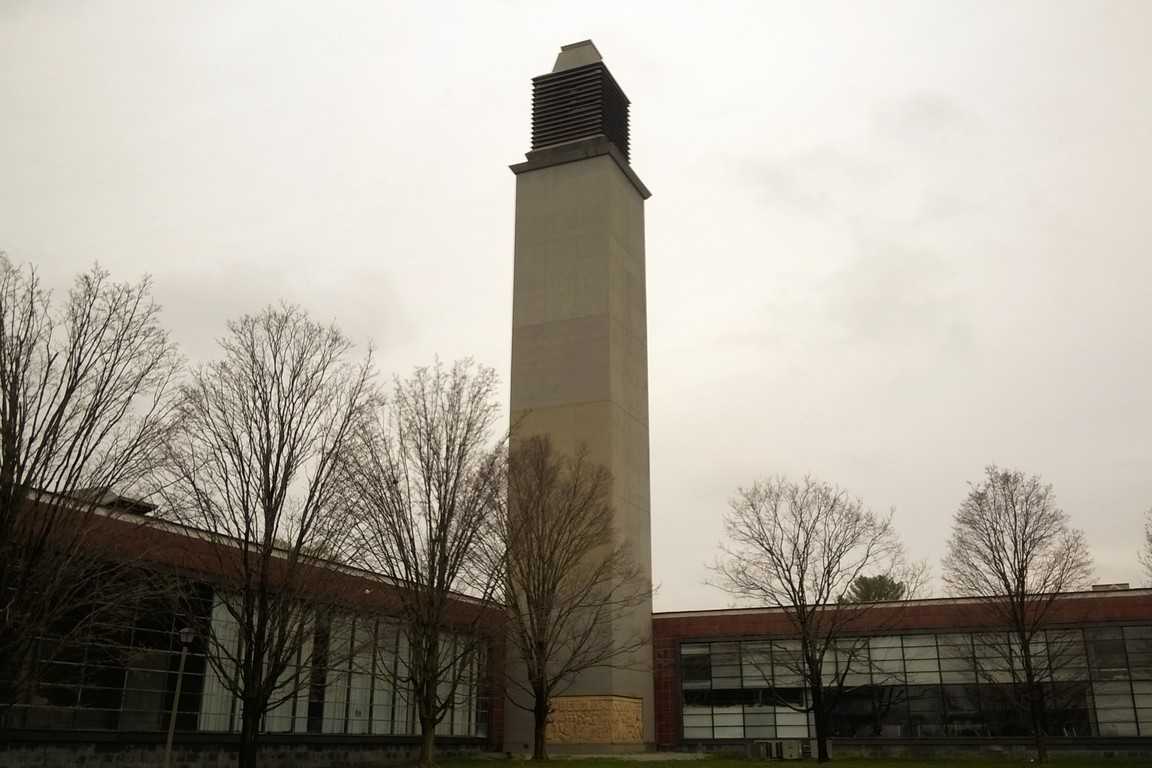
1500 North Lombardy Street
Built, 1939
Relocated, 1941
Architects, Victor Bourgeois & Leo Stijnen
VDHR 127-0173
Iconic Vann Memorial Tower – a modernist sentinel, perched over I-95.
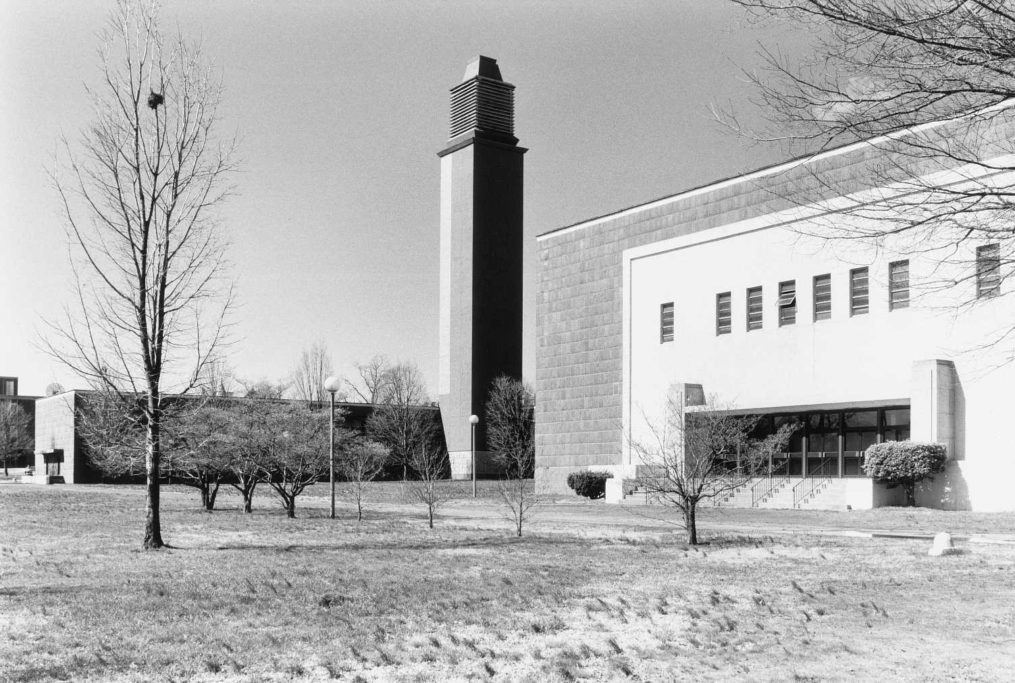
(VDHR) 1970
The Library building of Virginia Union University was originally built in 1939 in New York City as the Belgian Pavilion fort the World’s Fair. The architects for the building were Victor Bourgeois and Leo Stijnen who worked under the direction of Professor Henry van der Velde (1863-1957). Van der Velde, one of the most important twentieth-century architects, began as an exponent of the Art Nouveau movement but later became a pioneer of modernism, and was the predecessor of Walter Gropius as head of the influential Grand Ducal School of Art at Weimar, Germany, which later became the Bauhaus.
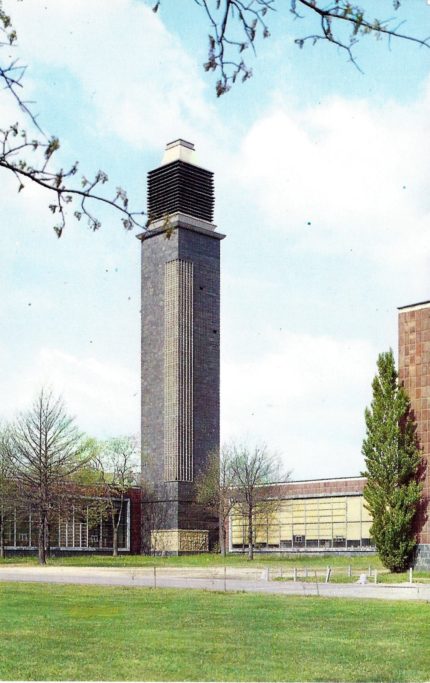
The building was erected with the idea of removing it to a Belgian university following the closing of the fair. However, the outbreak of World War I1 put a halt to this scheme, and the Belgian ambassador presented the building to Virginia Union University in 1941. The choice of Virginia Union was based largely on the potential use the school could make of the ‘pavilion, and the availability of a good site. The building was then dismantled, the materials shipped to Richmond, and reassembled on the grounds of the school. Its corner stone was laid on June 9, 1941. Because of the reputation of its architects, as well as the quality of its design, the former Belgian Pavilion must be considered to possess international architectural significance. It was this architectural movement which so largely shaped the architecture of the present day.
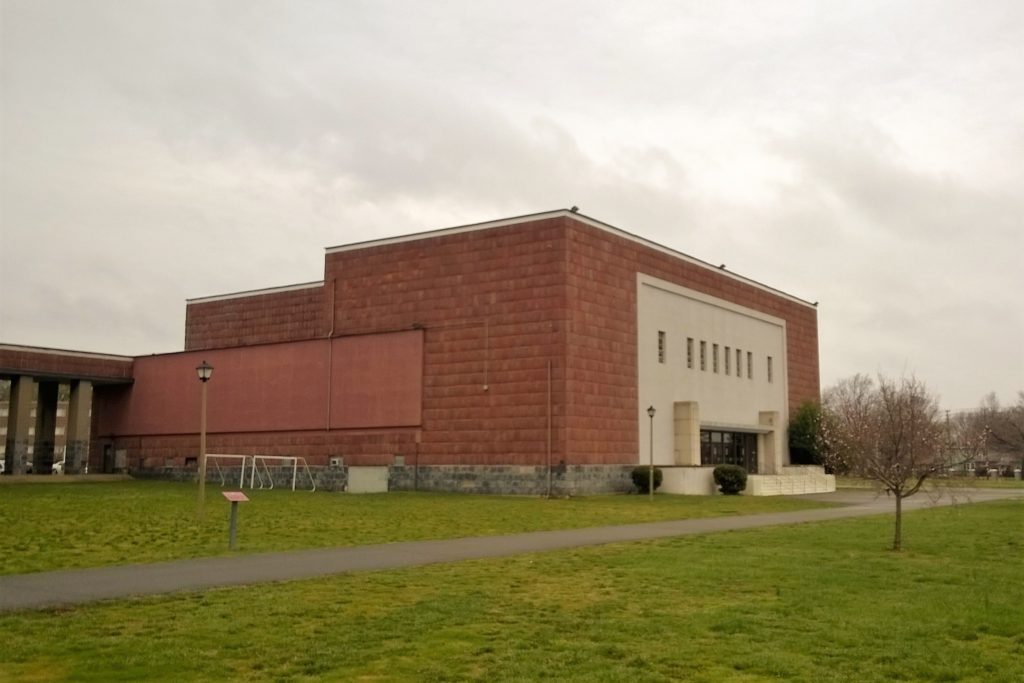
March 2016
Most of this one-story, flat roofed structure is faced with red tiles above a black slate-faced water table. The choice of materials is symbolic of Belgian unity; the red tiles are a product of Flanders while the black slate comes from the Ardennes and the plate glass used in large areas throughout the building are from the Walloon part of Belgium. The whole of the building, with its clean lines, geometrical patterned surfaces and geometrical massing, has an aura of austere formalism, one of the chief characteristics of the International Style.
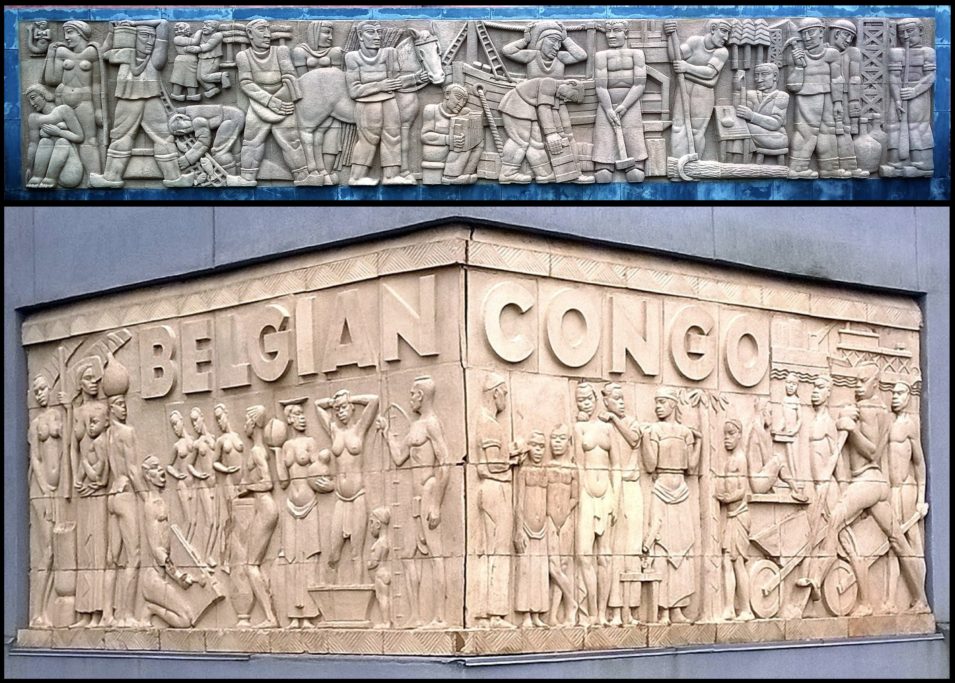
March 2016 – Aggregate of bas-reliefs
The tower is dedicated to Robert L. Vann, a Pittsburgh publisher and alumnus of Virginia Union. At the base of the tower are two bas relief panels which represent culture and trades in the Belgian Congo. A third, very long bas relief panel on the south wall of the Library represents trade in Belgium. The sculptors for these panels were 0. Jaspers and H. Purrez. (VDHR)
The Belgian Building marks the second Virginia Union entry on the VDHR Register, standing shoulder-to-shoulder with the historic buildings at University of Richmond, and Virginia Commonwealth.
It’s also an interesting contrast to the other modernist rectangular tower, just a few miles down the road.

Must-See RVA! is a regular series
appearing on rocket werks – check it out!




Savory Grain Closing this Sunday

Virginia Opera brings Pagliacci to the Carpenter Theatre on Nov. 13 and 15

Photo of the Day: Where Eagles Dare

The War on Cars Strikes on Election Day

Squirrel-O-Ween Flies into CarMax Park on Friday

Richmond musicians pay tribute to Dolly Parton at Get Tight Lounge on Oct. 10

University of Richmond lands record $150 million gift as it launches $600 million campaign

Hardywood and Starr Hill are officially one company, and neither brand is going anywhere

Richmond region visitor spending hits a record $4.1 billion in 2025

The Byrd Theatre screens the 1925 ‘Phantom of the Opera’ with a live Wurlitzer score on Oct. 25