Arts & Entertainment
PHOTOS: Inside VCU’s new Institute for Contemporary Art
VCU’s $41 million landmark project is stunning and will be transformative for a somewhat blighted intersection that serves as a major gateway to the city. Here’s a look inside.

After several years of construction, one of the most unique and complex buildings to ever be constructed in the area is finally coming together. The VCU Institute for Contemporary Art’s Markel Center, a 41,000-square-foot structure designed by renowned architect Steven Holl, will open to the public October 28th.
A striking building, the Markel Center is not only designed to take on a different look depending on what perspective from which it’s viewed, but offer a different experience depending on the entrance from which one comes through. A café and gallery space opening to the bustling adjacent intersection will draw in passersby. A quiet sculpture garden and reflection pool will greet students and others from the south–the side of the building facing campus. It’s designed to be a space that not only houses unique modern works, exhibitions, and lecturers inside, but to be a canvas in and of itself.
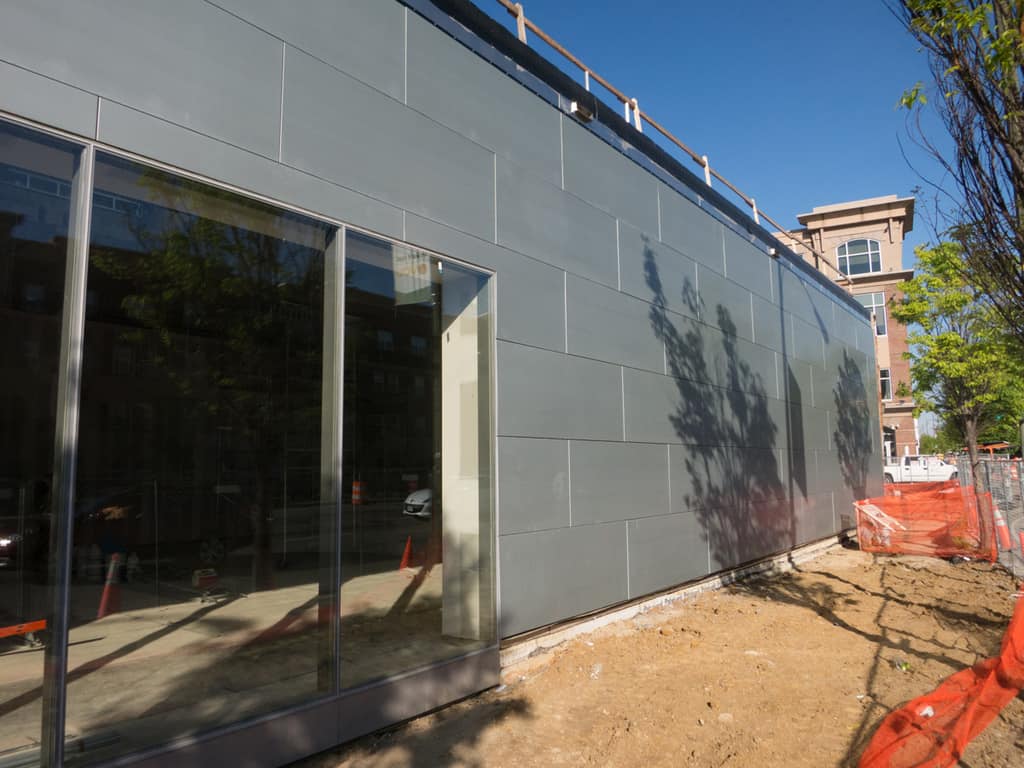
Collection and exhibition pieces will be hung from the building itself and placed within its common spaces outdoors; the sleek, modern structure providing a backdrop that’s handsome enough to be a work of art itself, yet understated and monotone enough–featuring pre-weathered zinc paneling and glass walls–to not take away from the artwork itself. The understated theme continues inside. Gallery ceilings and floors will feature unfinished concrete finishes and plain white sheetrock walls–as you might expect in a museum setting–bordered by aluminum chair rails.
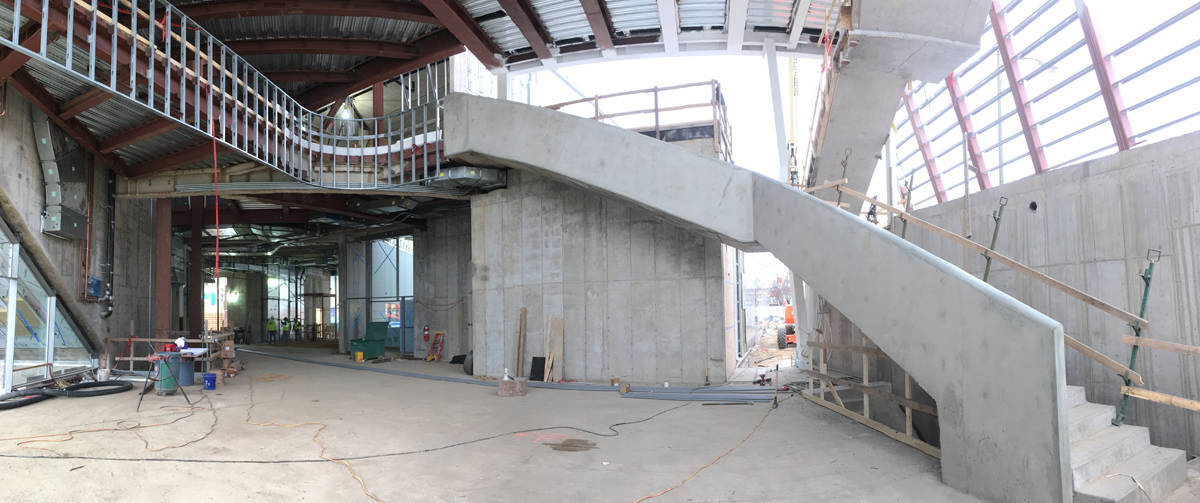
Visitors will be able to peruse four gallery spaces, each varying in size and ceiling height in order to create contrast and perspective–a theme that pulses through the building. The lobby is grand and open and invites guests to head up a winding staircase to the upper galleries on floors two and three. On the second floor, the ceiling drops to a mere nine feet, providing a more intimate atmosphere.
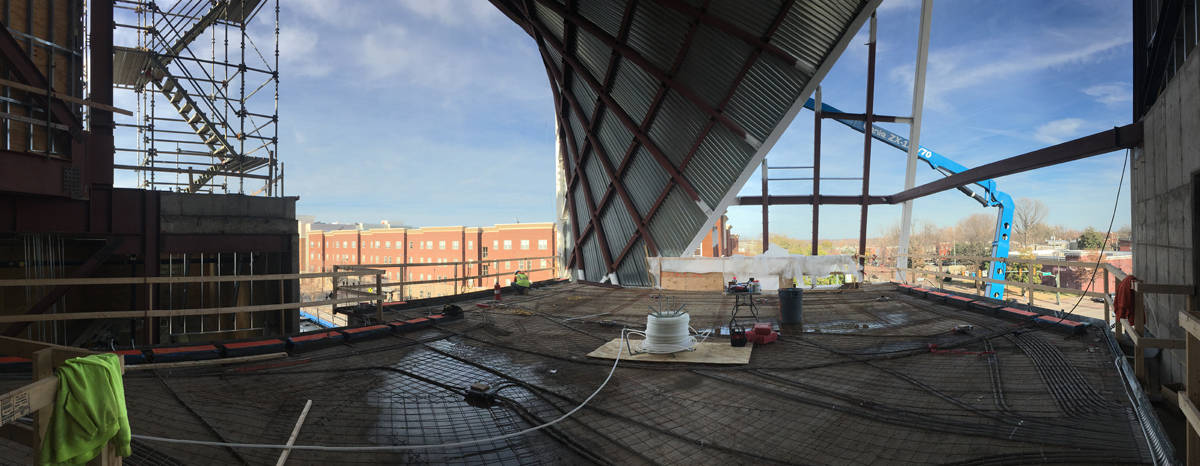
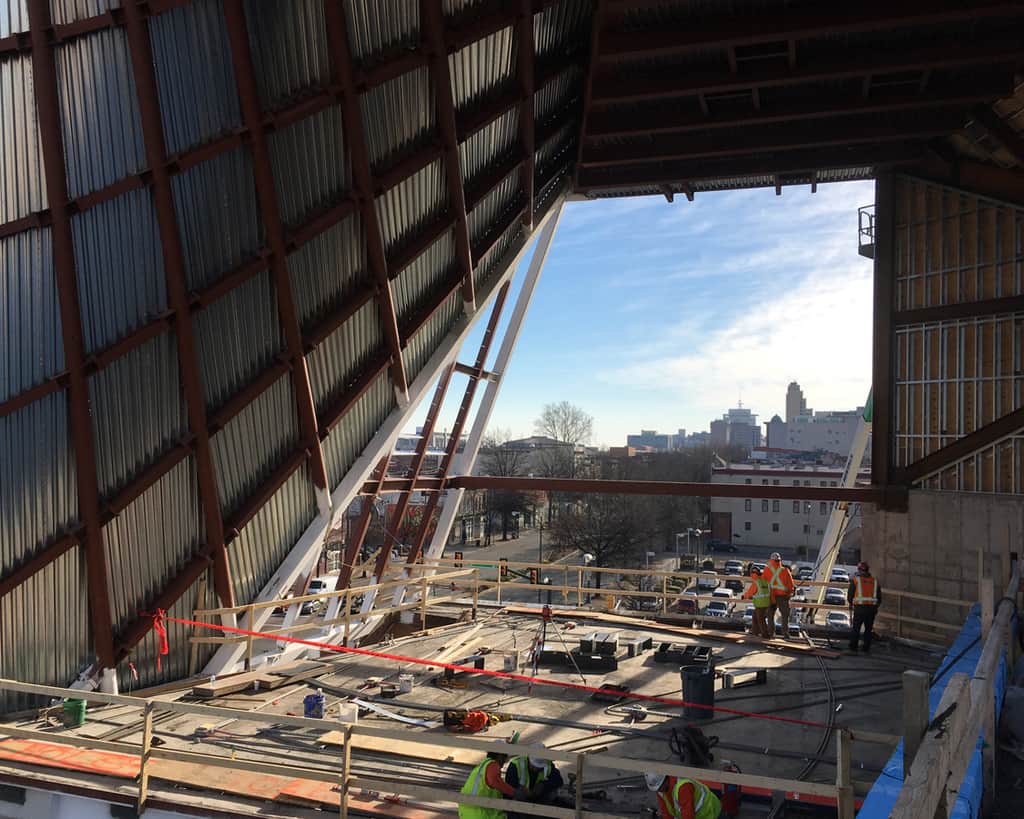
Perhaps the most unique space is the third floor gallery, with 35-foot contorted ceilings and frosted glass panel walls facing the east and west. ICA Director of Facilities Michael Lease, who lead us on a tour Tuesday morning, said the translucent glass will provide a varying environment as weather conditions change–constant, subdued lighting on overcast days; a bright and brilliant space when the sun is out.
Other amenities include a 240-seat auditorium with stadium seating and state-of-the-art audiovisual equipment, which VCU plans to use to house visiting artist lectures and other programs. Above, a large observation area and glass panelling provides visitors with a spot to peek in on the auditorium’s programming and allowing in a bit of natural lighting–unique for what is typically an environment of controlled lighting.
Adjacent to the auditorium will be a café serving coffee, beer, wine, spirits, and light fare with ample space for quiet study and amenities like WiFi, USB chargers, and power outlets every few feet that invite visitors, students, and others to linger and contemplate the space.
The project, which went over its original budget by around $5 million, will come in at a whopping $41 million. It’s the university’s largest privately-funded arts project to date. Construction complexities contributed to the increased price tag among other things. It’s no surprise, considering ICA Director Lisa Freiman called the building “the most complex building ever constructed in the Commonwealth.”
The Institute for Contemporary Art will open its doors October 18th with an exhibition entitled “Declaration,” will explore contemporary art’s power to catalyze change, and will feature painting, sculpture, multimedia works, site-specific installations, and time-based performances by emerging and established artists.
Featuring new work by artists from around the globe, including Amos Paul Kennedy, Jr., Marinella Senatore, Tania Bruguera, and Paul Rucker, the exhibition will also include artists from Richmond’s vibrant arts community, such as VCUarts Professor Stephen Vitiello and VCU alum Levester Williams. Examining themes of protest, social justice, connection, and creative community, Declaration will remain on view through February 25th. Daily admission and entry to all exhibitions will be free.
Check out some recent construction photos provided by the Institute for Contemporary Art below (photography wasn’t allowed during Tuesday’s media tour).