Downtown
CITYLAB looks at The Rise and Fall of Black Wall Street and Richmond’s role in that history
The history of Jackson Ward is deep and unexplored for many Richmonders.

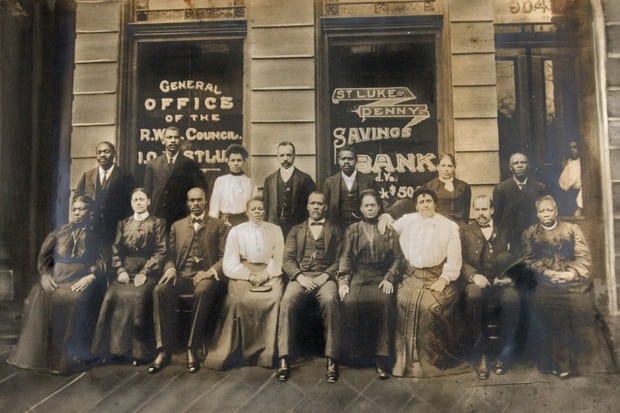
Jackson Ward was once known as the Black Wall Street and is even the subject of a movie called Black Wall Street – The Money, The Music & The People.
An article posted yesterday on CITYLAB (originally in The Atlantic) points to Richmond’s Black Wall Street collapse as an example of how and why black owned banks are currently failing across the country. The article points out that only 25 black-owned banks remain in the United States.
At the turn of the 20th century, it was one of the most prosperous black communities in the United States, with thriving theaters, stores, and medical practices. Richmond is where the first black banks opened, including one chartered to a former schoolteacher named Maggie Walker—the daughter of a freed slave. The St. Luke Penny Savings Bank, which Walker opened in 1903, made loans to qualified borrowers who were shunned by traditional banks, such as black doctors, lawyers, and entrepreneurs. St. Luke’s would eventually merge with other black banks and become Consolidated Bank and Trust. By the end of the 20th century, the bank was the last black-owned bank in Richmond and was struggling to compete with much bigger banks downtown. It had several troubled loans on its books and couldn’t raise enough capital to stay afloat.




Savory Grain Closing this Sunday

Virginia Opera brings Pagliacci to the Carpenter Theatre on Nov. 13 and 15

Photo of the Day: Where Eagles Dare

The War on Cars Strikes on Election Day

Squirrel-O-Ween Flies into CarMax Park on Friday

Richmond musicians pay tribute to Dolly Parton at Get Tight Lounge on Oct. 10

University of Richmond lands record $150 million gift as it launches $600 million campaign

Hardywood and Starr Hill are officially one company, and neither brand is going anywhere

Richmond region visitor spending hits a record $4.1 billion in 2025

The Byrd Theatre screens the 1925 ‘Phantom of the Opera’ with a live Wurlitzer score on Oct. 25