Critters of the Week
Critters of the Week
A wild critter we spotted in the RVA area and a critter up for adoption by SPCA.

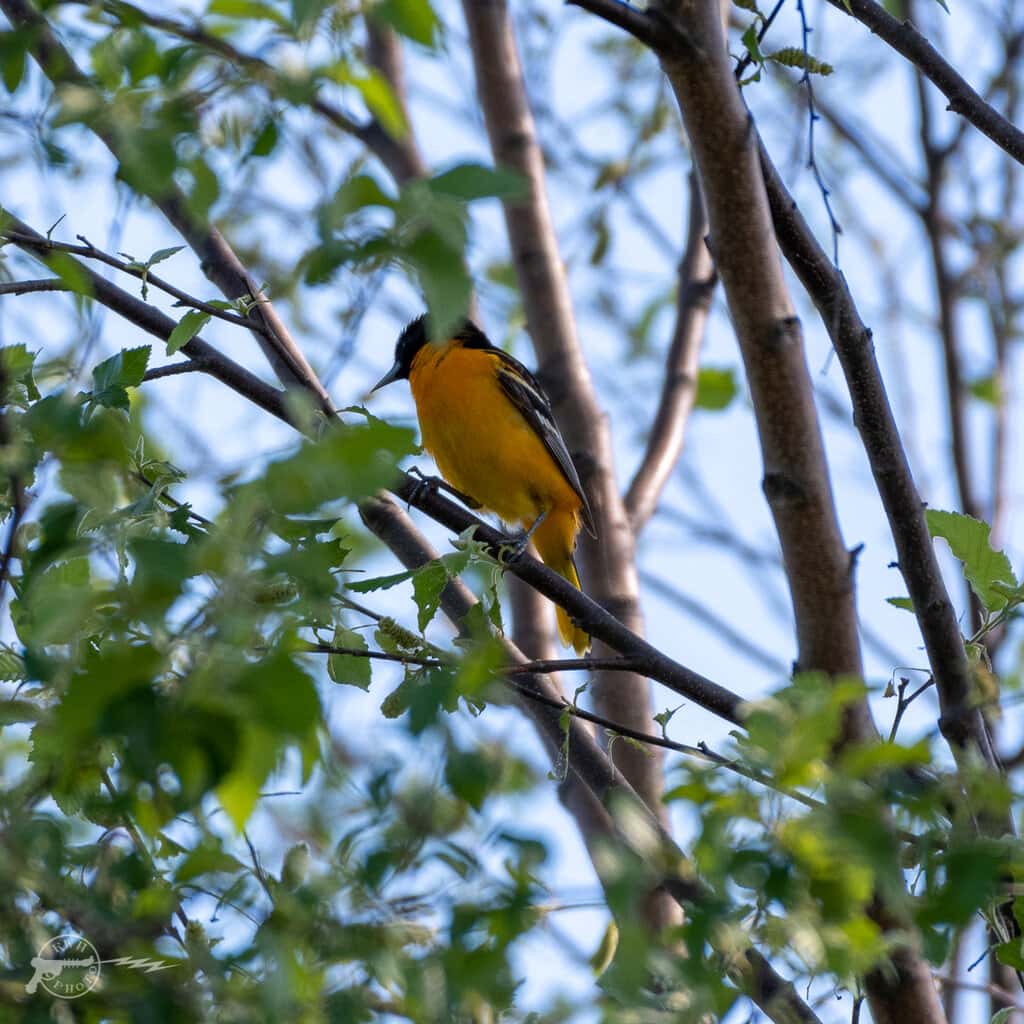

Where Spotted: James River Park (between Reedy Creek and 42nd Street Entrance)
Common Name: Baltimore Oriole
Scientific Name: Icterus galbula
Quick Facts Courtesy of Cornell Labs
- Unlike robins and many other fruit-eating birds, Baltimore Orioles seem to prefer only ripe, dark-colored fruit. Orioles seek out the darkest mulberries, the reddest cherries, and the deepest-purple grapes, and will ignore green grapes and yellow cherries even if they are ripe.
- The Baltimore Oriole hybridizes extensively with the Bullock’s Oriole where their ranges overlap in the Great Plains. The two species were considered the same for a while and called the Northern Oriole, but in the 1990s, after genetic studies, they were separated again.
- Young male Baltimore Orioles do not molt into bright-orange adult plumage until the fall of their second year. Still, a few first-year males in drab, female-like plumage succeed in attracting a mate and raising young. Females become deeper orange with every molt; some older females are almost as bright orange as males.
- The orioles of the Americas were named after similar-looking birds in the Old World, but the two groups are not closely related. Orioles of the Old World are in the family Oriolidae, whereas American orioles are in the same family as blackbirds and meadowlarks. Both New and Old World orioles are brightly colored with red, yellow, and black; have long tails and long pointed bills; build hanging, woven nests; and prefer tall trees around open areas.
- Baltimore Orioles got their name from their bold orange-and-black plumage: they sport the same colors as the heraldic crest of England’s Baltimore family (who also gave their name to Maryland’s largest city).
- Baltimore Orioles sometimes use their slender beaks to feed in an unusual way, called “gaping”: they stab the closed bill into soft fruits, then open their mouths to cut a juicy swath from which they drink with their brushy-tipped tongues.
- The oldest recorded Baltimore Oriole was over 12 years old when it was caught and killed by a raptor in Minnesota.
If you’re a fan of original content like those photos above be sure to give our Instagram and Dickie’s Backyard Bird Blind Bonanza on FB a follow and consider making a donation.
[wpedon id=”165378″]


Gem at Richmond SPCA


Are you searching for a fun, friendly and adorable family member? My name is Gem and I’m the girl for you! I am pretty lonely here by myself, just waiting for my special someone to come along. Won’t you please take me home today?
Age: 6 years,
Gender: Spayed Female
Color: White / Brindle
Size: M (dog size guide)
ID: 38439165
Learn more about their adoption process.


