Critters of the Week
Critters of the Week
A wild critter we spotted in the RVA area and a critter up for adoption by SPCA.

The photo above was taken this week. The photo below is perhaps my favorite and was taken a couple of years ago.
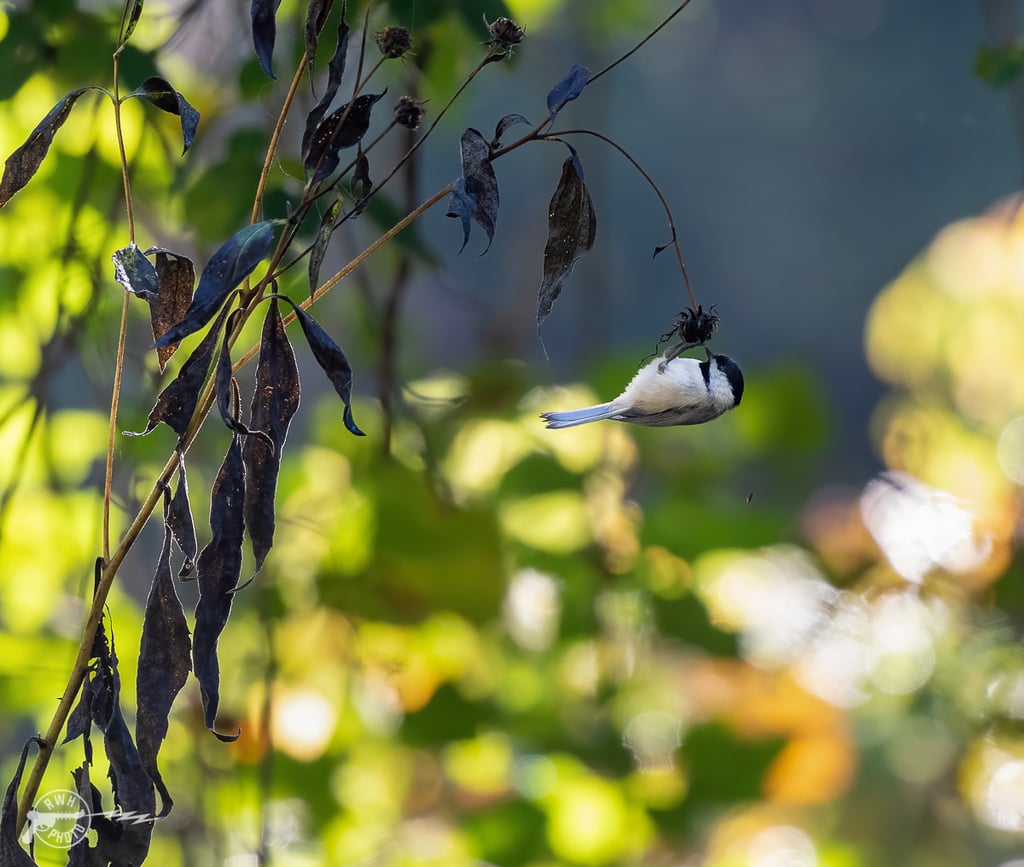

I used the picture above in an October, 2020 Critter of the Week in which I misidentified this guy as a Black-capped Chickadee. I have learned that the two have very little range overlap, mostly to the northwest of here with some in the corner of southwest Virginia (Black-capped Chickadee Range vs Carolina Chickadee Range). Also the Carolina Chickadee has wings that are plainer with more gray. So in conclusion, if you see a Chickadee in your backyard it’s a Carolina Chickadee and not a Black-capped Chickadee.
Where Spotted: Tuckahoe Creek Park
Common Name: Carolina Chickadee
Scientific Name: Poecile carolinensis
Length: 4.7-5.9 in (12-15 cm)
Weight: 0.3-0.5 oz (9-14 g)
Wingspan: 6.3-8.3 in (16-21 cm)
Quick Facts
- Where the two species ranges come in contact, the Carolina and Black-capped chickadees occasionally hybridize. Hybrids can sing the songs of either species, or might sing something intermediate.
- In winter, Carolina Chickadees live in flocks of two to eight birds and defend areas against other flocks. Dominant birds in these flocks establish breeding territories in the summer that were part of the winter flock’s range.
- The pair bond between a male and female Carolina Chickadee can remain intact for several years. The probability that a pair will remain together seems to vary among populations, with nearly all pairs remaining together in subsequent years in a study in Texas, but only half staying together in a study in Tennessee. If a nest attempt fails, a female may seek out a new male on a different territory.
- Most members of a winter flock stay in the same flock all season, but some birds are “flock switchers.” Some of these belong to one flock and then switch, joining another flock permanently and exclusively for the rest of the season. Other flock switchers regularly move between flocks. These flock-switchers may have different rankings in the hierarchy of each flock.
- The oldest known Carolina Chickadee was at least 10 years, 11 months old when it was recaptured and rereleased during banding operations in West Virginia in 1974. It had been banded in the same state in 1963.
- If you’re a fan of original content like those photos above be sure to give our Instagram and Dickie’s Backyard Bird Blind Bonanza on FB a follow and consider making a donation.
[wpedon id=”165378″]


Uniqua at Richmond SPCA


Hello Friends, I am Uniqua and as my name suggests, I am a unique lady. I am a perfect soul looking for a family to call my own. I am very smart. I know basic commands and I am eager to show you all of them! I am extra wiggly when I get pets and belly scratches. Please come ask to meet me so I can find my soulmate!
Age: 6 years,
Gender: Spayed Female
Color: Tan / White
Size: M (dog size guide)
ID: 49642483
Learn more about their adoption process.


