Critters of the Week
Critters of the Week
A wild critter we spotted in the RVA area and a critter up for adoption by Richmond SPCA.

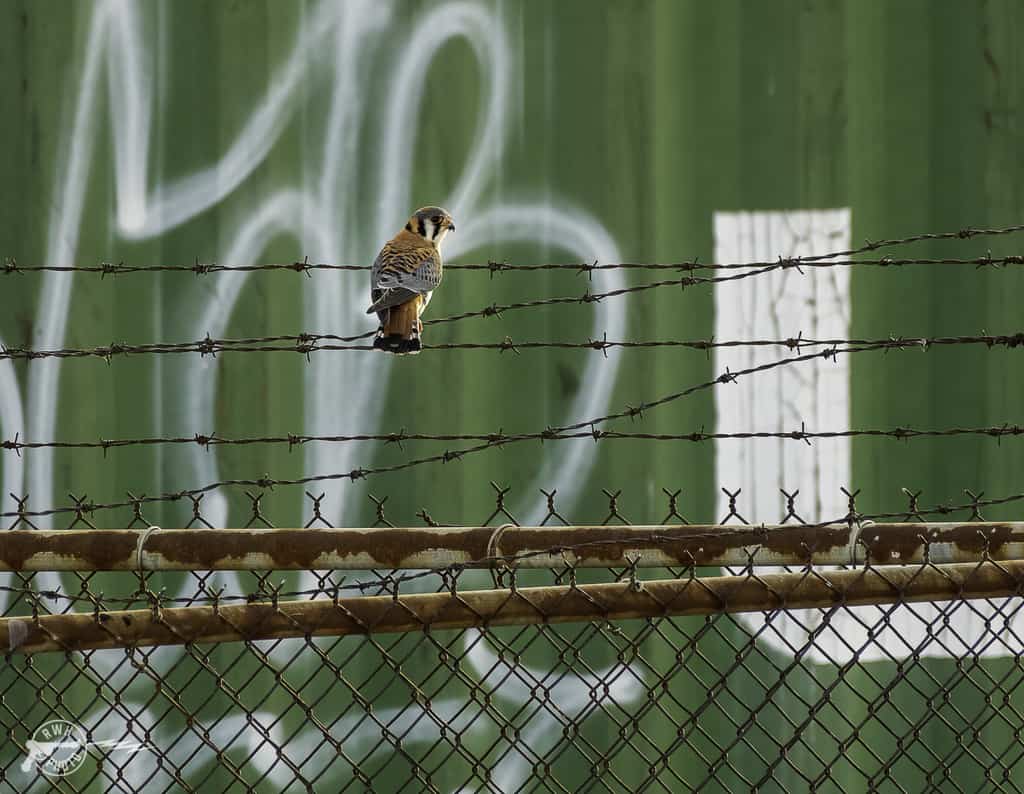
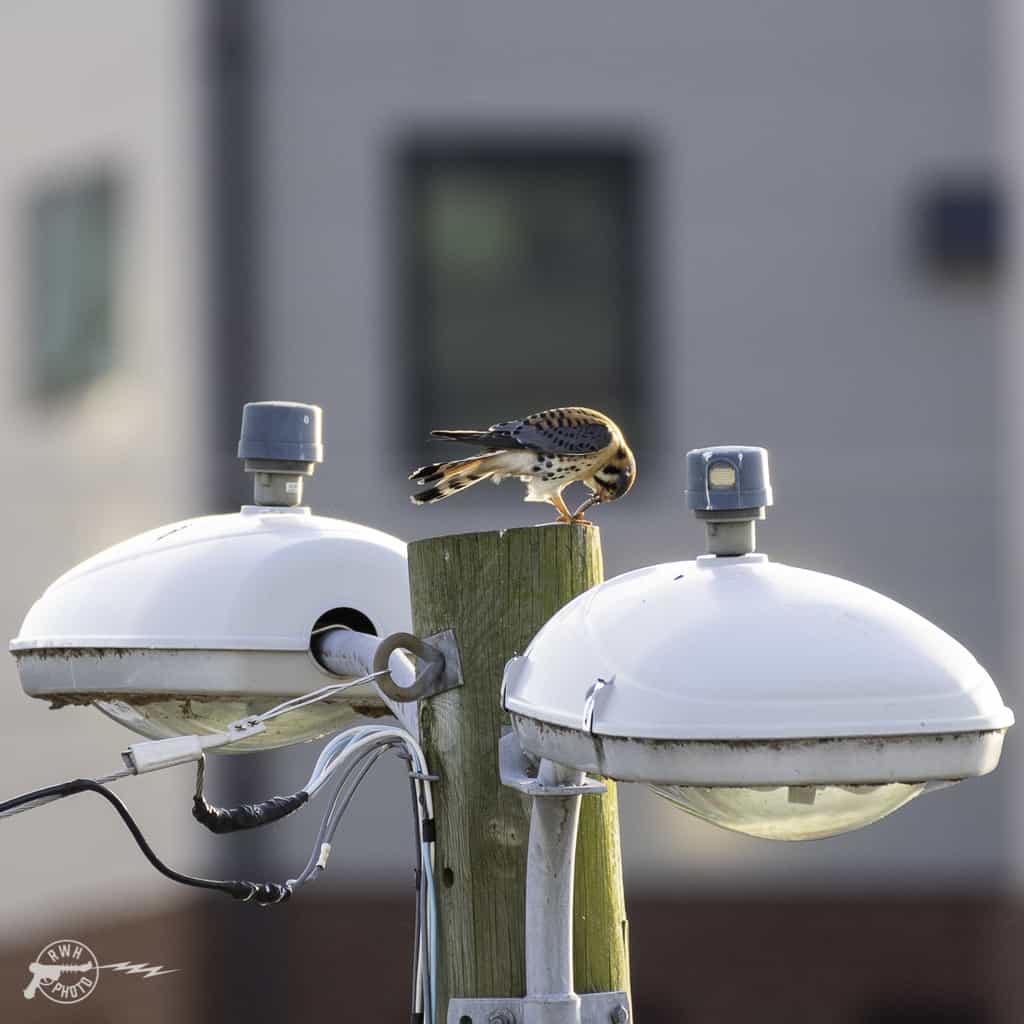

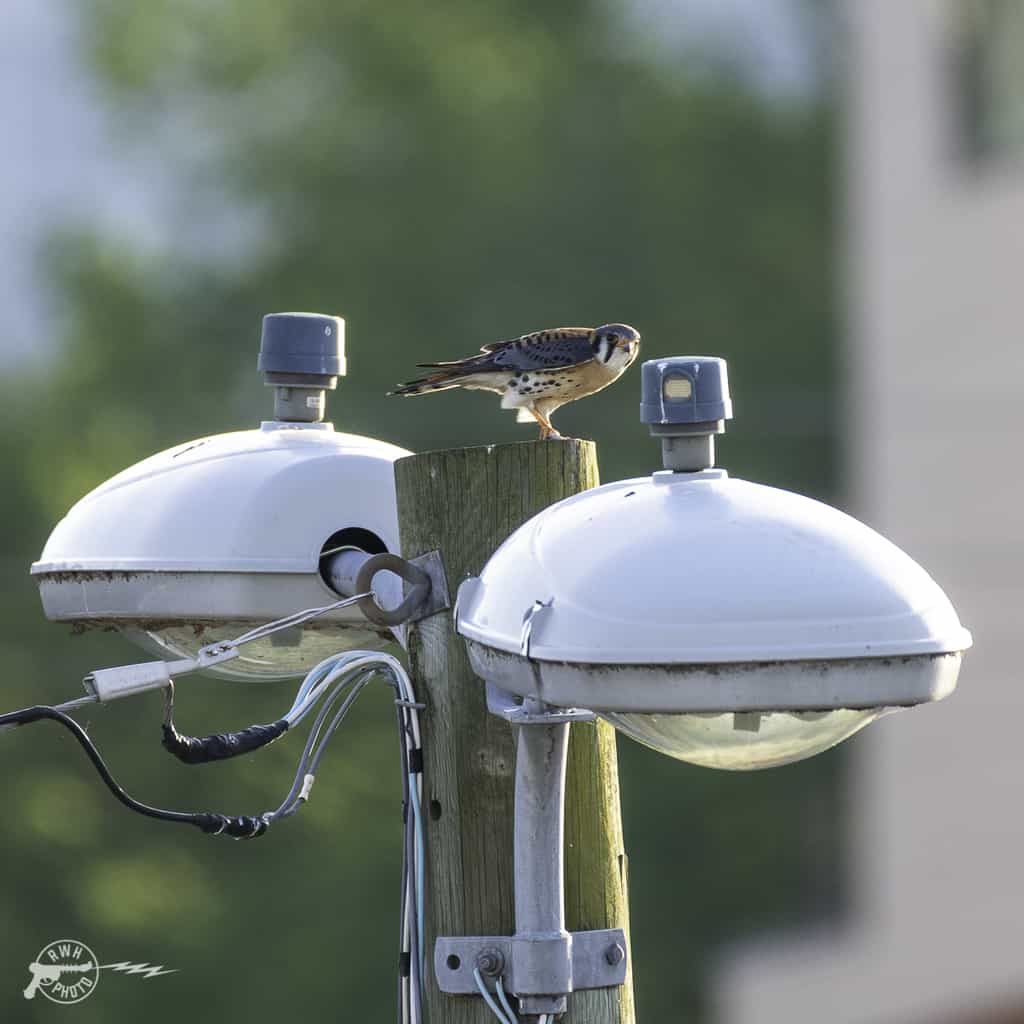
Where Spotted: Floodwall
Common Name: American Kestrel
Scientific Name: Falco sparverius
Length: 8.7-12.2 in (22-31 cm)
Weight: 2.8-5.8 oz (80-165 g)
Wingspan: 20.1-24.0 in (51-61 cm)
Quick Facts Courtesy of Cornell Labs
- Sports fans in some cities get an extra show during night games: kestrels perching on light standards or foul poles, tracking moths and other insects in the powerful stadium light beams and catching these snacks on the wing. Some of their hunting flights have even made it onto TV sports coverage.
- When nature calls, nestling kestrels back up, raise their tails, and squirt feces onto the walls of the nest cavity. The feces dry on the cavity walls and stay off the nestlings. The nest gets to be a smelly place, with feces on the walls and uneaten parts of small animals on the floor.
- It can be tough being one of the smallest birds of prey. Despite their fierce lifestyle, American Kestrels end up as prey for larger birds such as Northern Goshawks, Red-tailed Hawks, Barn Owls, American Crows, and Sharp-shinned and Cooper’s Hawks, as well as rat snakes, corn snakes, and even fire ants.
- In winter in many southern parts of the range, female and male American Kestrels use different habitats. Females use the typical open habitat, and males use areas with more trees. This situation appears to be the result of the females migrating south first and establishing winter territories, leaving males to the more wooded areas.
- Unlike humans, birds can see ultraviolet light. This enables kestrels to make out the trails of urine that voles, a common prey mammal, leave as they run along the ground. Like neon diner signs, these bright paths may highlight the way to a meal—as has been observed in the Eurasian Kestrel, a close relative.
- Kestrels hide surplus kills in grass clumps, tree roots, bushes, fence posts, tree limbs, and cavities, to save the food for lean times or to hide it from thieves.
- The oldest American Kestrel was a male and at least 14 years, 8 months old when he was found in Utah in 2001. He had been banded in the same state in 1987.
If you’re a fan of original content like those photos above be sure to give our Instagram and Dickie’s Backyard Bird Blind Bonanza on FB a follow and consider making a donation.
[wpedon id=”165378″]
Celeste at Richmond SPCA

Hi! My name is Celeste and I’m a cute, curious little lady looking for my place in this world and I hope that it’s with you! I love to play with toys and then have a cuddle session afterwards. I am quite silly and sure to keep you smiling with my antics. If you’d like to take me home, call the Richmond SPCA adoption center to schedule a time to meet me!
Age: 9 years,
Gender: Spayed Female
Color: Tan / Black
Size: XL (dog size guide)
ID: 47501983

Adopt Celeste at Richmond SPCA
In response to COVID-19 and in order to reduce visitor traffic, observe necessary social distancing and to best protect the health and wellbeing of thier staff and members of the public, Richmond SPCA has transitioned to adoptions by appointment only. Please review their adoption appointment process.




Savory Grain Closing this Sunday

Virginia Opera brings Pagliacci to the Carpenter Theatre on Nov. 13 and 15

Photo of the Day: Where Eagles Dare

The War on Cars Strikes on Election Day

Squirrel-O-Ween Flies into CarMax Park on Friday

Richmond musicians pay tribute to Dolly Parton at Get Tight Lounge on Oct. 10

University of Richmond lands record $150 million gift as it launches $600 million campaign

Hardywood and Starr Hill are officially one company, and neither brand is going anywhere

Richmond region visitor spending hits a record $4.1 billion in 2025

The Byrd Theatre screens the 1925 ‘Phantom of the Opera’ with a live Wurlitzer score on Oct. 25