Critters of the Week
Critters of the Week
A wild critter we spotted in the RVA area and a critter up for adoption by RACC or Richmond SPCA.

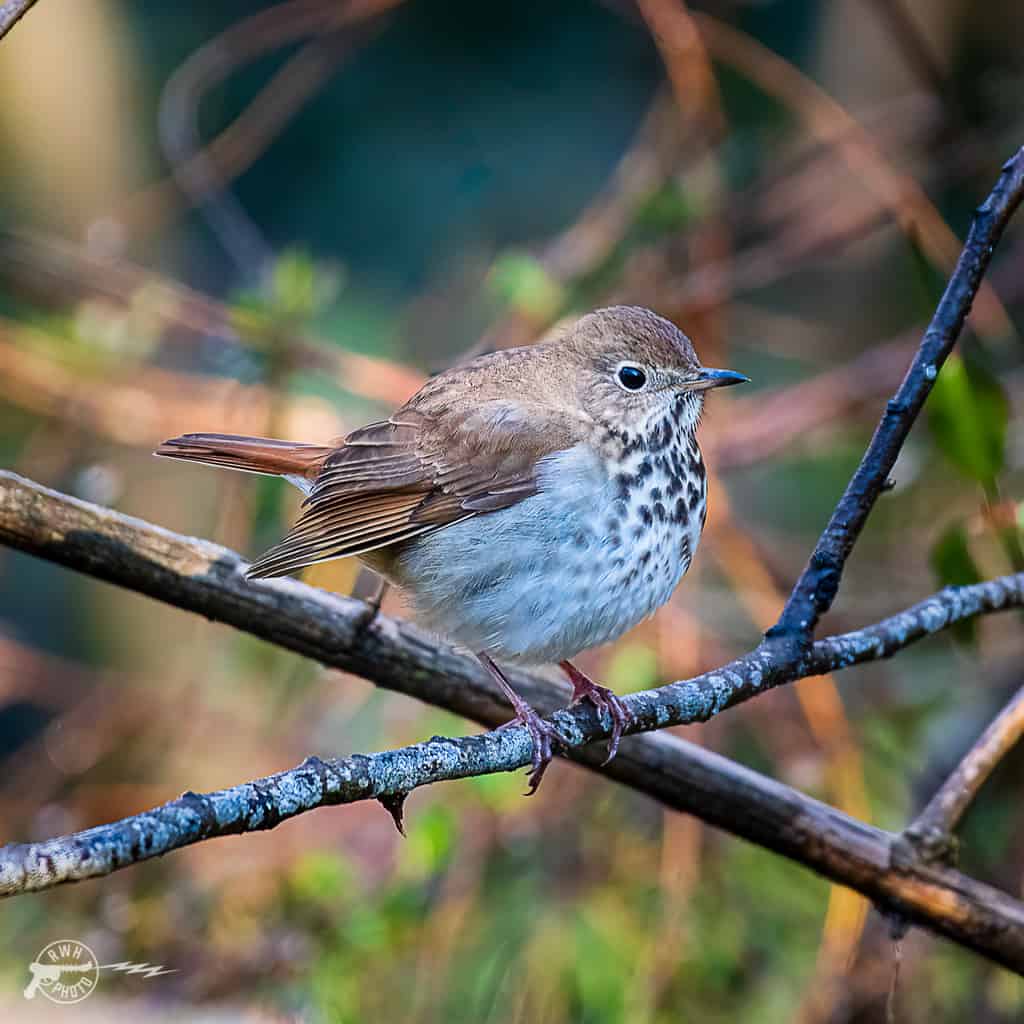
Where Spotted: Wetlands
Common Name: Hermit Thrush
Scientific Name: Catharus guttatus
Length: 5.5-7.1 in (14-18 cm)
Weight: 0.8-1.3 oz (23-37 g)
Wingspan: 9.8-11.4 in (25-29 cm)
Quick Facts Courtesy of Cornell Lab
- Males usually gather food for the nest, while females feed the nestlings. The young birds start by eating bits of larvae, then grasshoppers, moths, and spiders. One Hermit Thrush has been seen trying to give a nestling a salamander more than 1.5 inches long.
- Hermit Thrushes usually make their nests in and around trees and shrubs, but they can also get more creative. Nests have been found on a cemetery grave, on a golf course, and in a mine shaft.
- Hermit Thrushes sometimes forage by “foot quivering,” where they shake bits of grass with their feet to get insects. They also typically begin to quiver their feet as they relax after seeing a flying predator. Some scientists think the quivering happens as the bird responds to conflicting impulses to resume foraging or continue taking cover.
- East of the Rocky Mountains the Hermit Thrush usually nests on the ground. In the West, it is more likely to nest in trees.
- Hermit Thrushes make several distinct calls around their nests. They will sometimes make a rising byob sound similar to a canary call or mewing kitten. Females frequently rearrange their eggs while making quit quit noises. In the morning, two adults meeting near the nest will greet each other with a pweet pweet call.
- Hermit Thrushes are part of a genus (Catharus) that includes four other similar thrushes in North America: the Veery, Swainson’s Thrush, Gray-cheeked Thrush, and Bicknell’s Thrush. In the northeastern mountains, the Veery lives at the lowest elevations, Hermit Thrushes at middle elevations, and Swainson’s Thrushes at high elevations.
- The oldest recorded Hermit Thrush was at least 10 years, 10 months old when it was recaptured and rereleased during banding operations in Maryland in 2009. It had been banded in the same state in 1999.
If you’re a fan of original content like those photos above be sure to give our Instagram and Dickie’s Backyard Bird Blind Bonanza on FB a follow and consider making a donation.
[wpedon id=”165378″]

Ratatouille at Richmond SPCA
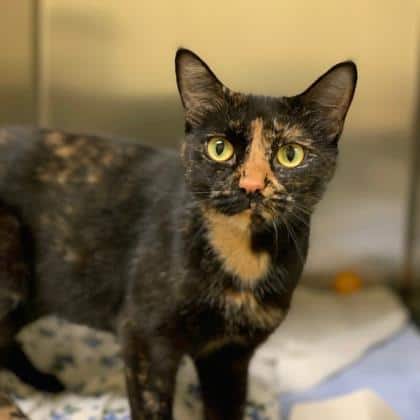
Hi! My name is Ratatouille and I’m a cute, curious little gal looking for my place in this world and I hope that it’s with you! I love to play with toys and then have a cuddle session afterwards. I am quite silly and sure to keep you smiling with my antics. Won’t you please take me home today?
Age: 1 year, 7 months
Gender: Spayed Female
Color: Black / Orange
Declawed: No
ID: 45165190
Adopt Ratatouille at the Richmond SPCA
In response to COVID-19 and in order to reduce visitor traffic, observe necessary social distancing and to best protect the health and wellbeing of thier staff and members of the public, Richmond SPCA has transitioned to adoptions by appointment only. Please review their adoption appointment process.




Savory Grain Closing this Sunday

Virginia Opera brings Pagliacci to the Carpenter Theatre on Nov. 13 and 15

Photo of the Day: Where Eagles Dare

The War on Cars Strikes on Election Day

Squirrel-O-Ween Flies into CarMax Park on Friday

Richmond musicians pay tribute to Dolly Parton at Get Tight Lounge on Oct. 10

University of Richmond lands record $150 million gift as it launches $600 million campaign

Hardywood and Starr Hill are officially one company, and neither brand is going anywhere

Richmond region visitor spending hits a record $4.1 billion in 2025

The Byrd Theatre screens the 1925 ‘Phantom of the Opera’ with a live Wurlitzer score on Oct. 25