Critters of the Week
Critters of the Week
A wild critter we spotted in the RVA area or a bit further afield and a critter up for adoption by RACC or Ricmond SPCA.

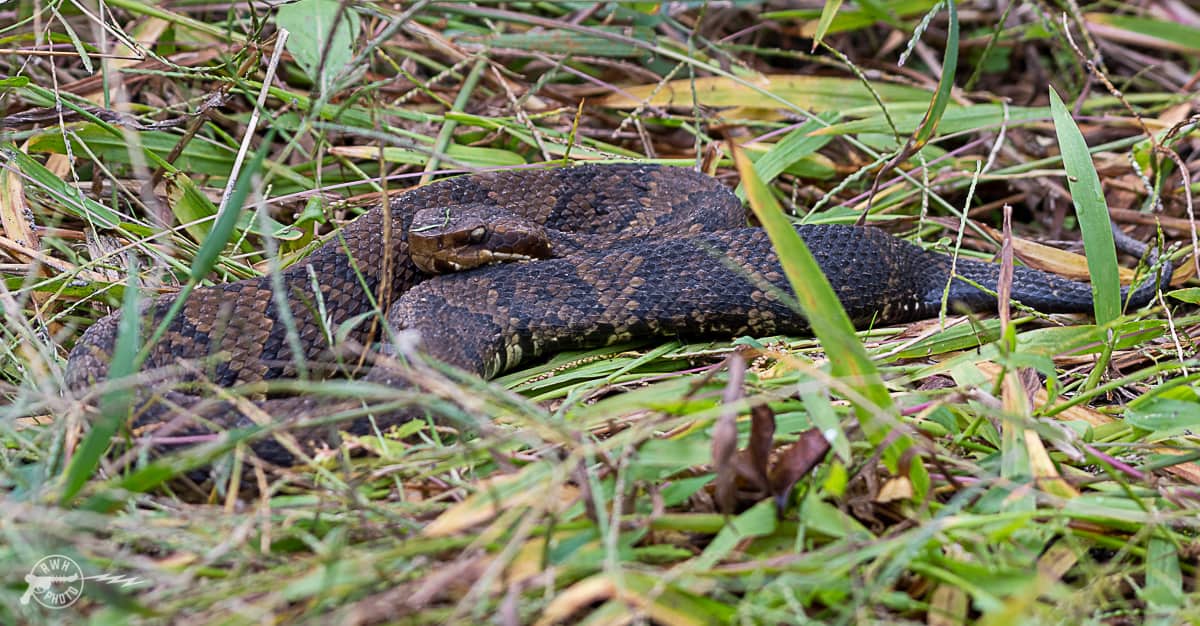

Where Spotted: Back Bay Nature Preserve near Virginia Beach (October)
Common Name: It has many, cottonmouth, water moccasin, swamp moccasin, black moccasin, or simply viper
Scientific Name: Agkistrodon piscivorus
Length: 26 to 35 in for males – females run a little smaller
Weight: 10.32 to 20.44 oz for males – 7.09 to 8.96 oz for females
Quick Facts Courtesy of Live Science
- The name ‘cottonmouth’ comes from the white coloration of the inside of the snake’s mouth.
- The water moccasin, North America’s only venomous water snake, has a distinctive blocky, triangular head; a thick body; and a dangerous bite. Water moccasins rarely bite humans, however, and only attack when threatened.
- Water moccasins are pit vipers, like copperheads and rattlesnakes. Alll pit vipers have heat-sensing facial pits between their eyes and nostrils. These pits are able to detect minute differences in temperatures so that the snake can accurately strike the source of heat, which is often potential prey.
- Juveniles have bright-yellow tail tips that they use as a caudal lure to attract prey. They undulate the tail tip slowly back and forth to lure prey, such as frogs, within striking distance.
- Females give birth to live young every two to three years, in litters of about 10 to 20 babies.
- Babies are born brightly colored and take off on their own as soon as they’re born. Parents do not care for them.
- Water moccasins are often confused with nonvenomous snakes, leading to the death of many harmless snakes. According to the Virginia Herpetological Society, one such species is the northern water snake (Nerodia sipedon). It looks similar, but the crossbands on the back of the snake do not widen at the ends. Another snake often mistaken for the cottonmouth is the nonvenomous brown water snake (Nerodia taxispilota), which has most of its body below the water when in motion and only the head showing when it’s motionless, unlike the cottonmouth, whose entire body is on the surface of the water.
If you’re a fan of original content like those photos above be sure to give our Instagram and Dickie’s Backyard Bird Blind Bonanza on FB a follow and consider making a donation.
[wpedon id=”165378″]


Shrimp at Richmond SPCA
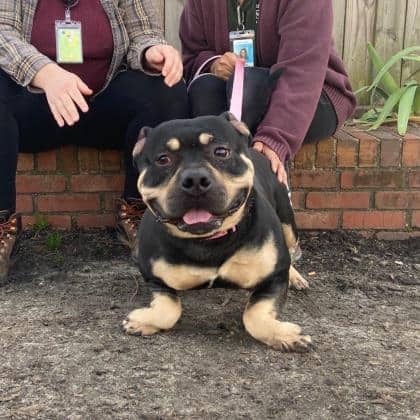

Shrimp is a hilarious, loving, and silly dog. She has a severe case of elbow dysplasia that causes her legs to bow out, and gives her a very odd gait when she walks. Her elbow dysplasia really doesn’t slow her down though, and she is still in good spirits!
She also has a condition called Brachycephalic Airway Obstruction where her soft palate is elongated. These medical needs will require long term treatment, but despite these conditions, Shrimp is happy go lucky, very affectionate, and very playful. She loves toys but likes to snuggle even more.
Age: 2 years,
Gender: Spayed Female
Color: Black / Tan
Size: L (dog size guide)
ID: 46369399
Adopt Shrimp at the Richmond SPCA
In response to COVID-19 and in order to reduce visitor traffic, observe necessary social distancing and to best protect the health and wellbeing of our staff and members of the public, Richmond SPCA have transitioned to adoptions by appointment only. Please review their adoption appointment process.


