Downtown
Benedict Arnold and the Burning of Richmond

This past Sunday, January 5th, St. John’s Church hosted Benedict Arnold’s Raid on Richmond. In attendance were reenactors that discussed various aspects of the events, uniforms, tactics, and answered any question thrown their way.
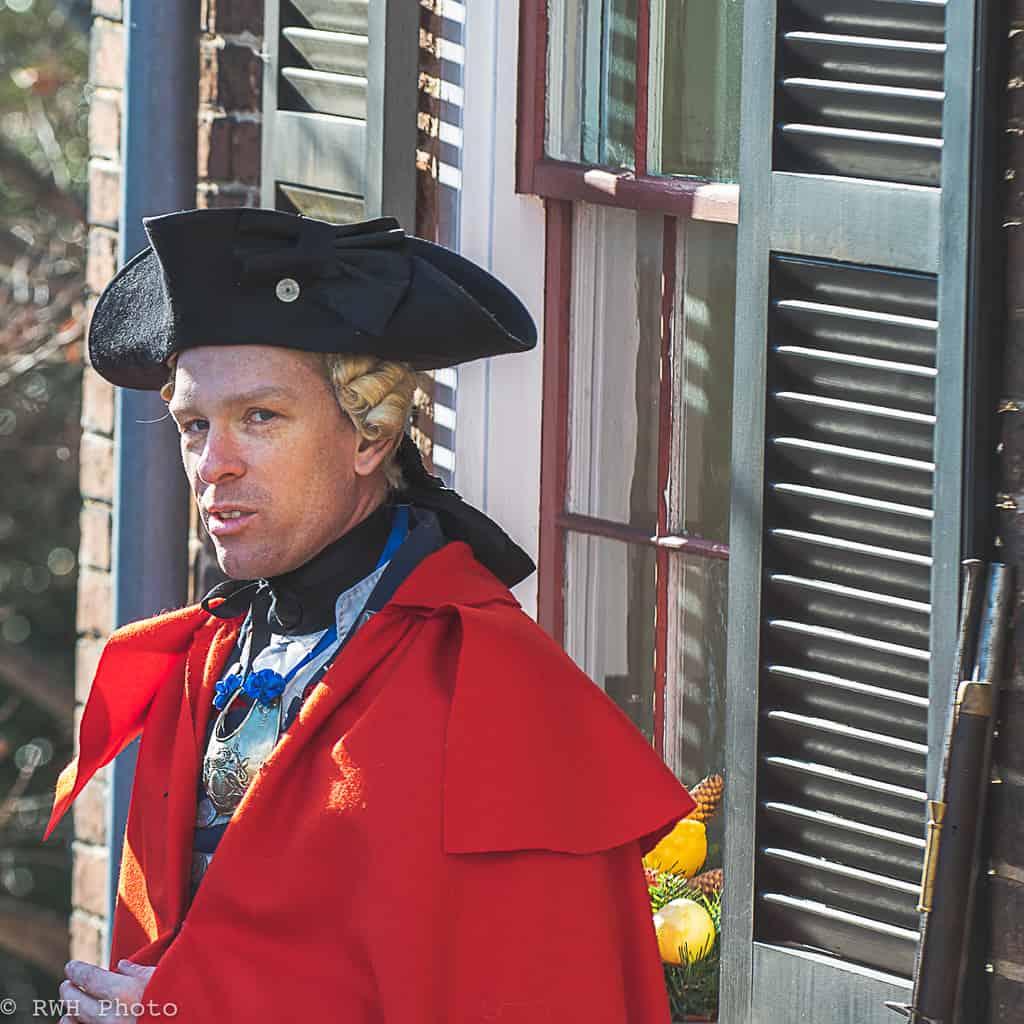

Benedict’s Arnold’s raid against Richmond and the surrounding area took place from January 1st through January 19th in 1781. Arnold (the traitorous rat but former military hero) and his troops sailed the James and torched/raided various locations on the way up.

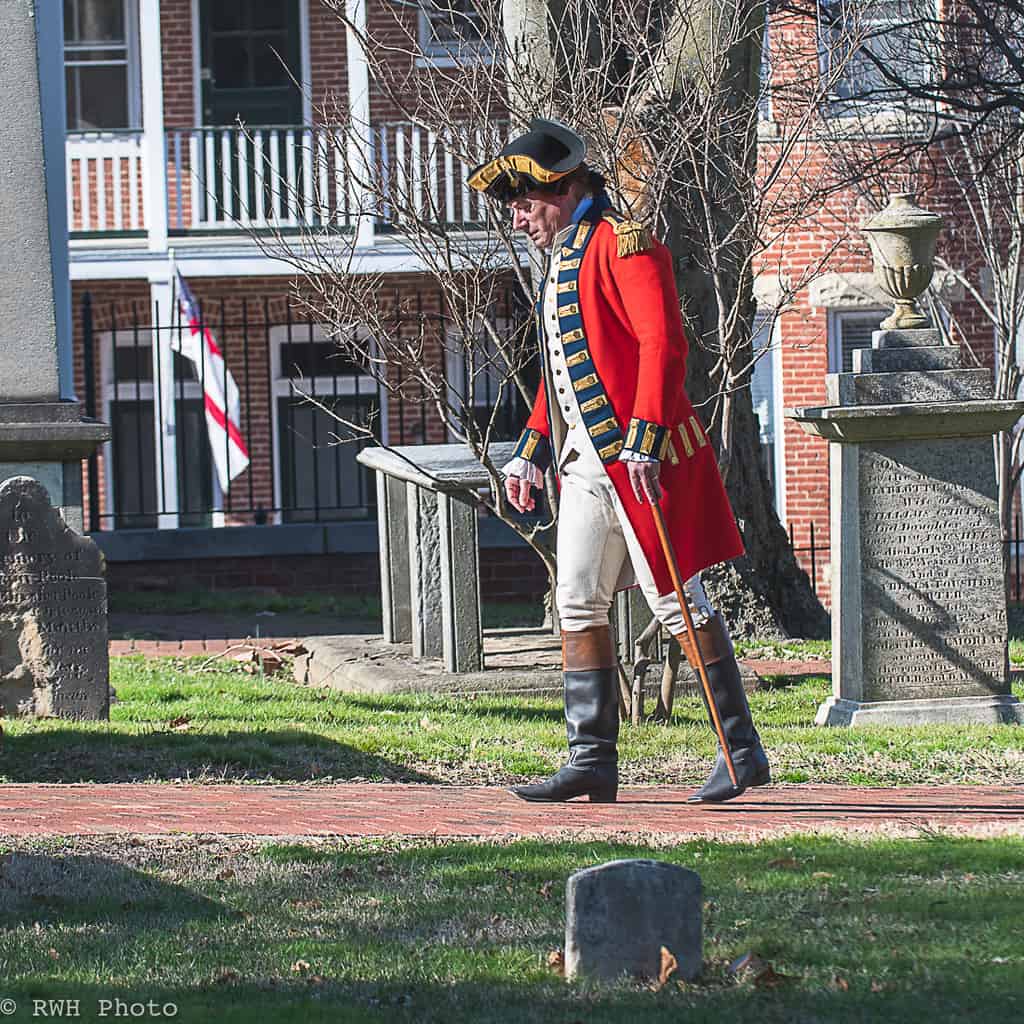
Benedict Arnold wondering where it all went wrong.


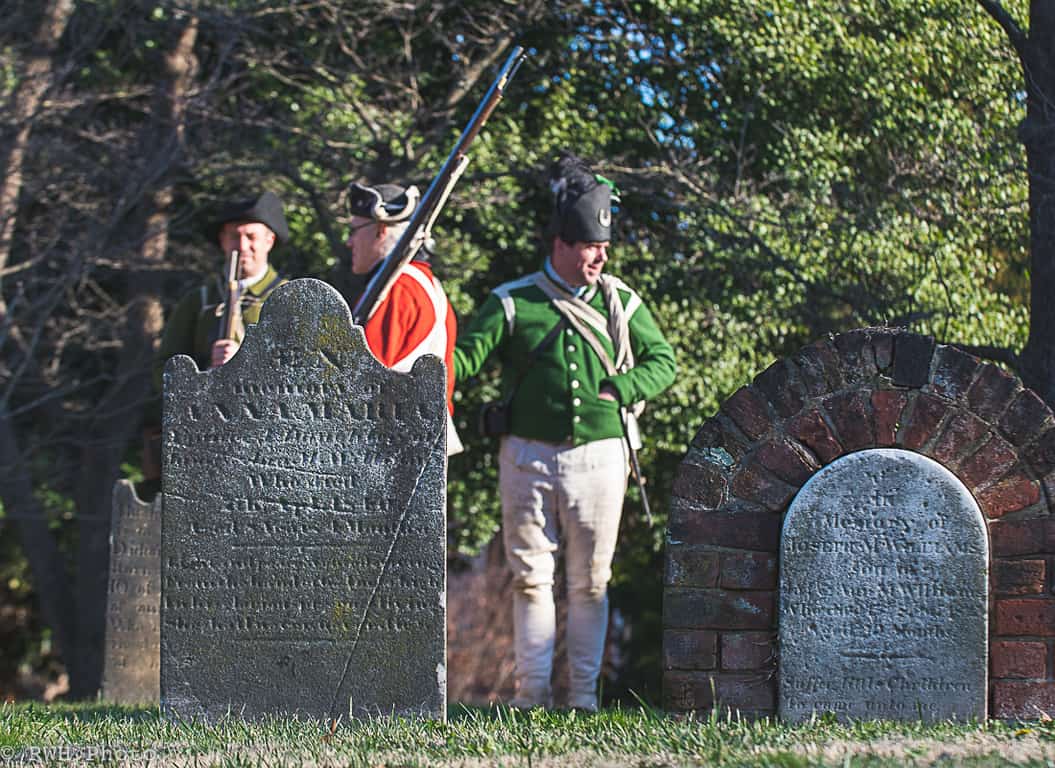
Consorting of various groups of soldiers.
Upon arrival at Richmond on the 5th, the Virginia militiamen didn’t feel much like fighting and split. Arnold and his men strolled into Richmond and found a healthy pile of tobacco and arms. Arnold sent a letter to President Jefferson giving the president the option of letting Arnold and his men take the loot and leave the city. Jefferson told Benedict to get bent received on January 6th which sent Arnold and his troops on pillaging and burning extravaganza.
Eventually, the rebels got off their butts, got organized and fought back. Ultimately leading to Arnold’s retreat back to Portsmouth.

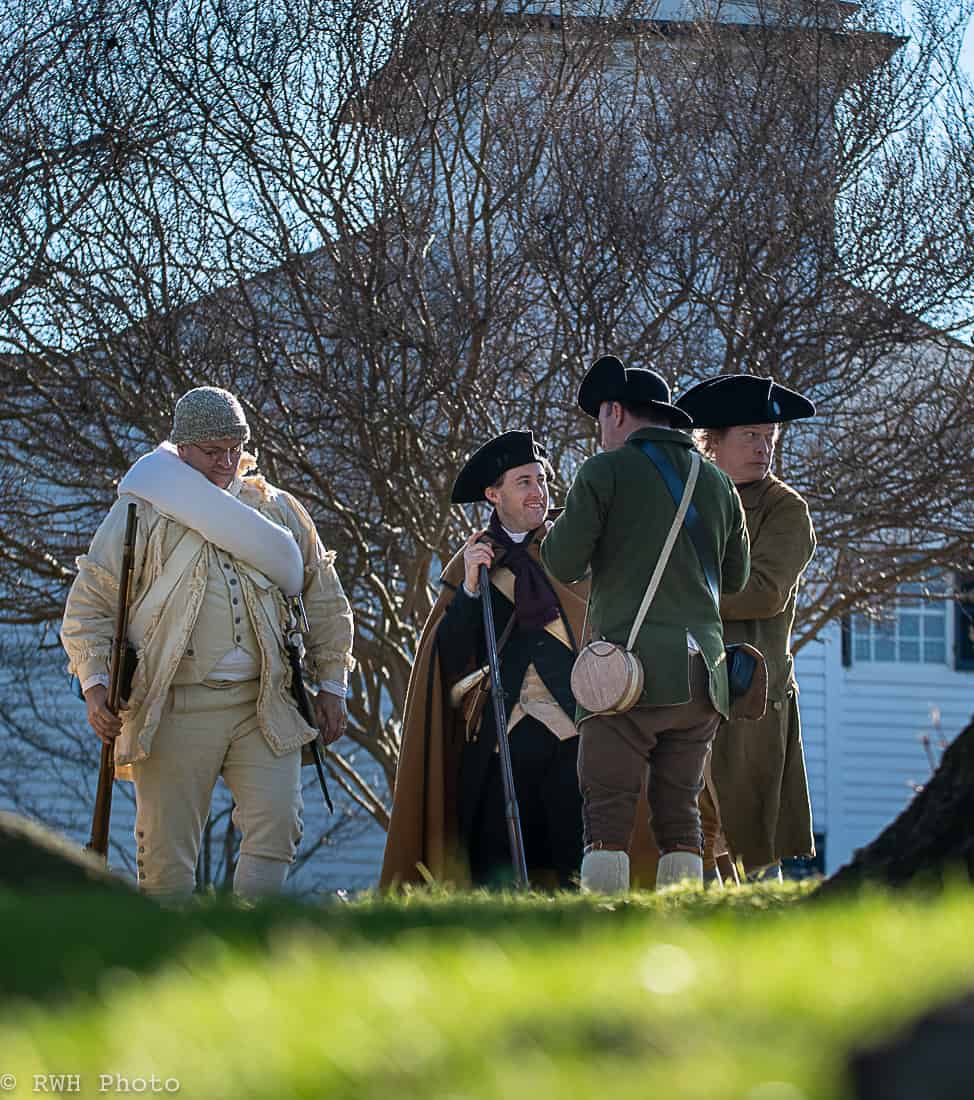
Rebel soldiers plot their next move.
Considerably more details snagged from Wikipedia:
On 4 January, the British reached Westover Plantation, where they would ready themselves for the assault against Richmond. In the afternoon, Arnold and his men disembarked on foot towards Richmond.
The following day, Arnold’s force of Loyalist “green-coats” (seen above in our header image), consisting of infantry, dragoons, and artillery, arrived at Richmond, which was defended by about 200 militiamen. Surprisingly enough, most Virginia militiamen had not bothered to defend their capital because they had already served their time in battle, and thought that their duty was up. Upon seeing the group of Virginia militiamen, Colonel John Graves Simcoe, of the Queen’s Rangers, ordered a detachment of soldiers to confront them. The militiamen fired a weak musket volley at the advancing British, and then broke and ran into the woods, with the Loyalist detachment chasing after them. Jefferson, seeing his militiamen dispersed, and no other plausible way to defend Richmond, quickly ordered the mass-evacuation of most military supplies from the city, and promptly fled in his carriage, along with the rest of Virginia’s government officials and his family.
At noon, Arnold’s forces marched triumphantly into the city, described by an eyewitness as “undisturbed by even a single shot.” From his headquarters at Main Street’s City Tavern (he would only stay in Richmond for a day), Arnold wrote a letter to Jefferson, saying that if he could move the city’s tobacco stores and military arms to his ships, he would leave Richmond unharmed. Jefferson’s response was livid, refusing that a turncoat do anything to Richmond’s supplies.[2]
Upon receiving the letter the next day on January 6, Arnold was enraged, and ordered Richmond to be set to the torch. British troops then started a rampage across the city, burning government buildings as well as private homes, ransacking the city of its valuables and supplies. A strong wind spread the flames even more, adding to the destruction. After most of Richmond was burned and its valuables sacked, Arnold led his forces outside of Richmond and to the Westham cannon foundry, which held even more armaments, and preceded to burn it down. After its destruction, the British went down to the port town of Warwick (across the James river, in Chesterfield County), and began another spree of violence, burning down homes and looting buildings.
When the news of Richmond’s destruction reached Jefferson, he was aghast. Arnold’s British force had entered Virginia’s very capital, unopposed, and had singlehandedly defiled it. The Governor called his friend, Sampson Mathews, the Colonel of the Virginia militia, and ordered him to assault Arnold’s forces. Mathews built up a group of around 200 militiamen, and embarked hastily to catch and damage Arnold’s slow-moving army near Richmond.
Eventually, delayed by bad weather, sickness and mutiny, Mathews’ forces caught up with Arnold’s army, and attacked it by surprise. Using nimble tactics popularized by American commander Nathanael Greene, the militiamen managed to inflict significant casualties on Arnold’s army, and over the following days, the British ranks were thinned by multiple skirmishes around Richmond and the James River. Eventually, Arnold considered the skirmishes between his American Legion and the Patriots to be so serious, that he ordered his army to retreat to Portsmouth, in order to set up defensive fortifications there and wait for reinforcements.
Thus, the British army moved quickly down the James River, burning more plantations and homes in their wake, while still being chased by Mathews. One of the plantations that Arnold’s men burned on their retreat was that of Berkeley Plantation, the home of Founding Father Benjamin Harrison V. Harrison was going about his regular duties in his mansion, when he saw the British force advancing towards his plantation. He quickly informed his wife and children, and they then escaped in a carriage. Arnold knew that Berkeley belonged to Harrison, whom he viewed as a traitor, and wanted to punish him for treason against Great Britain. All of the Harrison family’s portraits and artwork were taken outside and 40 of Harrison’s slaves were confiscated. Arnold spared Harrison’s mansion and houses, however, as he believed the war would soon be won by the British, and desired a grand plantation in which to live after the war. The only original portrait of Harrison to survive was the miniature around his wife’s neck, wearing it as she fled from the British forces.
On January 19, the Richmond Campaign ended, when Benedict Arnold’s weary troops reached Portsmouth. They had survived a great ordeal, and Arnold was praised by local Loyalists, as well as his superiors, to be a hero. On the same day, General William Phillips arrived to relieve Arnold with 2,000 fresh troops, and to assume command over Portsmouth’s defenses. Even though days of turmoil had ended, they would live on as some of Benedict Arnold’s finest hours.

