Downtown
Must-See RVA! — St. Alban’s Hall
A look into the history of Richmond places that are still part of our landscape.

AKA, The Crenshaw Building
300-302 East Main Street
Built, 1869
VDHR 127-0130
The first institutional building erected in Richmond following the Civil War.

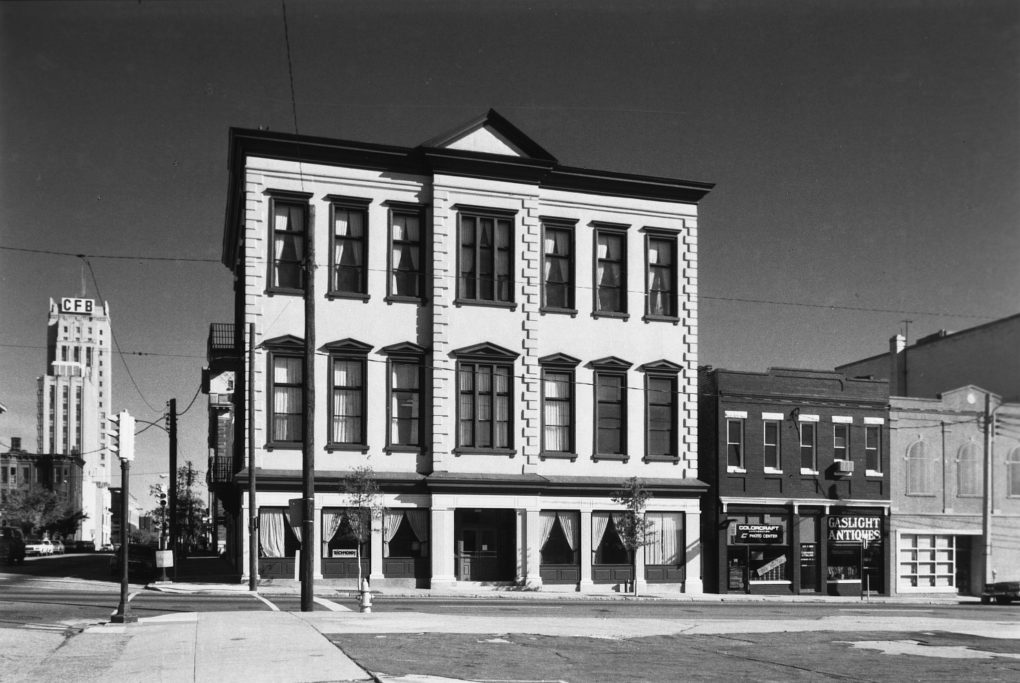
(VDHR) — 1983 nomination photo
Construction of St. Alban’s Hall began two years after central Richmond burned at the end of the Civil War and marked the beginning of the city’s revival. The Hall consisted of shops, a concert hall, as well as Masonic meeting rooms, and served as an important focus of post-war Richmond’s social and political life. The combination of commercial, cultural, and Masonic facilities in one building provided the prototype for later Masonic buildings in Richmond. The architectural style of the building shows the influence of the Renaissance Revival or Tuscan Palazzo mode widely used in the urbanizing North in the 1850s and ‘60s, but rarely found in the South because of the war. The style is the forerunner of the more exuberant High Victorian Italianate which achieved popularity in the 1870s.

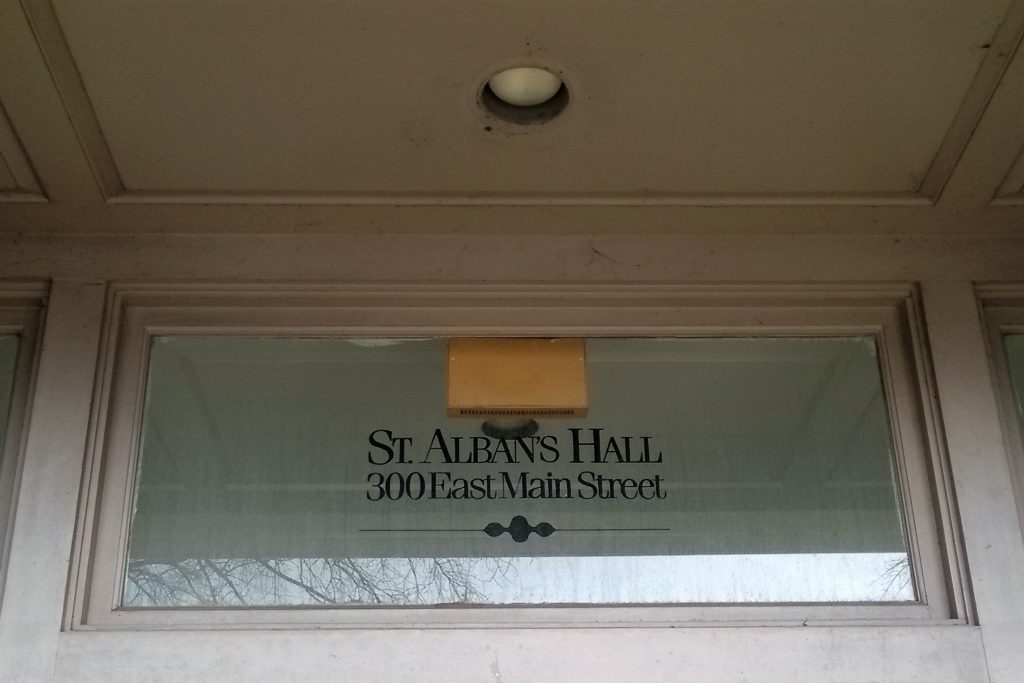
December 2016
Architectural activity in the immediate post-war period in Richmond was related to the reconstruction of the burned district. The need to rebuild the mills, shops, and offices of this area took precedence over all other construction! thus new institutional, church, and public buildings were rare in the city at this time.
The later 19th century was the heyday of fraternal and social organizations in the United States. The oldest and the most influential of these organizations in Richmond were the Masons. Richmond’s first Masonic lodge was established in 1780, and by 1800 there were five lodges in the city. These were Richmond Lodge #10, 1780; Richmond Randolph Lodge #319, 1787; St. John’s Lodge #36, 1792; Jerusalem Lodge #54, 1797; and the Richmond Royal Arch Chapter #3, 1792. Additional lodges were established throughout the 19th century.
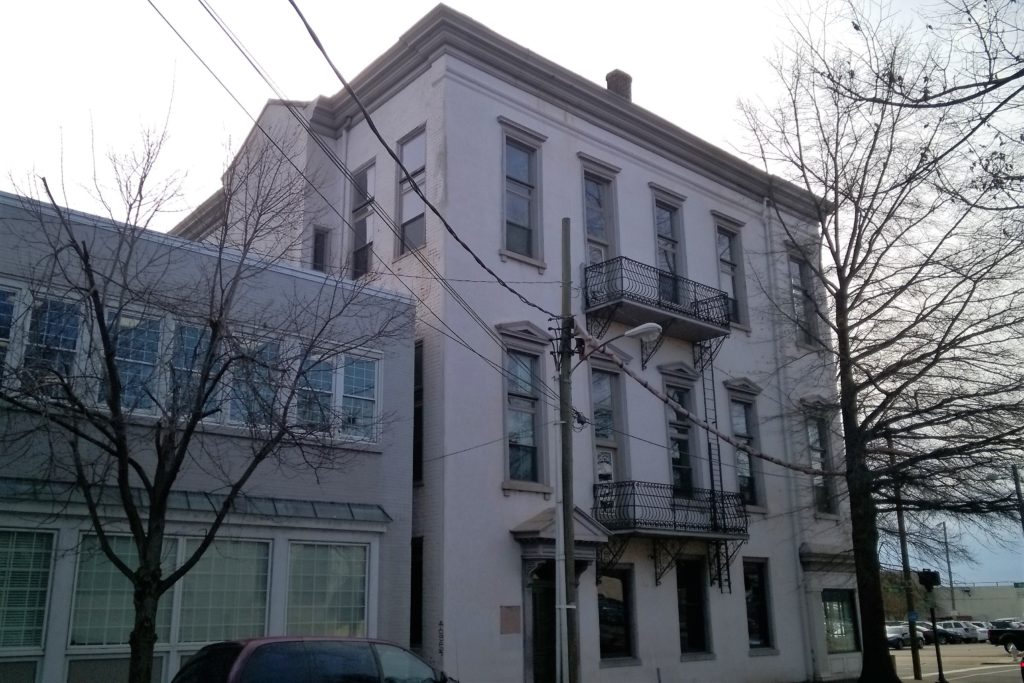
December 2016
Most of these early organizations met in the Mason’s Hall on Franklin Street in Shockoe Valley. Built in 1785-87 and erected by Lodge #10, this building still exists and is one of the most important early landmarks of Richmond.
The first hall was in the heart of 18th-century Richmond. Eighty years later the center of Richmond had shifted to the west and the original hall was inconveniently located for the western residential areas. St. Alban’s Hall was built by Metropolitan Lodge 1/11 and by Joppa Lodge #40, Ancient, Free and Accepted Masons, to provide meeting spaces nearer the homes of the members. Newly founded Joppa Lodge had been established in 1867.
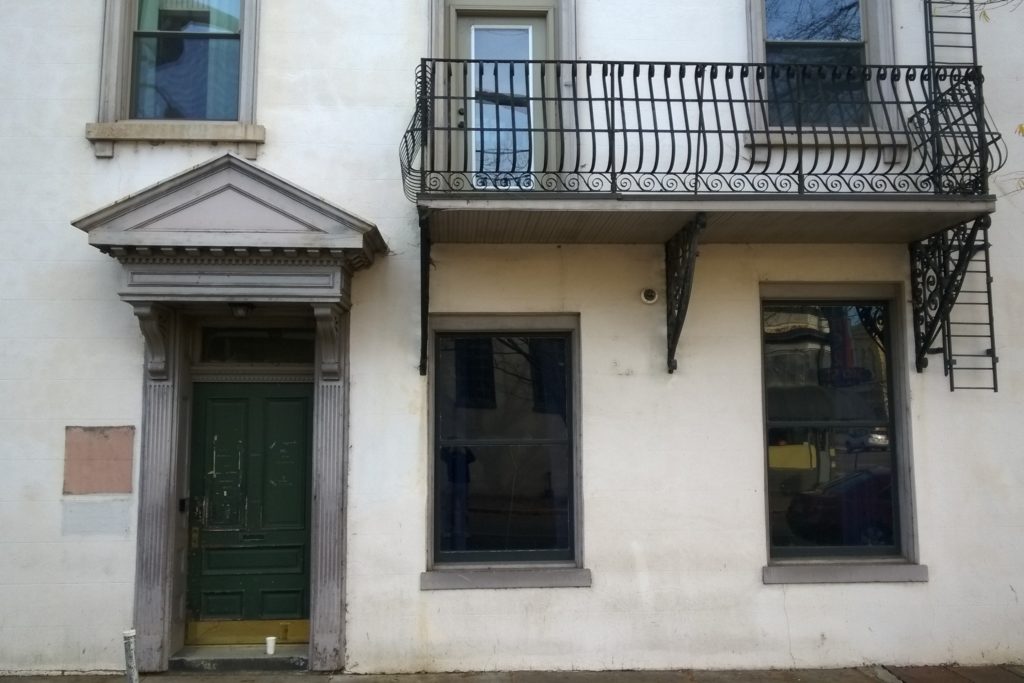
December 2016
Erected at the corner of 3rd and Main Streets, St. Alban’s Hall was in the heart of Richmond’s most prosperous residential area. To the north were the mansions and substantial residences of Franklin and Grace Streets. To the south were the more modest middle class homes of Gamble’s Hill. Thus, this was an ideal site for the Hall.

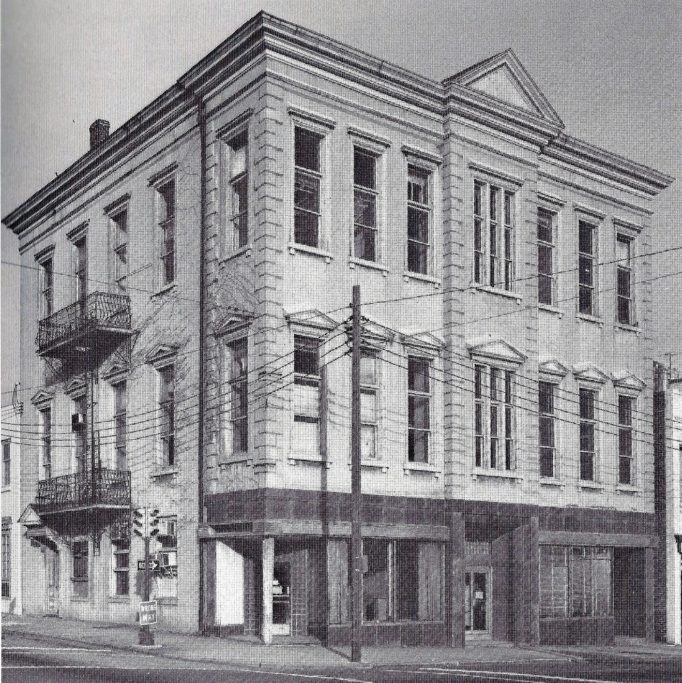
[ADR] — 1982
In the 1940s, major alterations were made to the building for the first time. It was then renamed the Crenshaw Building after its new owners. The storefront was removed and replaced in cast stone. The upper floors were subdivided for offices. An elevator and new stair were erected in the middle of the building, and the rooms were entirely renovated. By the 1970s the offices became gradually less desirable, and by 1980 much of the building was vacant and in need of repair.
Today, the structure is being totally rehabilitated. With the exterior restored to its original appearance and the interior retained as offices, St. Alban’s Hall will be preserved as a rare post-Civil War institutional landmark in Central Richmond (VDHR)
(St. Alban’s Hall is part of the Atlas RVA Project)
Sources
- [RVCJ03] Richmond, Virginia: The City on the James: The Book of Its Chamber of Commerce and Principal Business Interests. G. W. Engelhardt. 1903.


Must-See RVA! is a regular series
appearing on rocket werks – check it out!

