Downtown
Must-See RVA! — Pace-King House
A look into the history of Richmond places that are still part of our landscape.

AKA, Charles Hill House
205 North Nineteenth Street
Built 1860
VDHR 127-0229
August 2016
An Ice Queen lived here. It’s not what you’re thinking.
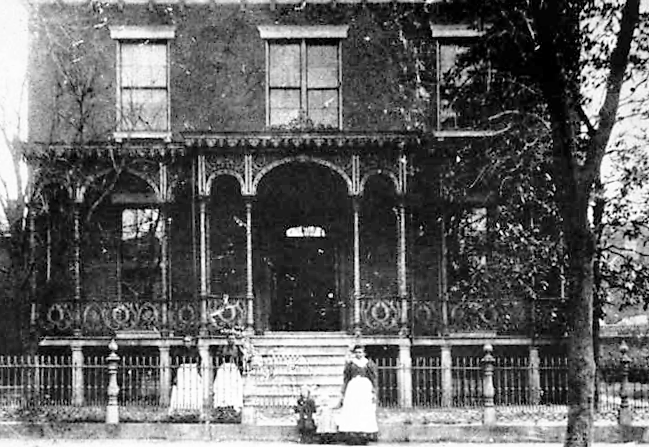
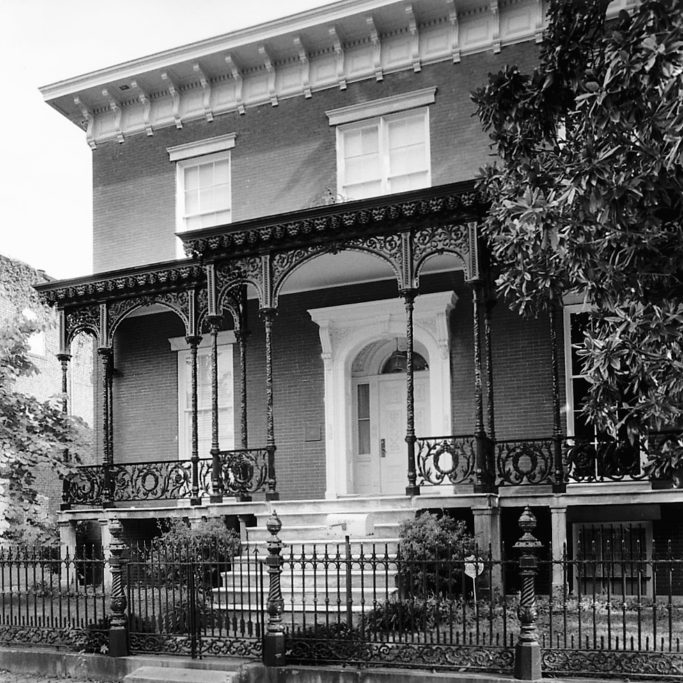
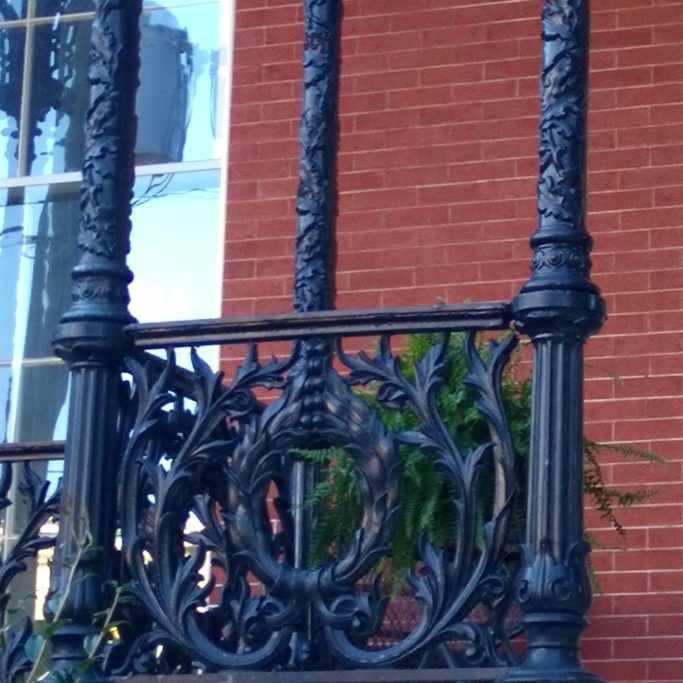
The Pace-King House survives as a rare example of the grand mansions erected in Southern cities on the eve of the War Between the States, Completed in 1860, it represents a final expression of taste in domestic architecture before the dissolution of the Old South. Of particular architectural interest is its festive cast-iron porch which ranks among the most outstanding examples of this art form in a city famous for its ironwork. The house is also a key element in the cluster of old buildings surrounding the late eighteenth-century Adam Craig House, one of the earliest remaining dwellings in Virginia’s capital. This group of houses forms the nucleus of Shockoe Valley, Richmond’s oldest neighborhood, the area laid off by William Byrd, founder of the city, in 1737.

[ORN]
Historically, the Pace-King House is associated with many personalities prominent in Richmond’s commerce and government. The dwelling was erected in 1860 (on the site of an early frame house) as the residence of Charles B, Hill, an active member of the local Democratic party and a long-time alderman of the old Jefferson Ward. A descendant of Col. Humphrey Hill of King and Queen County, Charles Hill made his living as an auctioneer. His house stands as a measure of his professional success, as it was initially valued at $20,000.00, a considerable sum for its time.

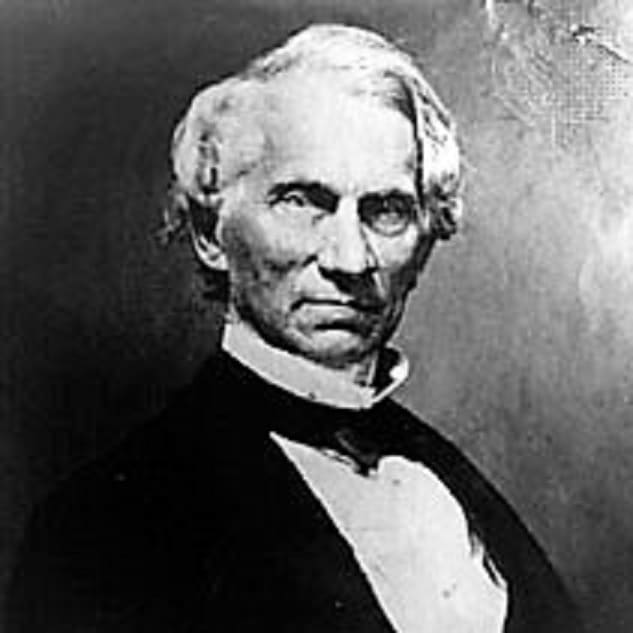
(WikiPedia) — Charles G. Memminger
Hill unfortunately did not long enjoy his new home, for by 1862, he was dead, and his : property had been acquired from his estate by Philip K. White, who formerly had resided on Church Hill in the impressive townhouse now known as the White-Taylor House. A late nineteenth-century newspaper account stated that for a time the Pace-King House was lived in by Charles G. Memminger, Secretary of the Confederate Treasury. Confederate archives do not list the house as one of Memminger’s official addresses; thus it may be that he was a guest of either Mr. Hill or Mr. White until he found more permanent quarters. The account also reported that in the house “… some of the finest entertainments were given and most brilliant receptions held that distinguish the brief but brilliant days of ‘Dixie’”. With a reception room nearly forty feet in length, the house was well equipped to provide an appropriate setting for such functions.

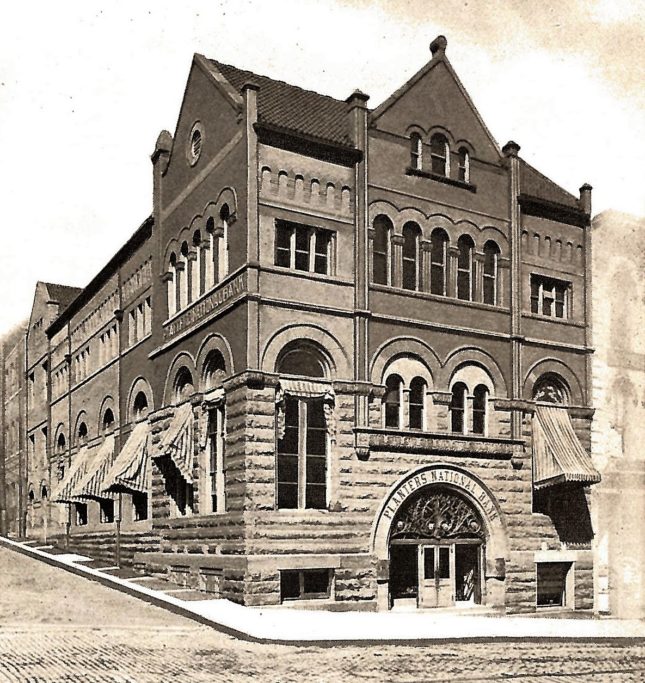
[RVCJ03] — circa 1903
Philip K. White died in 1865, and the property was sold at auction to James B. Pace, a prominent Richmond businessman. Pace owned and operated the J. B. Pace Tobacco Company whose factory was located nearby on North Twenty-Second Street, Pace also served as a president of the Planters National Bank and was one of the founders of the Virginia Trust Company. In addition to his business activities, he served as the Richmond City Treasurer from 1905 until his death in 1920.

(VDHR) — 1976 nomination photo
Pace lived in the house until 1881 when he sold it to Mrs. Jane King. Mrs. King was an enterprising woman; she ran a fuel company and a wholesale and retail ice company founded by her late husband in 1856. It was during her ownership that two of the dwelling’s out- buildings were enlarged for use in the ice business. Mrs. King’s company was no small affair. (VDHR)
When electric refrigeration was undreamed of and ice had to be brought by boat from Maine, Mrs. King’s occupation demanded energy and resourcefulness. That she succeeded in it besides raising a family, somewhat upsets the popular notion of the Victorian clinging vine. [ORN]
August 2016
Architecturally, the Pace-King House is an outstanding example of Italianate domestic architecture of ostentatious scale and embellishment. Many fine town mansions of its type were built in Southern cities, but few survive, as most were located in the hearts of the irrespective communities, on valuable real estate that soon was commercialized. (VDHR)
(Pace-King House is part of the Atlas RVA Project)
Sources
- [RVCJ03] Richmond, Virginia: The City on the James: The Book of Its Chamber of Commerce and Principal Business Interests. G. W. Engelhardt. 1903.


Must-See RVA! is a regular series
appearing on rocket werks – check it out!


