History
Must-See RVA! — American Can Company
A look into the history of Richmond places that are still part of our landscape.

AKA, Hasker & Marcuse Factory
2401 – 2413 Venable Street
Built, 1893
VDHR 127-0299
The old neighborhood factory building.
The Hasker & Marcuse Factory was constructed in 1893 to house the Hasker & Marcuse Manufacturing Company, formed in 1891 as a stock company soon after Charles H. Hasker entered into a partnership Jonas Marcuse and his sons. A prominent Union Hill citizen, Hasker was born a Londoner in 1331, immigrated to the United States while in his teens, and joined the U.S. Navy.

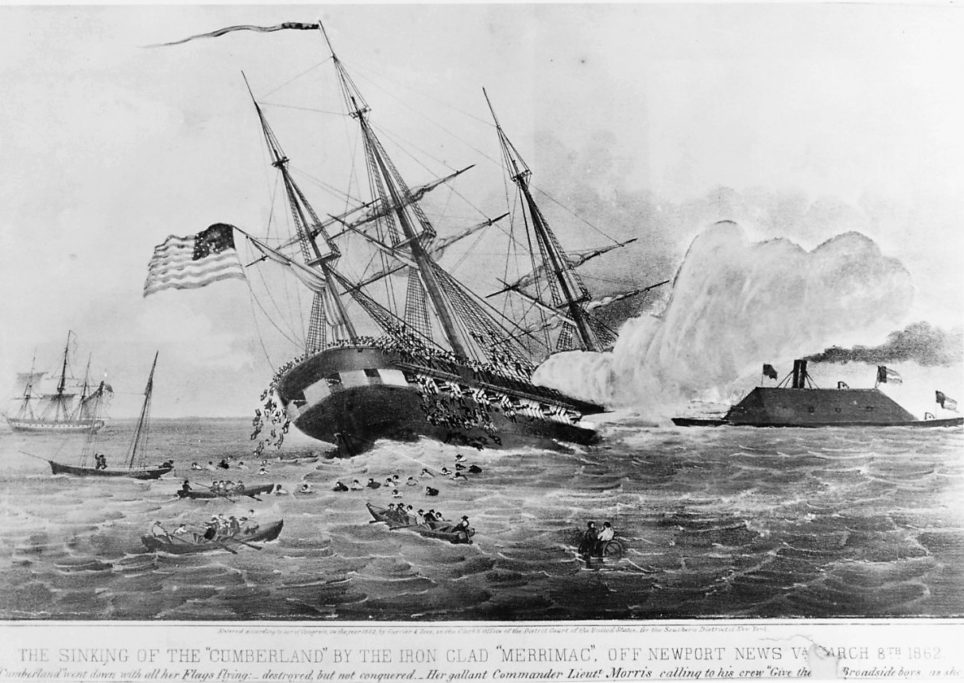
(U.S. Naval Historical Center) — USS Cumberland sunk by CSS Virginia — 8 March 1862
During the Civil War, however, he served in the Confederate Navy on the CSS Virginia (the Merrimac) and was credited with saving the ship during its epochal battle at Hampton Roads. Following his recuperation at the end of the war from an injury sustained during torpedo boat experiments, Hasker began his industrial career. In the 1870s he started an enterprise for the manufacture of small paper boxes, succeeded in the business, and then sold it to Major N. V. Randolph.

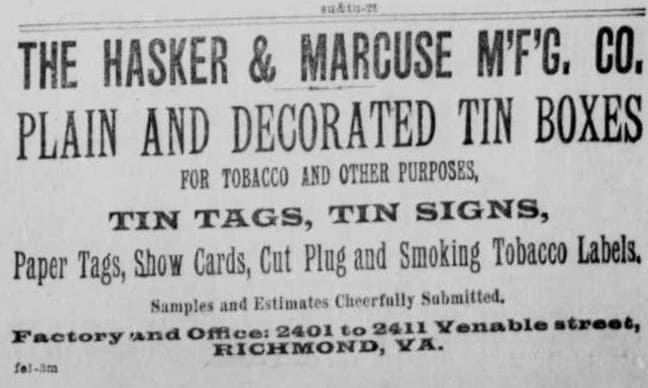
(Chronicling America) — The Times, Richmond, Virginia — May 2, 1893
Hasker next launched an operation to manufacture paper tags for tobacco plugs. Swamped with demand for his product, but needing more capital, he attracted several Richmond investors and businessmen. In 1891 the Hasker & Marcuse Manufacturing Company was formed and continued production of the paper tags from a small 2-story brick building (no longer existing) in Union Hill. As a result of the contribution of Milton Marcuse, the company added a new product–a lithographed tin tag which could be applied more quickly to the pieces (or plugs) of tobacco. By 1893, the company needed the larger quarters of the present building to produce “Plain and Decorated TIN BOXES, Tin and Paper Tags, Weatherproof Showcards.” The company employed 175 people among whom were “designers, lithographers, engravers on stone, wood and steel, and die and toolmakers.”

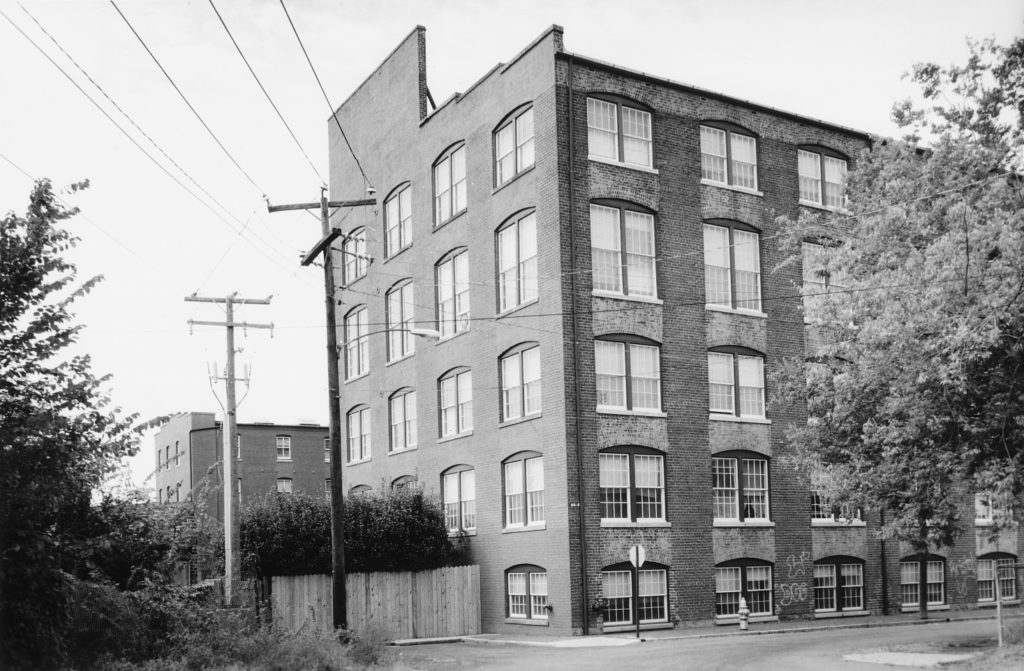
(VDHR) — 1983 nomination photo
The Hasker & Marcuse Manufacturing Company’s initial success was related to its proximity to the prominent tobacco products manufacturers located in Richmond, the largest of which in the 1870s and 1880s were Thomas and Patterson (Lucky Strike plug tobacco), and the Camerons. The state of Virginia had been the country’s top producer in tobacco manufacturing through 1880 and, though losing first place to Missouri by 1890, remained near the top throughout the 1890s. In actuality, the Hasker & Marcuse Manufacturing Company marketed their products from New York to North Carolina and probably to St. Louis.


March 2015
Another reason for the company’s success in the early 1890s is related to the intense competition in the tobacco industry that culminated in the late 1880s. The tobacco products manufacturers promoted recognition of brand names by using such innovative techniques of merchandising as displaying the brand name of name of the manufacturer on the tin and paper tags fixed to the chewing plugs and pasting highly colored, lithographed “head labels” (top labels) on the wooden boxes of chewing tobacco. The decade from 1890 to 1900 saw the formation of the huge tobacco conglomerates–the American Tobacco Company, which controlled 90 per cent of the country’s cigarette manufacture, and the Continental Tobacco Company which handled plug tobacco.

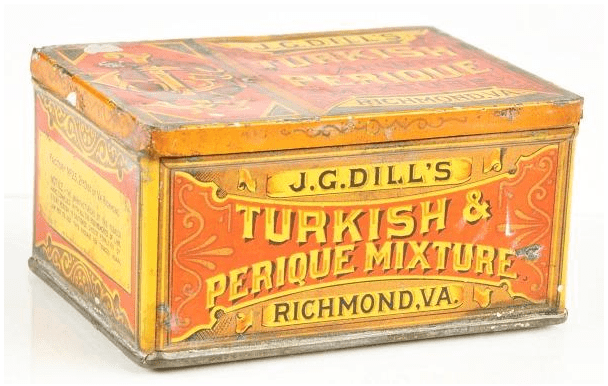
By 1900 the merchandising value of consumer product packaging was established for tobacco products as well as for other consumer goods. Indeed, the Hasker & Marcuse Manufacturing Company was one of about 100 independent container manufacturers (not exclusively tin) that were consolidated in 1901 to form the American Can Company which rapidly became a leader in the packaging industry. The American Can Company continued the production of flat cigarette tins and large tobacco tins in the Hasker & Marcuse Factory until the end of 1951 when the machinery was moved to one of the company’s factories in the west.

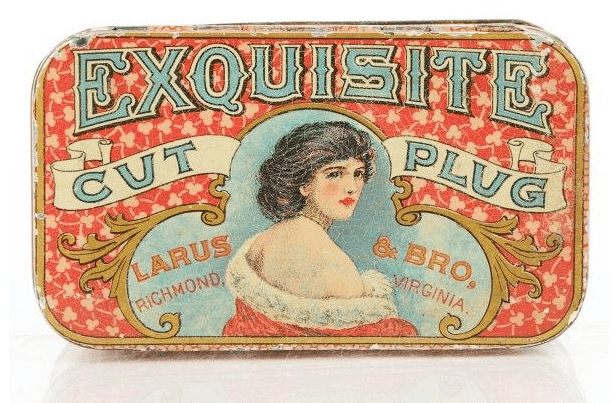
Alec Davis in Package and Print: The Development of Container and Label Design (1967) traces the history of the development between the 1850s and 1900 of the tinplate printing process. Tin boxes were important for long storage, difficult transport, and, in the case of tobacco products, moisture-free storage. Early metal boxes were decorated with paper labels but these were too vulnerable. Direct printing on the metal itself proved to be unsatisfactory because the tinplate does not absorb ink as paper or board does. Transfer printing, in use from about 1873 to 1893, consisted of printing designs on thin transfer paper which was then applied to the tinplate in a way similar to the process of enameling. The method that eventually solved the problem was a process whereby the design from the lithographic stone was printed on a glazed cardboard (later rubber) blanket first and then was immediately offset from the blanket on to metal sheets.


March 2015
Davis also notes the dearth of tin-printers in the United States in 1888 (only three listed in the Lithographer’s Directory). Thus the Hasker & Marcuse Manufacturing Company was in the forefront of the tin-printing industry in 1893. (VDHR)
Today, the old factory building serves as a senior living center.


Must-See RVA! is a regular series
appearing on rocket werks – check it out!


