Downtown
Must-See RVA! — Putney Houses
A look into the history of Richmond places that are still part of our landscape.

Samuel Putney House
1010 East Marshall Street
Built 1861
Architect, SWA (1981 restoration)
Bye, bye Greek Revival!

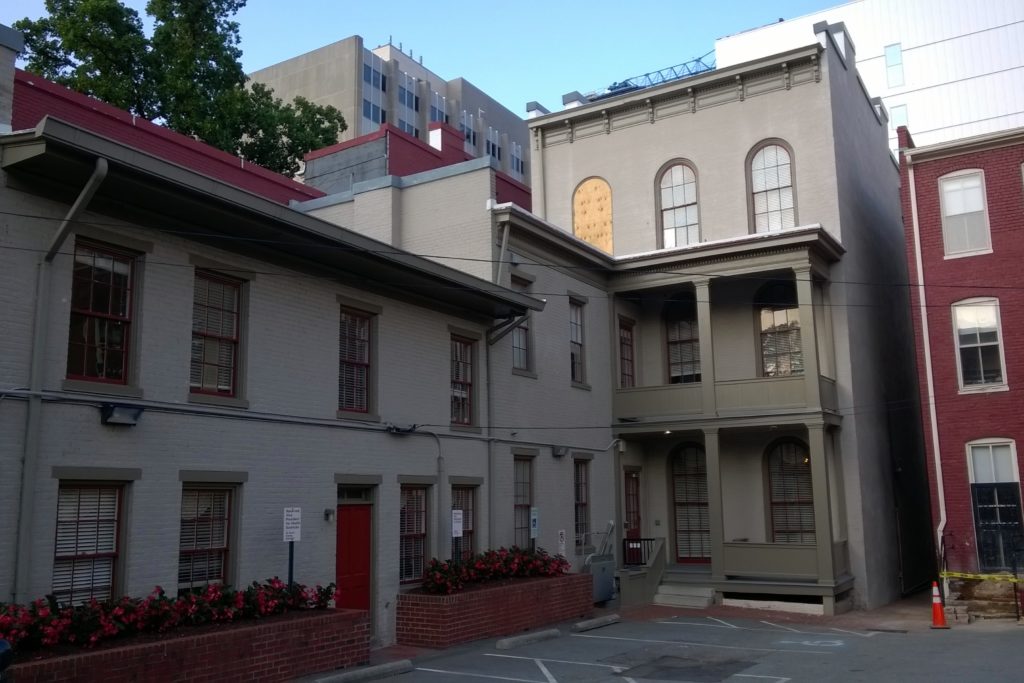
July 2015
Built for Samuel Putney, this house completes the transition to the Italianate style with no trace of Greek Revival. The arched windows are framed with elaborate cast iron. The cast iron porch is also notable.
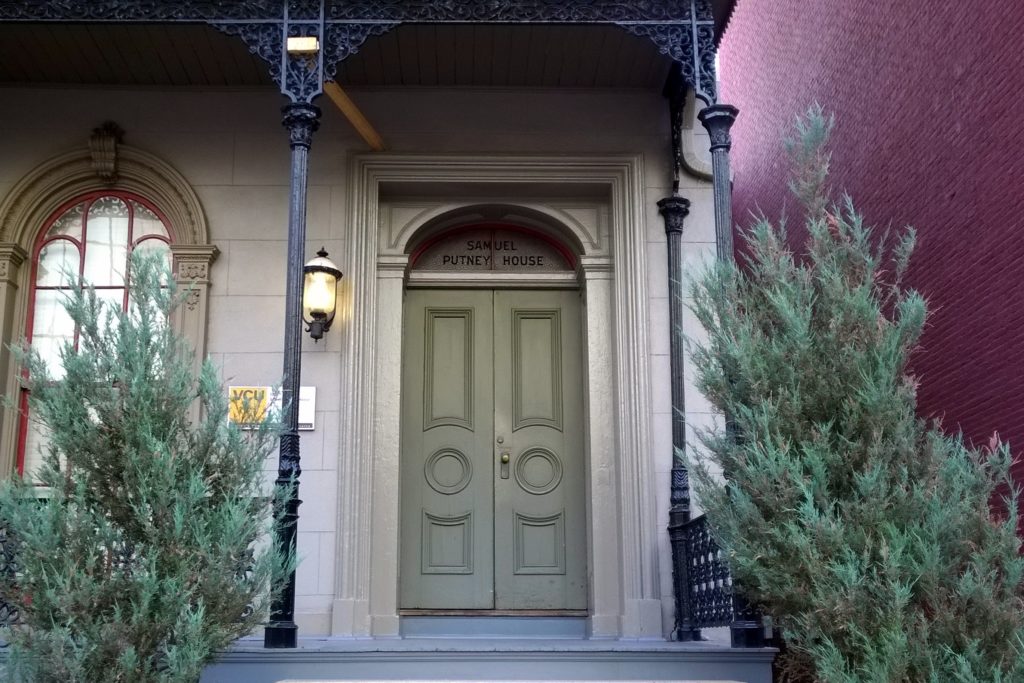
July 2015
During the recent restoration, wall paintings imitating molded panels were discovered in the major rooms. These have been carefully restored and repainted, returning the interior to its mid-Victorian elegance. [ADR]

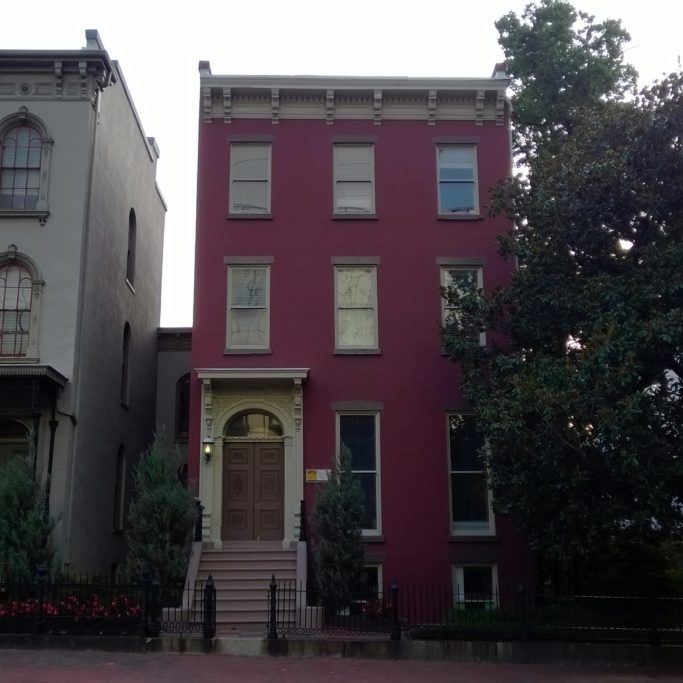
July 2015
Stephen Putney House
1012 East Marshall Street
Built, 1859
Architect, SWA (1980 restoration)
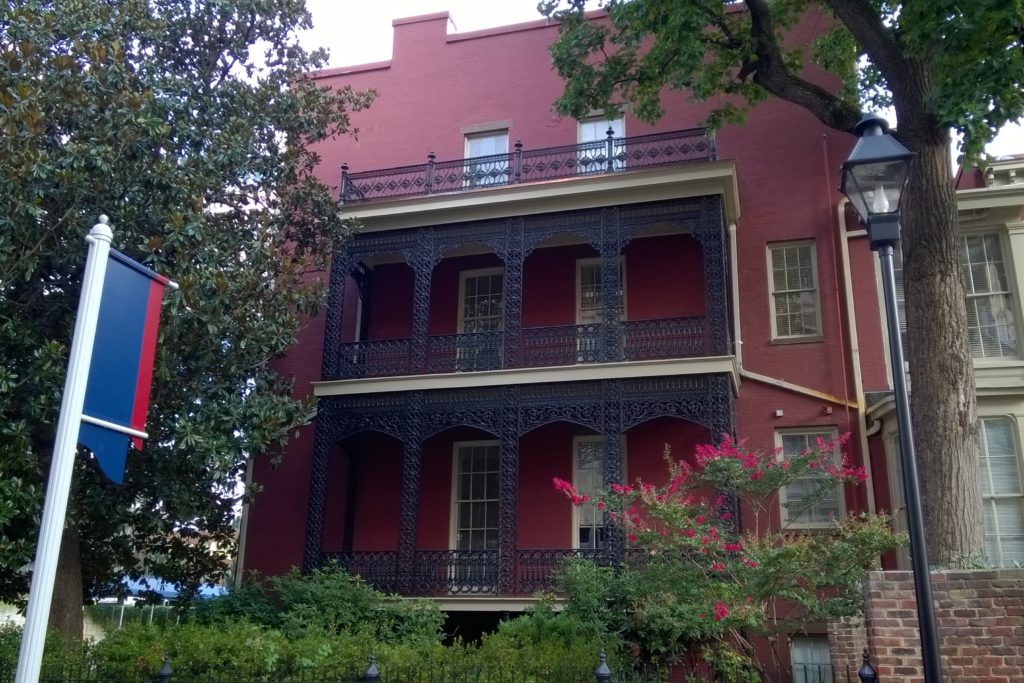
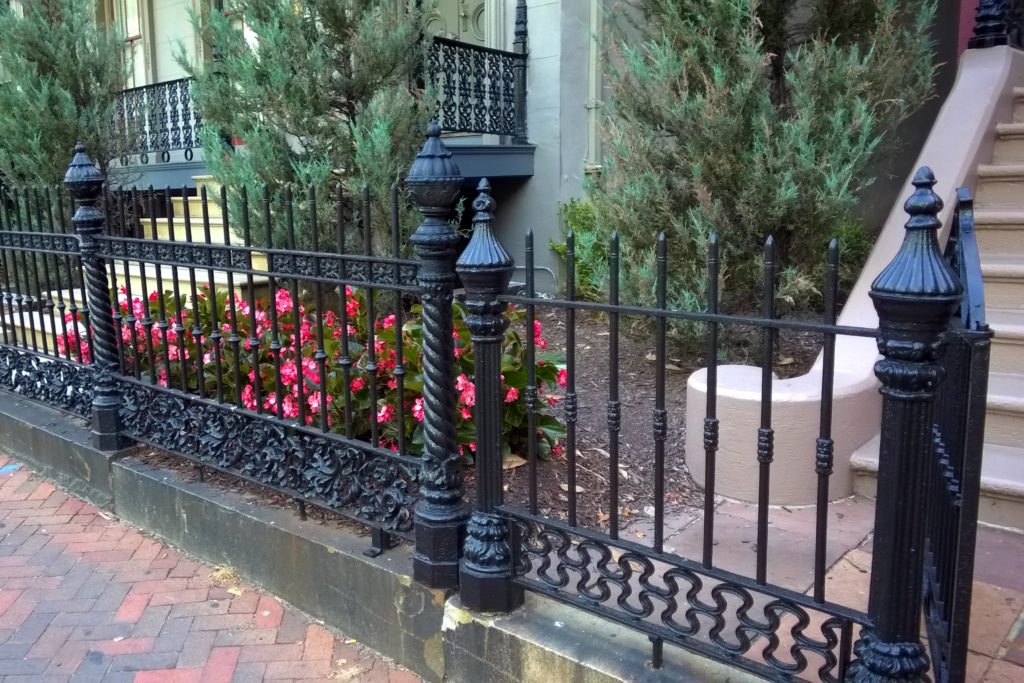
Most of Richmond’s cast-iron dates from the ’fifties and ’seventies. Both Putney houses have fine iron: the rich two-story balcony on the Stephen Putney house, 1012 East Marshall, 32 is more spectacular but less unusual in pattern than the verandah and fence of the Samuel Putney house next door. Much later in date is the vine-fence at 1001 East Clay, which cannot be earlier than 1879 when the house was built.

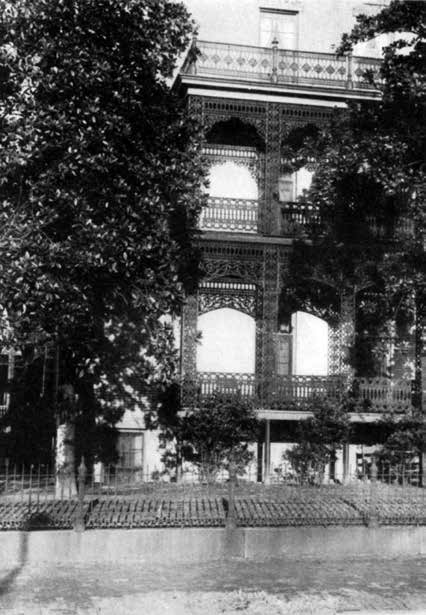
[HOR]
Equally beautiful was a post-war verandah which formerly stood at 901 East Clay, a house built in 1869. It is worth noting that in these later examples, including the houses built just before the War, the iron-work, unlike that of the Capitol fence, the Medical College or St. Paul’s, was not designed to harmonize with a fine piece of architecture but was rather intended to “dress up” a building of relatively little character. [ORN]
July 2015
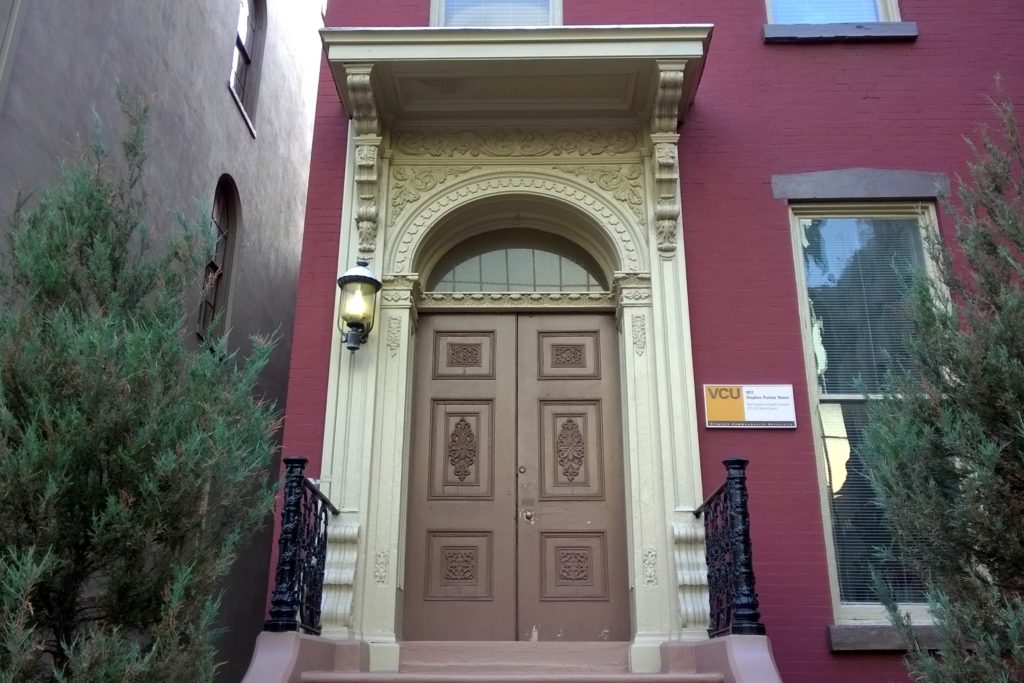
Built by Samuel Ayers in 1859, this house was owned from 1862 to 1894 by Stephen Putney, who lived there until he sold it. Putney was the son of Samuel Putney, a New Englander who had come to Richmond as a youth and become a leading dealer in shoes as well as one of the most prominent and generous laymen in the Methodist Church. His son continued the wholesale boot and shoe business of his father, and the firm (now manufacturers of shoes) is still in existence under the name of the Stephen Putney Shoe Company.
July 2015
Mr. Putney sold the house in 1894. From 1909 to 1938 it belonged to Mrs. Louise Kernodle, author of several guide books of Richmond.
July 2015
The building itself is large and plain, with a long wing in the rear. It has no trace of Greek Revival influence. What chiefly distinguishes it is the beautiful iron balcony on the side. That this was made by the Phoenix Iron Foundry is proved by a carte-de-visite photograph of it evidently used to advertise that firm and now in the possession of the son of William B. Cook, head of the Phoenix Foundry. [HOR]


Must-See RVA! is a regular series
appearing on rocket werks – check it out!

