History
Must-See RVA! — John B. Cary School

AKA, West End School, Winthrop Manor
2100 Idlewood Avenue
Built, 1912
VDHR 127-0824
Architect, Charles M. Robinson
Another Gothic Revival school, courtesy Charles M. Robinson.
The Cary School was named for Colonel John B. Cary, Superintendent of the Richmond Public Schools from 1886 to 1889. Constructed between 1912-1913, it replaced the Sidney School. It was renamed West End in September 1954, when it became a school for black students.

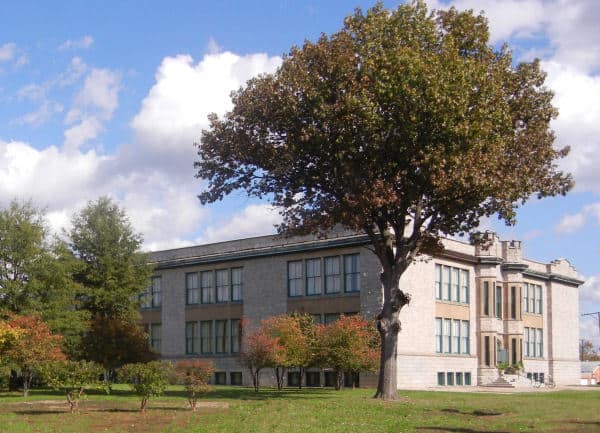
The Cary School is associated with an important period in the history of public education in Richmond. Between 1870, when the Board of Public Instruction launched its initial acquisition and development program, and 1909, capital outlay for school construction was modest. In 1909, Dr. J.A.C. Chandler was named Superintendent of Richmond Public Schools. Dr. Chandler soon initiated an ambitious construction program which was overseen by Public School Architect Charles M. Robinson. Over the next twenty years most of the extant historic school buildings in Richmond were constructed. The Cary School is one of the best examples of the schools constructed during this period. The Depression of the 1930s and World War I effectively ended school construction in Richmond. Not until after the war were schools constructed on a scale comparable to the 1909-1929 period.

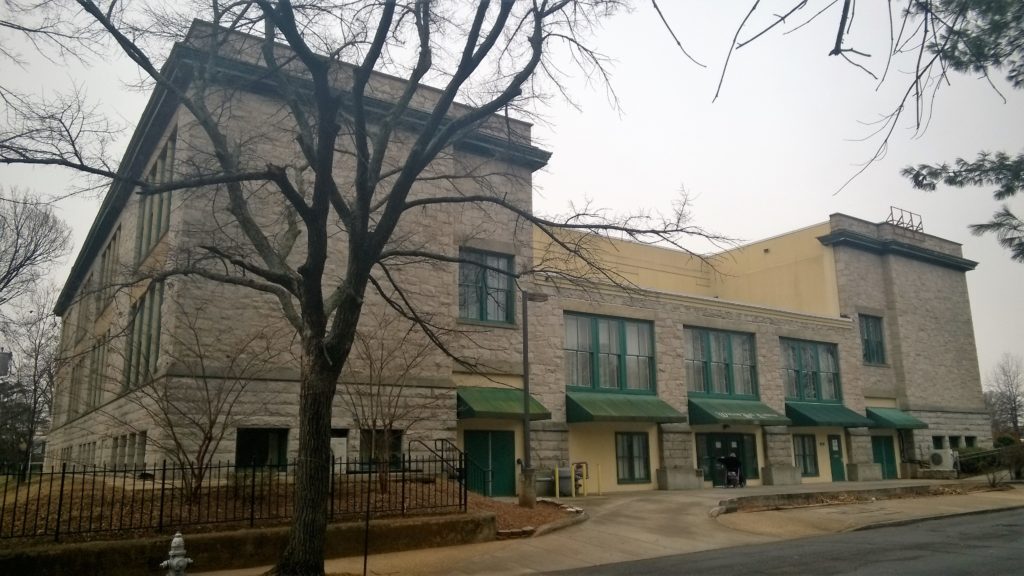
January 2017
The Cary School was designed by Charles M. Robinson (1867-1932), a significant Virginia architect, particularly noted for his design of educational buildings.
Robinson was supervising architect for the Board of Public Instruction of the City of Richmond between 1910 and 1929. In addition to the Cary School, he designed the William Fox School, the Albert Hill School, and Thomas Jefferson School among others.
The Cary School was constructed by the Wise Granite Company of Richmond from locally quarried stone. It is a relatively rare example of the use of granite within the city of Richmond, where brick has been the most common masonry material. It is one of only two extant school buildings in Richmond which is extensively faced with granite. The granite lends greater authenticity to the Gothic styling whose origins date to the Medieval period and are closely associated with the architecture of churches and fortifications.
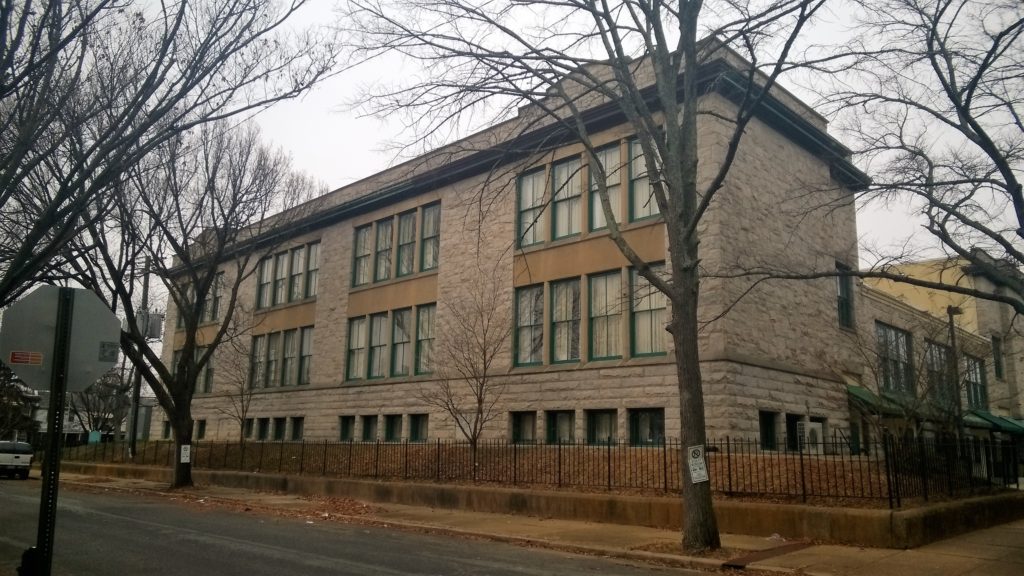
January 2017
During the 1830s the Gothic Revival became fashionable principally through the work of Alexander Jackson Davis, the country’s most prolific practitioner of the style. Davis’s plans for houses and cottages were widely distributed in the popular books of Andrew Jackson Downing. Downing produced several pattern books which illustrated the suitability of the style to modest domestic architecture. Downing’s publications made the Gothic one of the predominant building styles of the period. The Gothic Revival style was most popular in the United States between 1840 and 1870, although it remained a popular building style for religious and educational buildings well into the 20th century.
Beyond its Gothic styling, the Cary School shares certain traits common to hundred of others found throughout the country. While historic school buildings varied greatly in terms of their size, style, and materials, their designs did adhere to certain standards. The earliest published standards for school buildings date to 1832 when William A. Alcott prepared a brief treatise on school design.

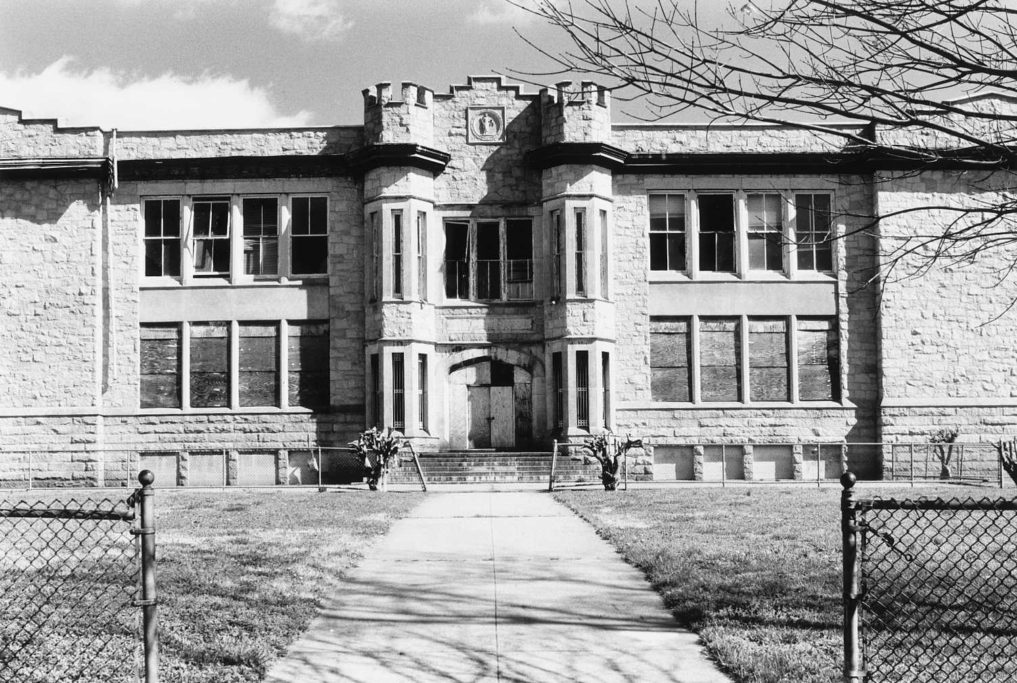
(VDHR)
Alcott stressed that fresh air, space, and light were necessary in promoting a healthy learning environment. He suggested the liberal use of large windows, classrooms providing a separate desk for each pupil, and open surroundings for recreation. For more than a century afterwards, school architects followed similar standards. These schools featured a basic classroom size of about 25 by 35 feet, expansive windows, high ceilings, and an open setting usually with adjacent playgrounds and athletic fields. These characteristics were shared by schools ranging from one-room rural types to large urban schools. The Cary School shares many of these traits and is a good example of the adaptation of the Gothic style to traditional school design. (VDHR)
Today, the Cary School is no longer used for public education, but it has found new life as Winthrop Manor, an assisted living residence.


Must-See RVA! is a regular series
appearing on rocket werks – check it out!

