Downtown
Must-See RVA! — Fraternal Order of Eagles Building
A look into the history of Richmond places that are still part of our landscape.

220 East Marshall Street
Built, 1913
Architect, Asbury & Whitehurst
VDHR 127-5885
The champions of Mother’s Day
The Neoclassical Revival-style building at 220 East Marshall Street was erected in 1914 for the Richmond Chapter of the Fraternal Order of Eagles, a national organization “dedicated to the ideas of democracy and brotherhood” was founded in 1898. The Richmond chapter called “Dixie Aerie No. 338” occupied the clubhouse from 1914 until the mid 1980s.

Fraternal Order of Eagles logo
The Fraternal Order of Eagles was instrumental in the passage of the Workman’s Compensation Act, Mother and Old Age pensions, Social Security laws, the “Jobs After 40” bill, and Medicare. In 1904, one of the officers from the South Bend Aerie of the Fraternal Order of Eagles, Frank E. Hering, made a public plea for a national day to celebrate and honor mothers. In 1914, the U. S. Congress passed legislation which President Woodrow Wilson signed making the second Sunday in May a national holiday – Mother’s Day. The F.O.E. is still engaged in fighting to liberalize social benefits and combating disease through their sponsorship of a number of charitable organizations.

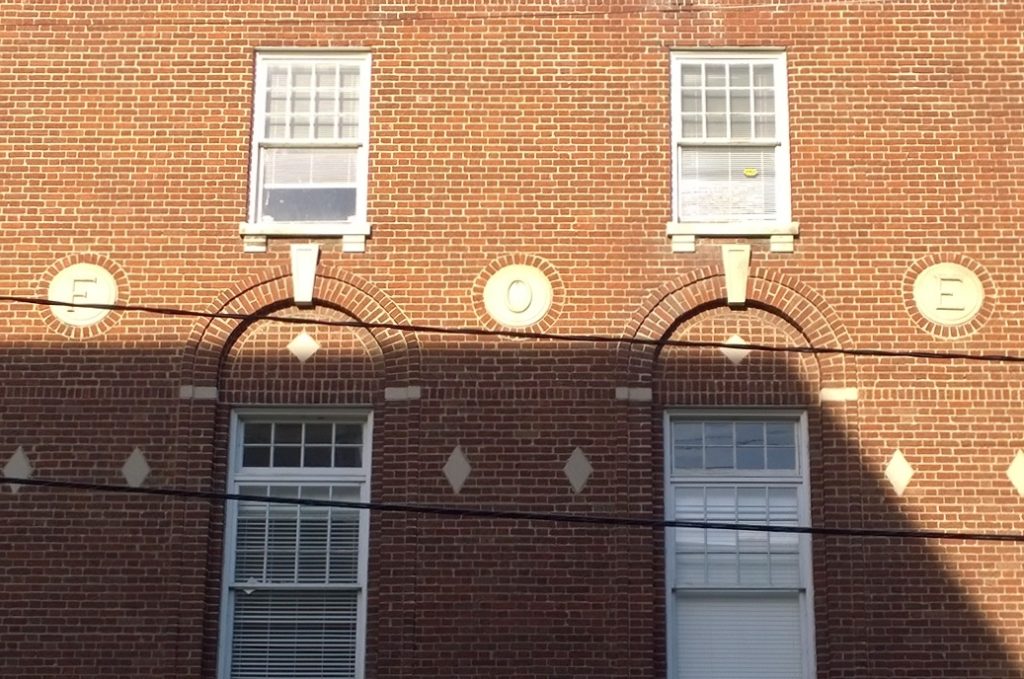
November 2014 — roundels showing F-O-E
Most of the earlier members of the F.O.E. were actors, playwrights, and stagehands, and “as they went on tour they carried the story of the new order with them across the United States and Canada.”

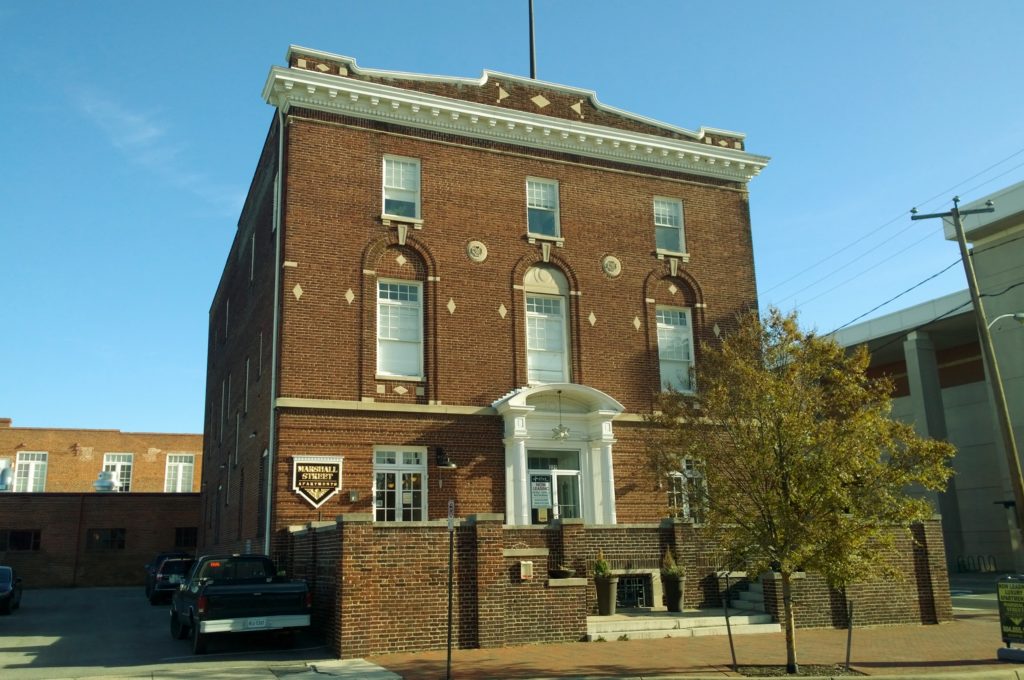
November 2014
Dixie Aerie No. 338 was established in Richmond on 22 March 1903 with 101 charter members. The first “worthy president” of the chapter was John B. Bliley, one of the many Bliley brothers whose nearby establishment grew to become one of the city’s best known funeral homes.

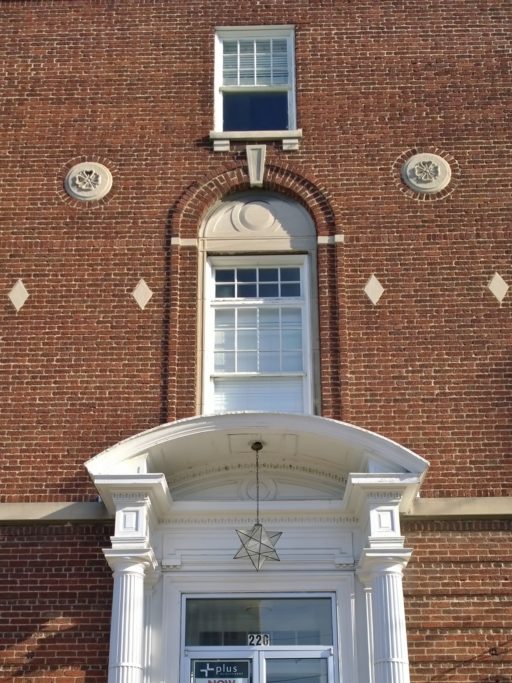
November 2014
The Eagles leased the building to other organizations for meetings and parties and every Saturday night they hosted dinner-dances. The dances were so popular that women in gowns and men in tuxedos would be lined up around the block. To get in you had to have a red poker chip with 338 on the back and once the dance floor was filled to capacity, about 200 people, you had to wait for someone to leave before you could get in.

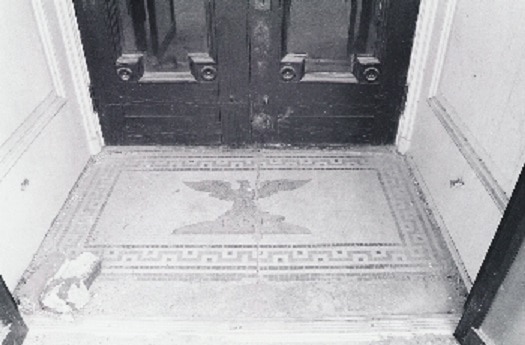
(VDHR) — 2006 nomination photo
In addition to the charities supported by the national organization, the Dixie Aerie worked closely with the surrounding Jackson Ward neighborhood. At Easter, in cooperation with the Bliley Funeral Home, they passed out eggs to the neighborhood children and at Christmas they hosted a big party for the community. They sponsored neighborhood ball teams, gave to the churches and held bingo games where food, not money, was given as prizes.

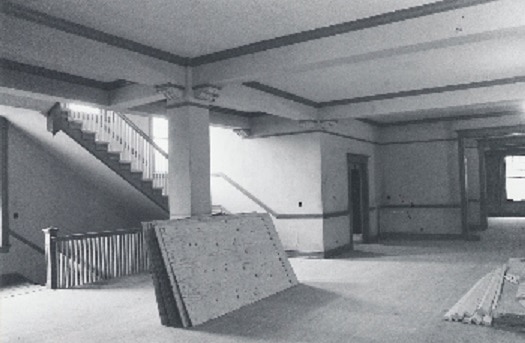
(VDHR) — 2006 nomination photo
While Asbury and Whitehurst were associated, they designed apartment buildings and houses in Richmond’s Fan District and on Monument Avenue. The Fraternal Order of Eagles building appears to be the only commercial building designed by the firm or by Otis K. Asbury independently. In that regard it is a unique example of their work. However, it shares much in design and scale with their residential architecture. “Due to his training, it is likely that Asbury was the creative force in the partnership while Whitehurst handled its business affairs.” Otis K. Asbury was known for his skillful dwellings in a variety of historical styles, including Tudor, Mediterranean, Colonial and Classical Revival. He was “one of the few architects whose designs show[ed] individuality” and his work “revolutionize[ed] the types of architecture for residential work here in Richmond. (VDHR)


Must-See RVA! is a regular series
appearing on rocket werks – check it out!

