Hills & Heights
Must-See RVA! — Bridge at Falling Creek
A look into the history of Richmond places that are still part of our landscape.

U. S. 1/301 at Falling Creek
Built, circa 1823
VDHR 020-0135
Hidden between the the divided lanes of Jeff Davis Highway, lie the remains of the ancient bridge.


December 2014
The Bridge at Falling Creek was built to serve travelers on the Manchester and Petersburg Turnpike. In the early 19th century travel between Richmond and Petersburg was very arduous. The number of intervening streams and creeks made for a very long and inconvenient trip. The quickest land route was through Henrico County on the north side of the James River to a point opposite the town of Osbornes in Chesterfield, where, after a ferry crossing, travelers continued south to Petersburg. This journey took five hours if everything went well.


December 2014
It is one of only twelve known masonry-arched turnpike bridges in Virginia. Its construction in 1823 as a component of the Manchester-Petersburg Turnpike illustrates one of the ways the citizens of the young republic of the United States approached the issue of meeting local transportation needs.

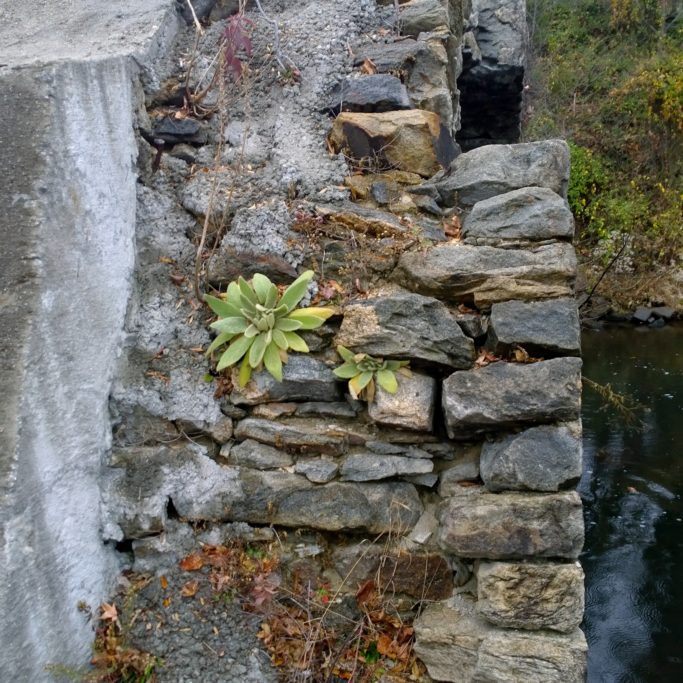
December 2014
The grace of its form and strength of its materials attest to the important role accorded the bridge in the early establishment of the north-south route of the Manchester-Petersburg Turnpike. Built about 1823 or 1824 of rough uncoursed granite, the bridge’s two semicircular arches supported a section of roadway nearly 24 feet wide and 148 feet long and constituted the first permanent crossing of what was then regarded as a substantial chasm–the bed of Falling Creek.
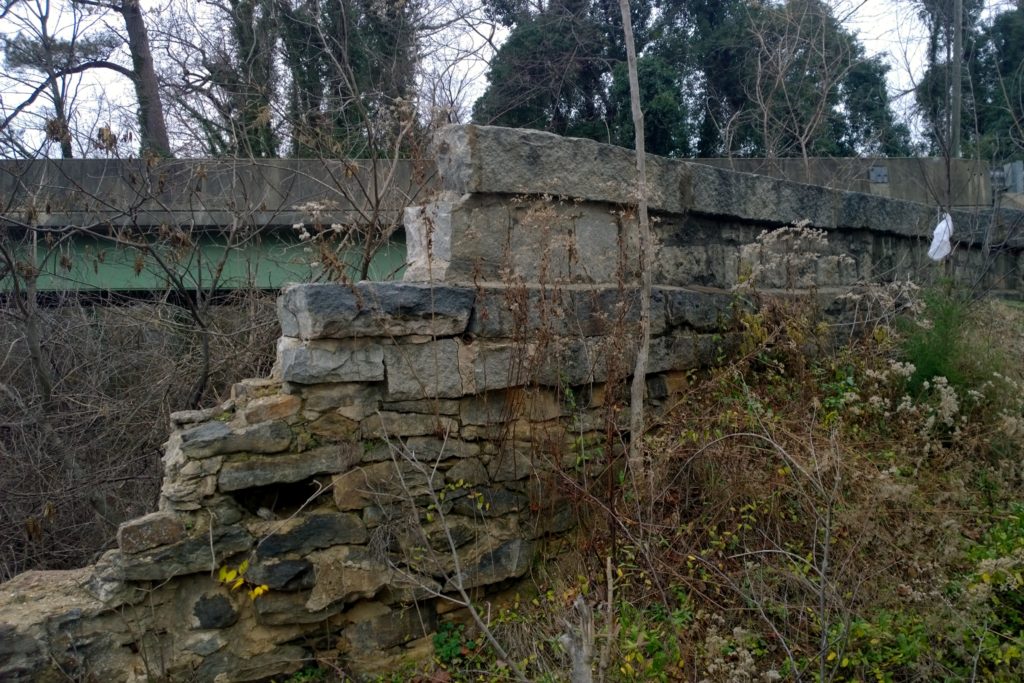
December 2014
The arches are founded on solid rock and spring from just above water level to a height of some 12 feet above the creek. The intrados is of roughly-coursed granite. Together the arches span 48 feet of the bridge’s current 134-foot length. The base of the pier between the arches has been encased in formed concrete as a stabilizing measure sometime between 1920 and 1945. The pier was constructed without a dolphin and there is evidence of the pier’s having been buffeted in times of high water by flotsam carried forcefully in the swift current.

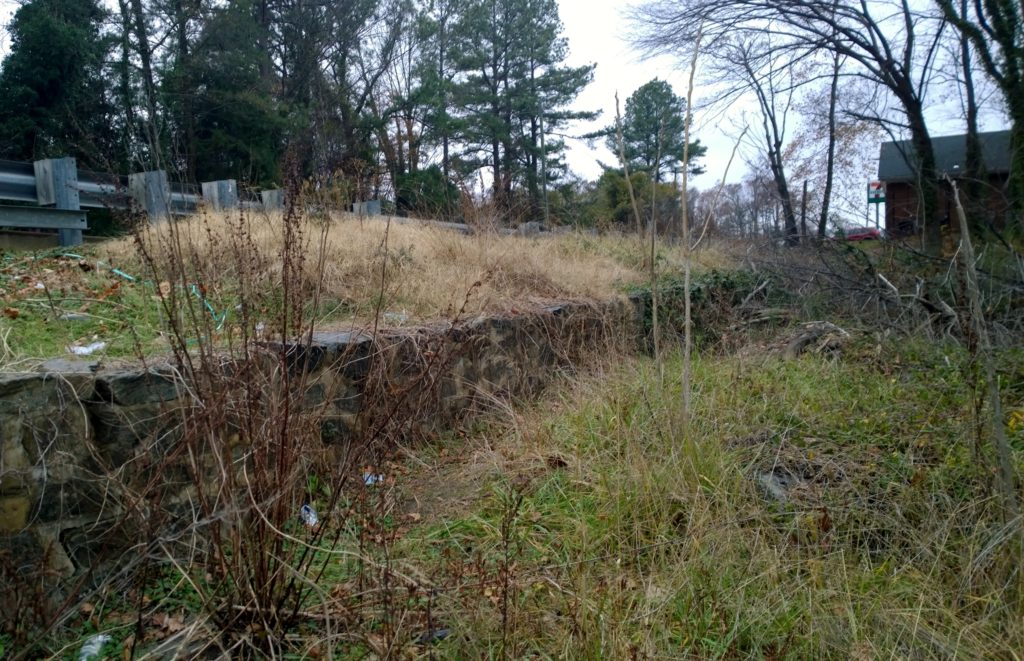
December 2014
The bridge was retired from service shortly after 1931 upon the completion of a span to carry the southbound traffic of US 1/1301 over Falling Creek.
The Virginia Wayside established to preserve and to permit pedestrian access to the bridge is a grassy area under a pleasant canopy of shade trees with a few smaller understory trees dotted about. Macadam paths lead from the south parking areas to the bridge. A dirt path leads down to the south bank of Falling Creek and another continues north of the bridge to the businesses located further north between the lanes of US 1/301, but shielded from view within the wayside by dense tree growth. A scattering of picnic tables and trash receptacles invites the traveler to discover what the site has to offer. (VDHR)

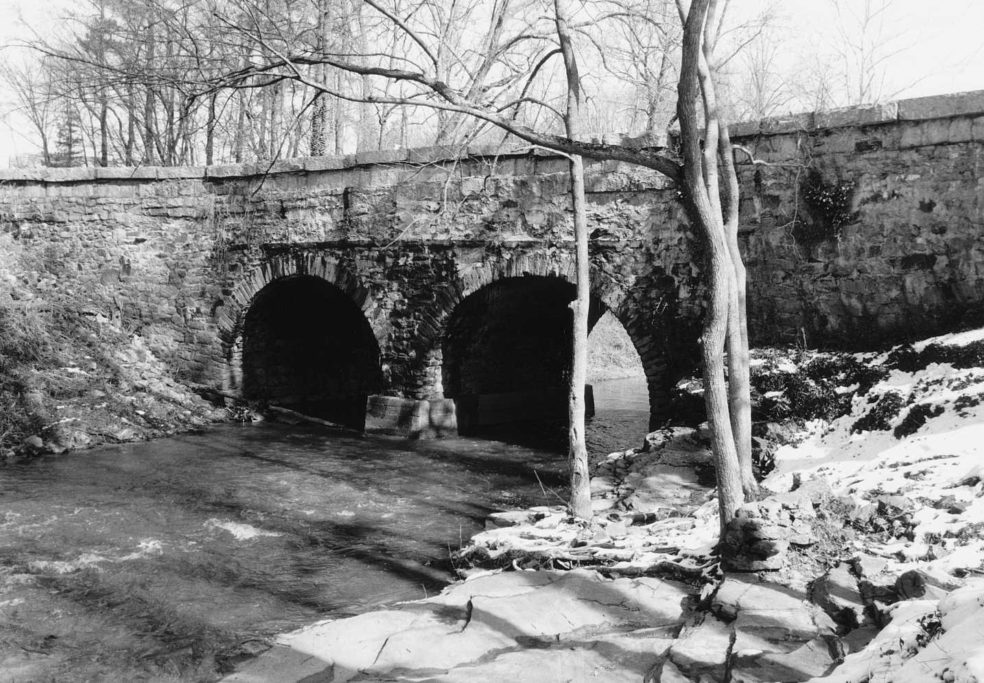
(VDHR)
As late as 2004, the bridge was in a remarkably well-preserved condition, until partially destroyed by flood waters caused by Tropical Gaston.


Must-See RVA! is a regular series
appearing on rocket werks – check it out!

