Downtown
RVA Legends — Good Luck! Part 5
A look into the history of Richmond places and people that have disappeared from our landscape.

Never send to know for whom the goose quacks; it quacks for thee.

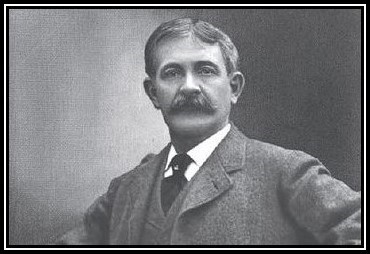
What’s a little graft between friends? This was the Gilded Age mindset that William Ziegler represented, and he lived to see the beginning of its end.
It was at this point that error and evil was added to their advertising methods, and to the decision to add to the advertisements of cream of tartar baking powder, that is, the proper and legitimate statement of its merits, a new feature which represented the manufacturers of alum and alum-phosphate baking powders as using an acid ingredient which was dangerous to health, can be traced the source from which has flowed in logical sequence a train of evils and embarrassments which has led to the indictment for bribery and corruption of the strongest individual mind which the years of struggle and controversy have brought to the surface. [BPC1]

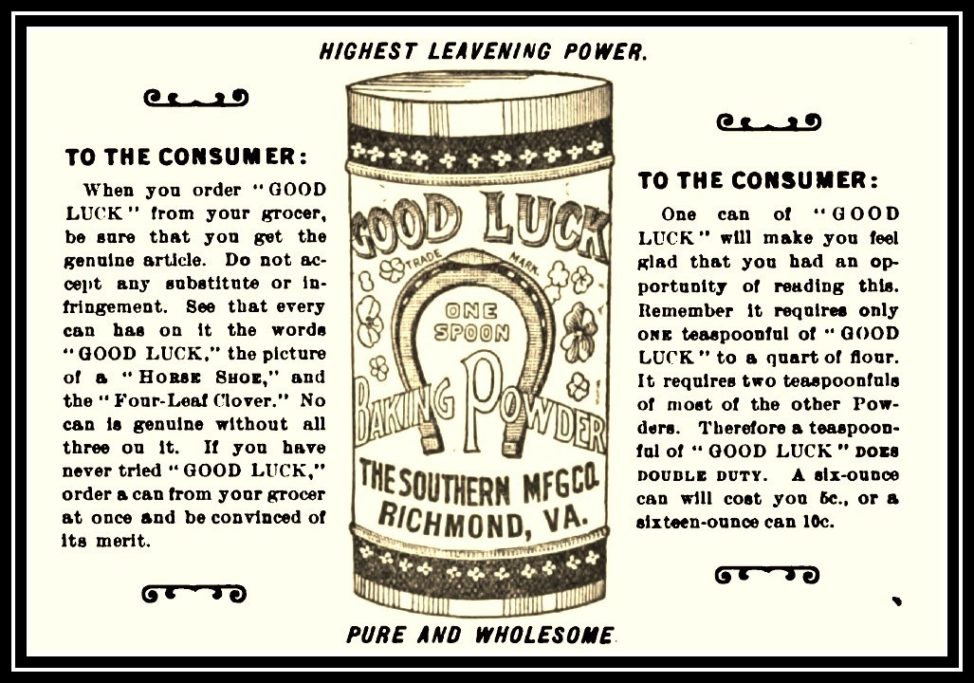
[VFLD] — 1897
The high-priced Baking Powders that have been on the market for the last fifteen or twenty years are quoted to-day at the same prices as they were fifteen years ago, while the cost of raw material for the manufacture of Baking Powder has declined, in the mean-while, more than sixty per cent. The high-priced manufacturers have endeavored, and are still endeavoring, to hold their ground, by the most expensive advertisements. in preference to reducing their prices to what they ought to be. The cause of the unjust is bound to fail. “Good Luck” Baking Powder was placed on the market on the basis of a small margin of profit to its manufacturers, and at a price based on the present cost of raw material. The difference in price of “Good Luck” and the high-priced powders is not a difference in Grade, Quality, or Merit, but simply represents the decline in cost of raw material during the last fifteen years. and further marginal profit to the high-priced manufacturers. [VFLD]

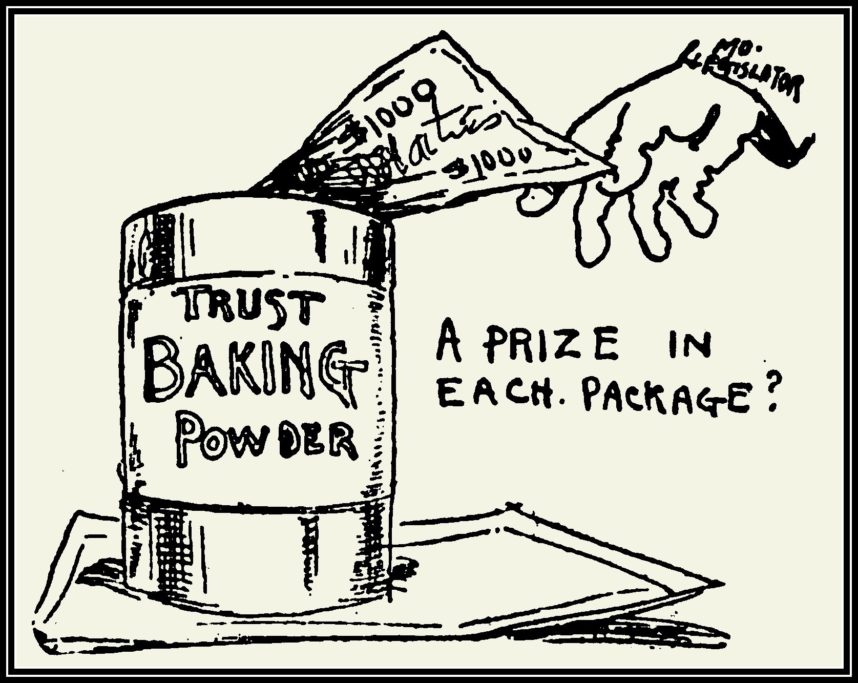
[BPC2] — St. Louis Globe-Democrat — April 11, 1903
Royal Baking Powder’s pursuit of state-based Pure Food Laws proved it was not above the occasional friendly bribe to ensure passage of favorable acts. In the case of the State of Missouri, it ended up being a quite a number of them.
Journalistic investigation into the baking powder shenanigans ended up producing a slew of political cartoons on the subject, as well as the resignation of a Lieutenant Governor.

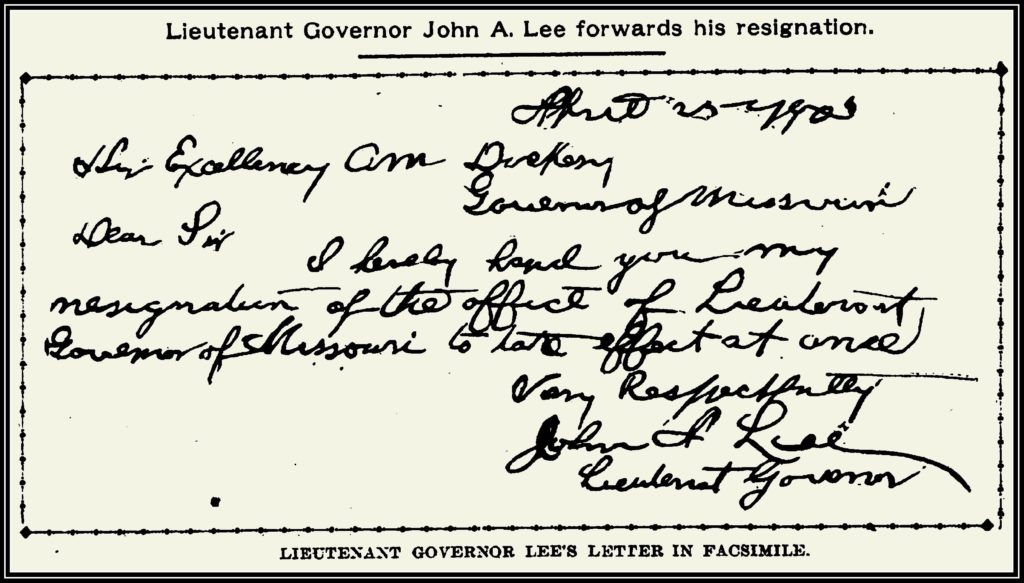
[BPC2] — St. Louis Republic — April 27, 1903
Not the least interesting feature of the boodle scandal in Missouri has been the sensational disclosures of the part played by the Baking Powder Trust. The investigations of the Cole County Grand Jury, and a similar body in St. Louis, has led to the indictment of seven Senators, among them Farris, the undisputed leader of the Missouri Senate; and to the flight of Lieutenant-Governor Lee, his return, his confession that he received a bribe, and that he received several thousand dollars which he handed to Senator Farris for distribution among other Senators. This was followed by his resignation as Lieutenant-Governor, and its prompt acceptance by Governor Dockery. Four indictments have been found against Daniel J. Kelley, president of the National Health Society, which, according to sworn testimony, was composed of Kelley, an itinerant Baptist preacher, and ex-Governor and present United States Senator Wm. J. Stone. Kelley, it is charged, was simply the legislative agent of the Baking Powder Trust, while Stone was employed by the baking powder lobby at an expense of $5,000 a year. Kelley is now a voluntary exile in Canada with a price upon his head. Ex-Governor Stone stands discredited at home an object of pity in the ruins of his political hopes and aspirations. [BPC1]
Ziegler himself was snared in this hail of indictments in 1902, but Governor Odeil of New York refused Missouri’s request to hand his corrupt ass over. Though wanted, he remained happily aloof, with his clubs, yachts, and society affairs, until his death by stroke in 1903.

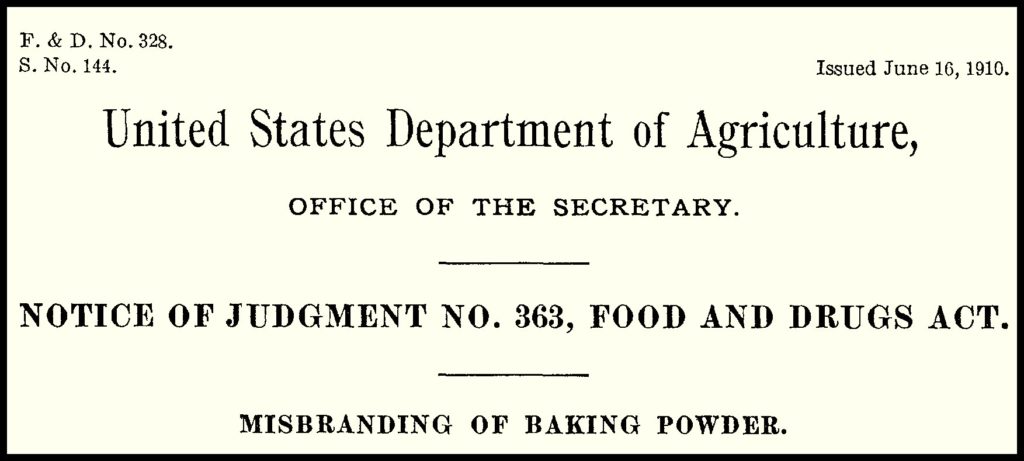
[USDA] — 1910
That was great news if your business was Simon Pure. It wasn’t the case for Southern Manufacturing, who got nabbed by The Man.
On or about June 2, 1908, the Southern Manufacturing Company, of Richmond, Va., shipped from the State of Virginia to the State of Louisiana 501 cases of baking powder. Examination of samples of this shipment made in the Bureau of Chemistry, United States Department of Agriculture showed it to be misbranded within the meaning of the Food and Drugs Act of June 30, 1906. It appearing from the findings of the analyst and report made that the shipment was subject to seizure under section 10 of the act, the Secretary of Agriculture reported the facts to the United States attorney for the Eastern District of Louisiana. In due course a libel was filed against the said 501 cases of baking powder, charging misbranding. Two hundred cases were labeled “One hundred Cans six-ounce Good Luck One Spoon Baking Powder, Southern Mfg. Co., Richmond, Va.”, and 301 cases were labeled “ Fifty Cans sixteen-ounce Good Luck One Spoon Baking Powder, Southern Mfg. Co., Richmond, Va.”, which form of labeling is false, misleading, and deceptive, in that it indicates that the cans contained six ounces, and sixteen ounces, respectively, whereas in fact the average in weight of the unit packages is considerably less than claimed in each case.

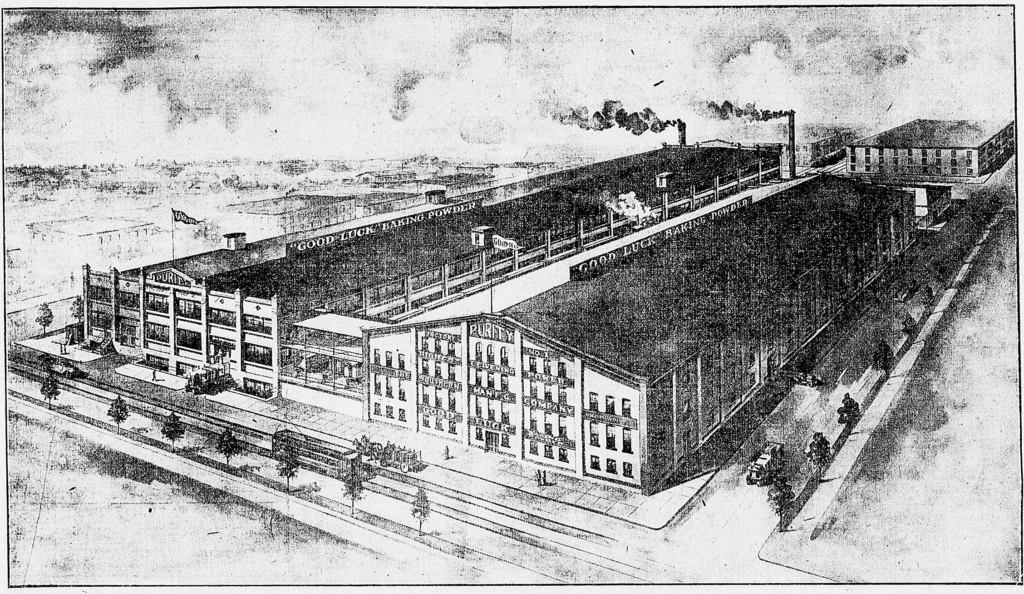
(LOC) — The Times-Dispatch — Sunday, May 28, 1911
Oops.
Despite this setback, things seemed to be going Southern Manufacturer’s way. An easing of pressure from Royal, and continuing strong sales pointed the way to further expansion.
The growth of “Good Luck” Baking Powder is due to the selection of the best ingredients, of the highest standard, carefully maintained by chemical analysis, and combined in a a happy formula that produces the highest leavening properties and the most wholesome and nutritious bread. This is the reason why “Good Luck” Baking Powder has outgrown its present large quarters and made necessary the erection of an additional big factory, work on which will begin shortly. (LOC)
The facility at Seventh and Perry Streets in Manchester doubled in size. Good times!

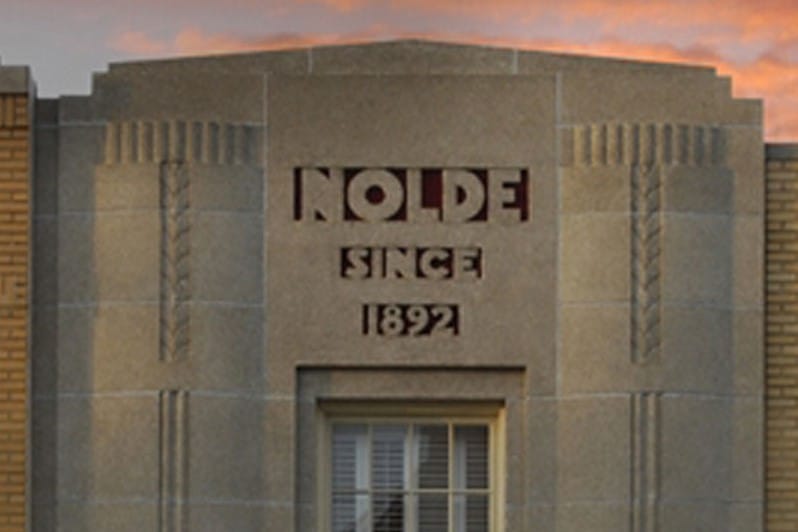
(Nolde Condos) — Nolde Bakery Building
Unfortunately, there were other trends in the Progressive Era, such as the rise (sorry) of industrial bakeries, that foreshadowed doom. In 1900, 95% of all flour produced in the U.S. went to homes; by 1911, this number had dropped sharply, and only 35% of families were making their own bread. [BBR] That meant a lot fewer sales of those 6 and 16 ounce cans of “Good Luck” Baking Powder. There was probably money to be made in industrial sales, but at no where near the same profit margin.
It would take a deeper study than this to provide the medical examiner’s opinion as to the final causes of the company’s demise, but it seems this was one hurdle too many.
The last mention of Good Luck Baking Powder was in the 1924 City Directory. The business lasted until 1932, but the glory days were over. [BBR]
Sources
- [BBR] Big Business in Richmond, The Good Luck Baking Powder Story. Ray Schreiner. June 2010.
- [BPC1] The Baking Powder Controversy, Volume I. A. Cressy Morrison. American Baking Powder Association. 1904.
- [BPC2] The Baking Powder Controversy, Volume II. A. Cressy Morrison. American Baking Powder Association. 1904.
- [VFLD] Virginia Federation of Labor Directory. 1897.

appearing on rocket werks – check it out!


