History
Must-See RVA! — Ritter-Hickock House
A look into the history of Richmond places that are still part of our landscape.

821 West Franklin Street
Built, 1855
Revised, after 1903
Architects, Noland & Baskervill (revision)
More attractive than either the Thomas or Haxall mansions is 821 West Franklin, built by William Ritter in 1855 in what was then a suburb. Called in the first insurance policies an Italian villa, it bears but faint resemblance to such a model. But the wings set back from the façade give it a restful character in keeping with its one-time rural location.

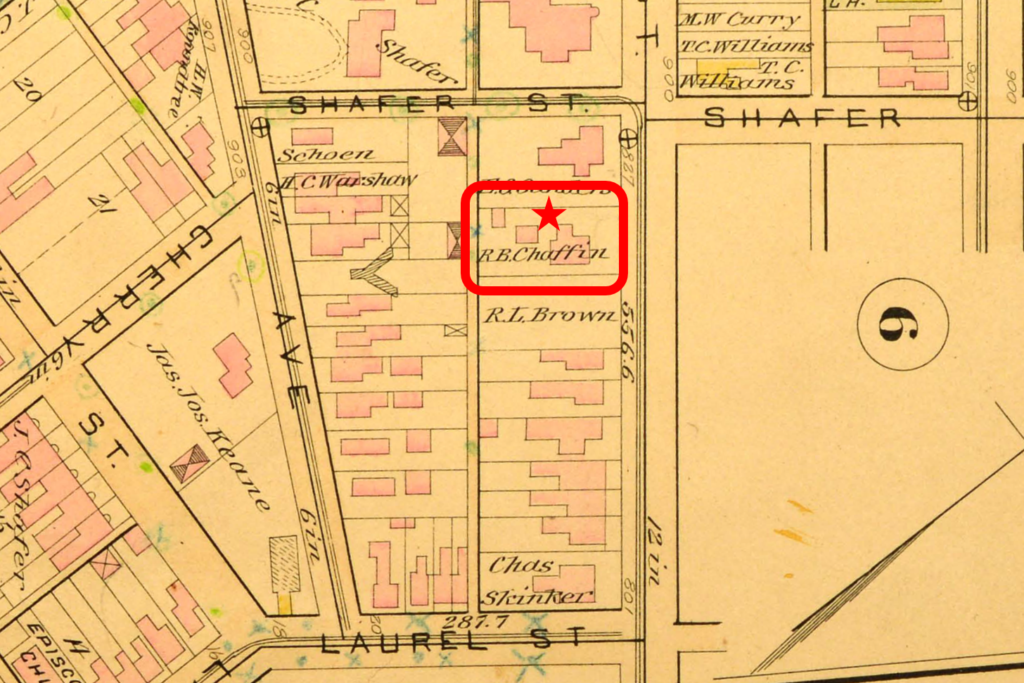
(VCU) — 1889 Baist Atlas Map of Richmond — Plate 10
After Ritter’s death in 1865, the house was occupied by Samuel W. Harwood, and in the ’nineties by Richard B. Chaffin. It was charmingly restored by Mrs. J. J. Hickock, who lived there for thirty years. Since her death it has become a part of the Richmond Professional Institute. [ORN]
It was the sixth property acquired by the developing Institute and was initially used as a women’s dormitory. (City of Richmond Photo Album Index)

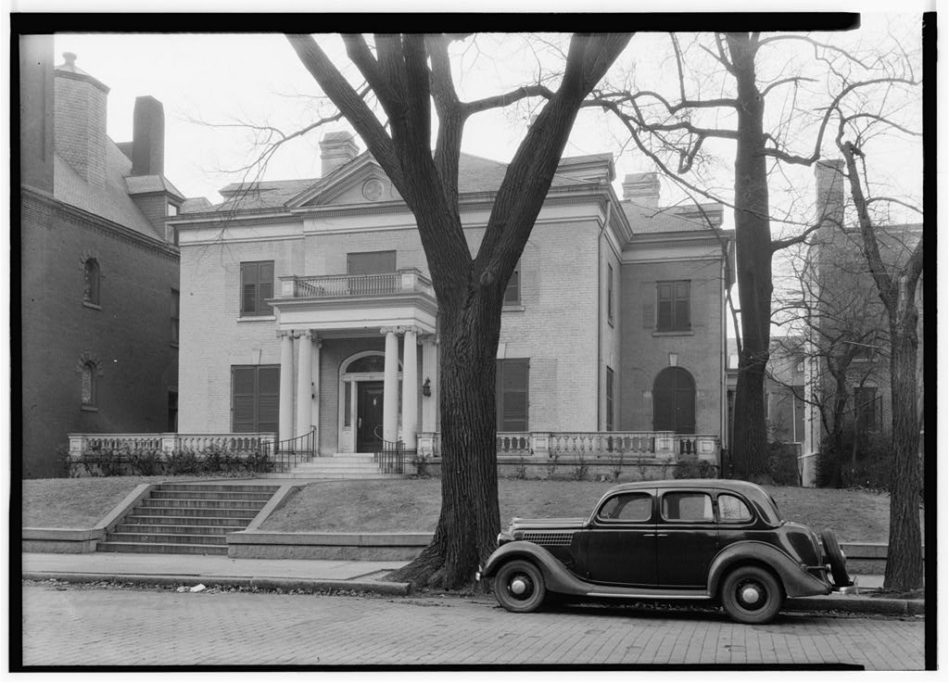
(LOC) — after 1933
Because of the Depression, the price was very low: $17,500. An illustrated booklet issued in 1944 described the house, and said it was “built in 1855, enlarged about 1900, and restored in 1940,” after it was acquired by the Institute. The house still has an attractive lawn, although the original spacious grounds in the midst of which it stood during the days when it was an outstanding antebellum mansion have since disappeared. Its outhouses, kitchens and smokehouses—used during the Civil War as prisons for spies, if a war-time issue of the New York Herald is to be believed—also are gone, but the house itself still shows the good taste, both of the “before-the war” builder and of the owner who enlarged and “improved it in the Gay Nineties.”

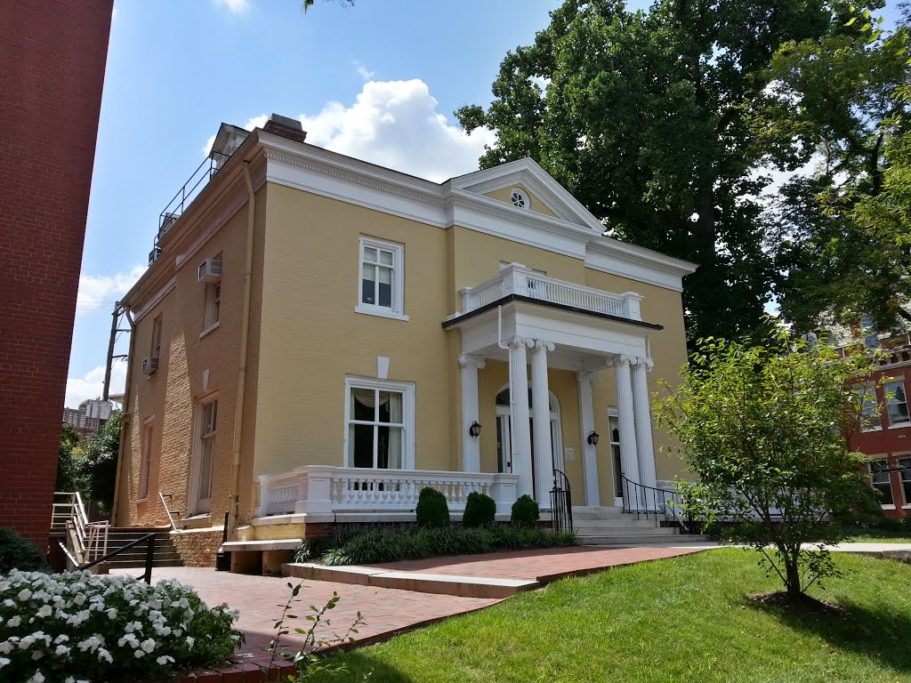
(Fox Mitchell) — 2013
Negotiations for the purchase of the Ritter-Hickok House at 821 West Franklin Street were another example of how Foundation arrangements determined how much it could pay for real estate during the great Depression. This historic old house was first offered by one agent for what he said was the ridiculously low price of $25,000. He was told there were no state funds with which to pay for the property, but that the private citizens’ Foundation had authorized the purchase of nearby property, if the price were low enough to be financed by the board’s income, especially income from dormitory rents. “Would he ask the owners if $15,000 would be an acceptable offer?”
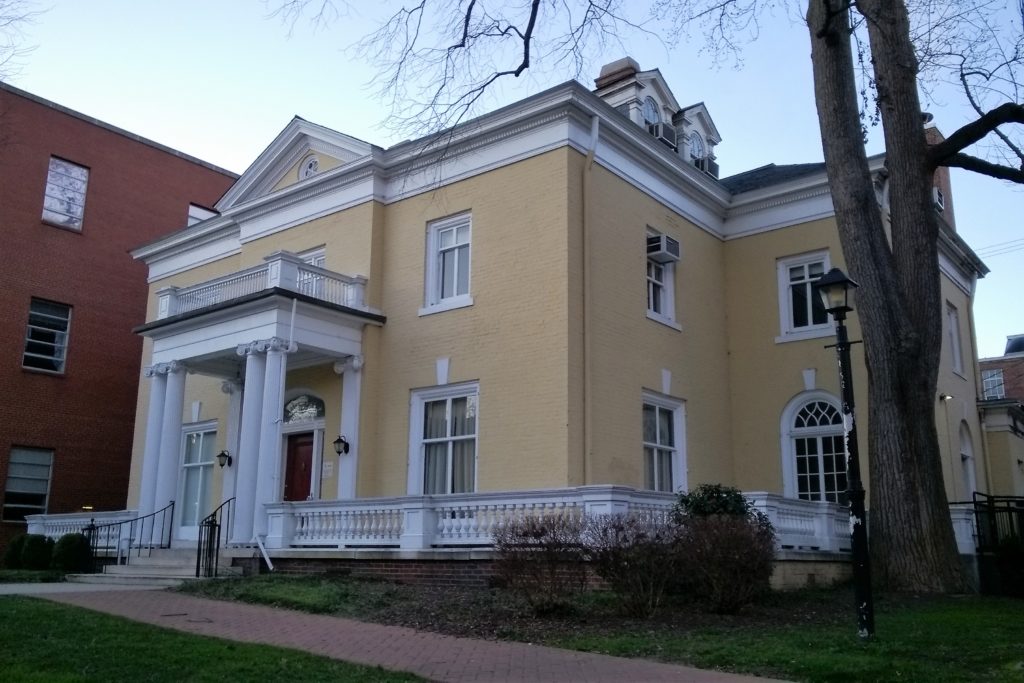
February 2017
The agent couldn’t or wouldn’t try to understand this method of appraising real estate and refused to transmit the offer to the heirs. This happened several times and he still refused because he said “the place was worth much more.”
This was admitted but that fact did not affect the board’s ability to pay, or to liquidate the notes from the rents. Finally, another agent came in and said that “a relative of the late owner had told him that the heirs in Baltimore would sell for $17,500.” This offer was accepted and the Federal WPA remodeled the building, adding several dormitory rooms by finishing the attic. The charges for rent were set so as to pay all costs, including the mortgage notes.

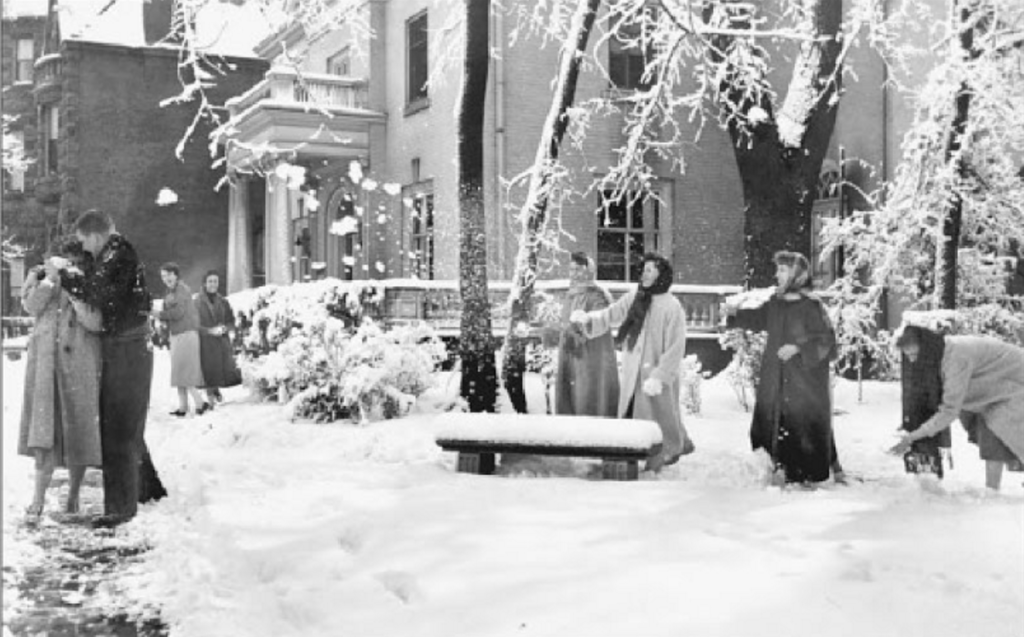
[RHWT] — snowball fight in 1955
There is something to be said in favor of the use of old residences of the Victorian era, when thoroughly remodeled and new bathrooms and closets installed. Certainly the parlors are quite suitable for students—these old buildings all had two parlors, and the larger ones had four. It may be that the large, ‘congregate’ dormitories so common on the campuses of conventional colleges do impress students more favorably at first sight. It is far easier, however, to maintain a happy college life in smaller buildings. They make life in small groups very satisfying. [HRPI]
Of that there can be no doubt. Today, however, VCU uses Ritter-Hickok as the Office of Admissions.
Sources
- [HRPI] A History of the Richmond Professional Institute. Henry Hibbs. 1973.
- [RHWT] Richmond: A Historic Walking Tour. Keshia A. Case. 2010.


Must-See RVA! is a regular series
appearing on rocket werks – check it out!

