The Richmond and Chesapeake Bay Railway car barn is significant because it is one of two surviving buildings associated with the independent electric railway that provided service between the City of Richmond and the Town of Ashland from 1907 to 1938. The only other surviving building, the terminal, has been heavily altered and is no longer recognizable as a terminal building. Utilitarian in nature, the car barn incorporates industrial materials of the time – steel structure and corrugated metal siding. A number of innovations incorporated into the line made it unique – the type of car, the current utilized, and the concrete and steel viaduct.
History
Must-See RVA! — Richmond & Chesapeake Bay Railway Car Barn
A look into the history of Richmond places that are still part of our landscape.

16200 Brook Road
Built, 1907
VDHR 127-6171

VDHR
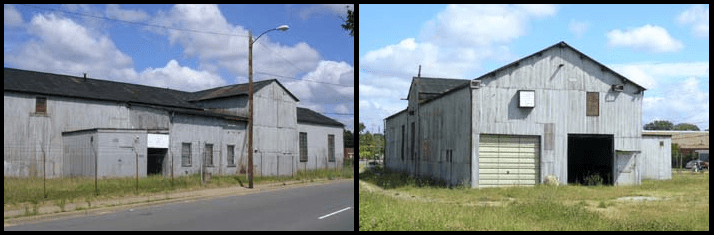
Constructed in 1907, the Richmond and Chesapeake Bay Railway Car Barn is located on the west side of Brook Road to the northwest of Richmond’s central business district. Brook Road borders the property on the east, with School Street to the north. Other industrial properties define the boundaries to the south and west. A chain link fence encloses the triangular lot with a gate at the north end. Tracks once ran to the west of the building with spur lines that passed through the building. The utilitarian building was designed to service the railway’s electric passenger cars, which entered and exited the building through large openings at both ends. Utilitarian in nature, the gable-roofed, T-plan building has a steel frame clad with corrugated steel panels. Today, the building appears much as it did when built. A one-story transformer station was added to the east side of the building in the 1920s with further alterations being made in the 1970s when the building was acquired by Meyer Repair and used for the repair and service of large trucks.

February 2014
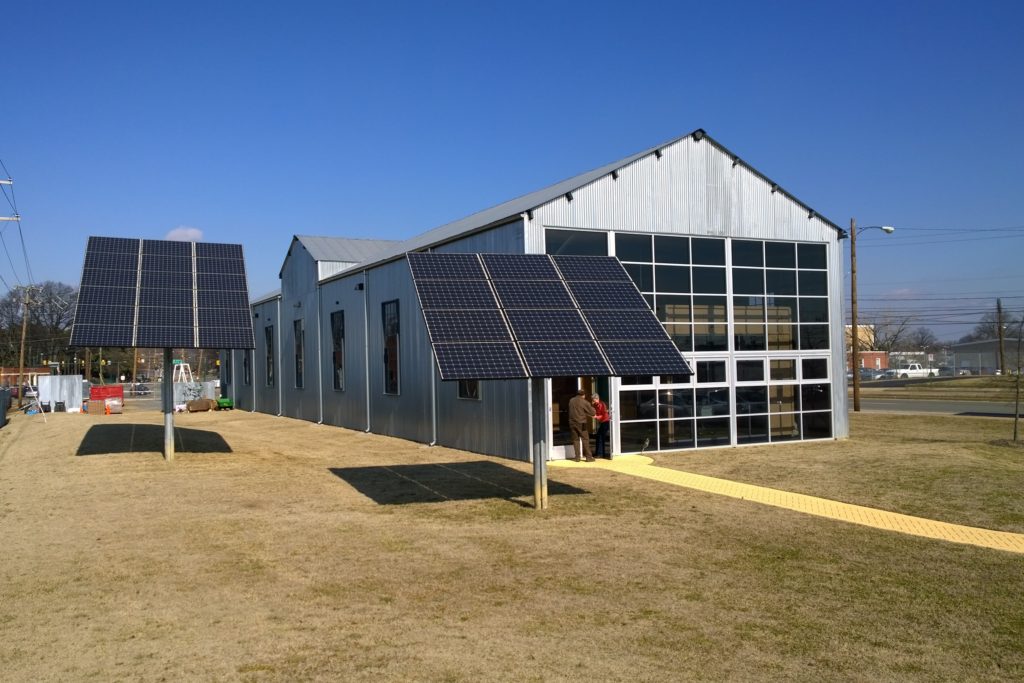
The Richmond and Chesapeake Bay Railway Car Barn is sited on a triangular lot on the west side of Brook Road. A chain link fence encloses the partially paved lot. The building stands alone today, but the 1925 Sanborn maps shows that there were once five additional storage buildings on the property. The Sanborn also shows that there were four “workmen’s shanties” to the west and four dwellings to the south, between the car barn and Sledd Street. In the 1970s, Brook Road was widened from sixty feet to ninety feet and the dwellings and storage buildings removed.
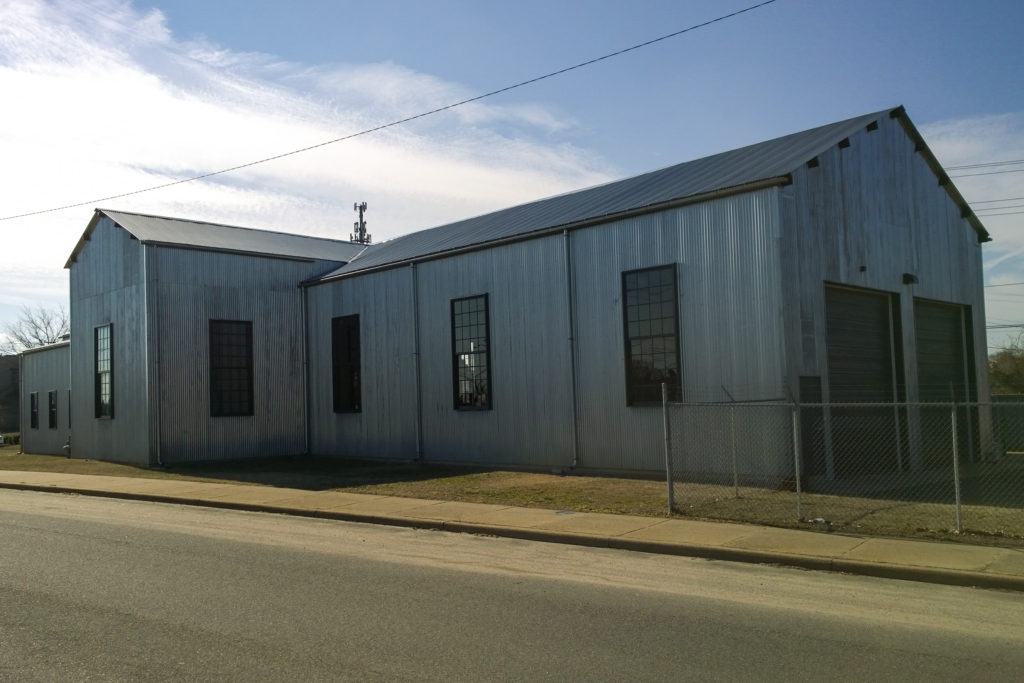
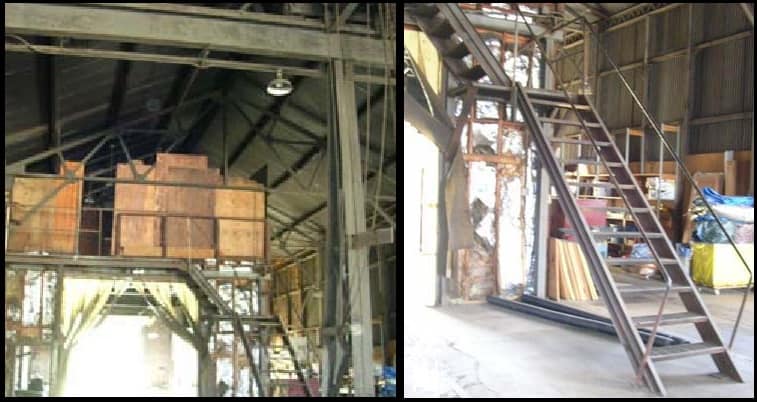
The corrugated steel-clad, T-plan building has a structural steel frame that supports a Fink Truss gable roof. The corrugated metal stopped at the bottom of the trusses in the north and south gable-ends creating large openings through which the cars were driven in and out along rails that are still imbedded in the concrete floor. The main part of the building had a capacity for six cars. A second slightly higher gable roof crosses at the center of the building and extends beyond the sidewall on the east creating a T-shaped plan. The blacksmith and machine shop were located in the wing. A Vulcan hoist is located in this elevated area. There are three, sixteen-over-sixteen double-hung, wood-sash windows in the east elevation and two in the west elevation. Physical evidence and an old photograph would suggest that there were seven windows in each of the side elevations. A one-story transformer station was added to the east side of the building in the 1920s and a second one-story toilet addition was made to the east side of the building in the 1970s. Other alterations made to the building in the 1970s include the removal of several of the windows, and the construction of a makeshift mezzanine at the north end of the building. A portion of the east wing was removed when Brook Road was widened, in the 1970s.
February 2014
The form and structural elements of the Richmond and Chesapeake Bay Railway Car Barn were dictated by current technology and the function of the building. The Fink truss, patented in 1850, was one of the first trusses to be built from iron instead of wood. The designer, Albert Fink, a civil engineer, was born near Frankfort-on-the-Main, Germany in 1827. He studied architecture in Germany, and emigrated to the United States in 1849 where he found employment as draughtsman with the Baltimore and Ohio Railroad, and became chief office assistant of Benjamin H. Latrobe, Jr. In this capacity he was the superintendent for the design and construction of buildings and bridges. During this time, Mr. Fink was also consulting engineer to the Norfolk and Petersburg railway. In 1857, he left the service of the Baltimore and Ohio Railroad, and became chief engineer of the Louisville and Nashville Railroad.

VDHR
The Ajax Sheet Metal and Roofing Company of Cincinnati, Ohio supplied the sheet metal at the car barn. Vulcan Ironworks, of Wilkes-Barre, Pennsylvania, manufactured the hoist in the car barn. Best known as a locomotive manufacturer; Vulcan Ironworks was founded in 1849 as a small foundry to manufacture shaft hoists and other machinery for Wyoming’s booming coal industry. By 1881, Vulcan’s Wilkes-Barre facility included a machine shop, a foundry, a blacksmith shop, a boiler shop and a pattern store and office. The first locomotives were offered in 1888 with the acquisition of the Wyoming Valley Manufacturing Company. Vulcan became an important producer of industrial locomotives and in 1919 a new steel plant with open-hearth furnaces was built to satisfy the demands of World War I. By 1929, things were indeed very good at Vulcan, with some 1,600 employees producing both gasoline and diesel-electric locomotives, along with some battery mine units. Business declined during the Great Depression, never to recover again. World War II gave the company a short reprieve, but production ceased in the 1950s.
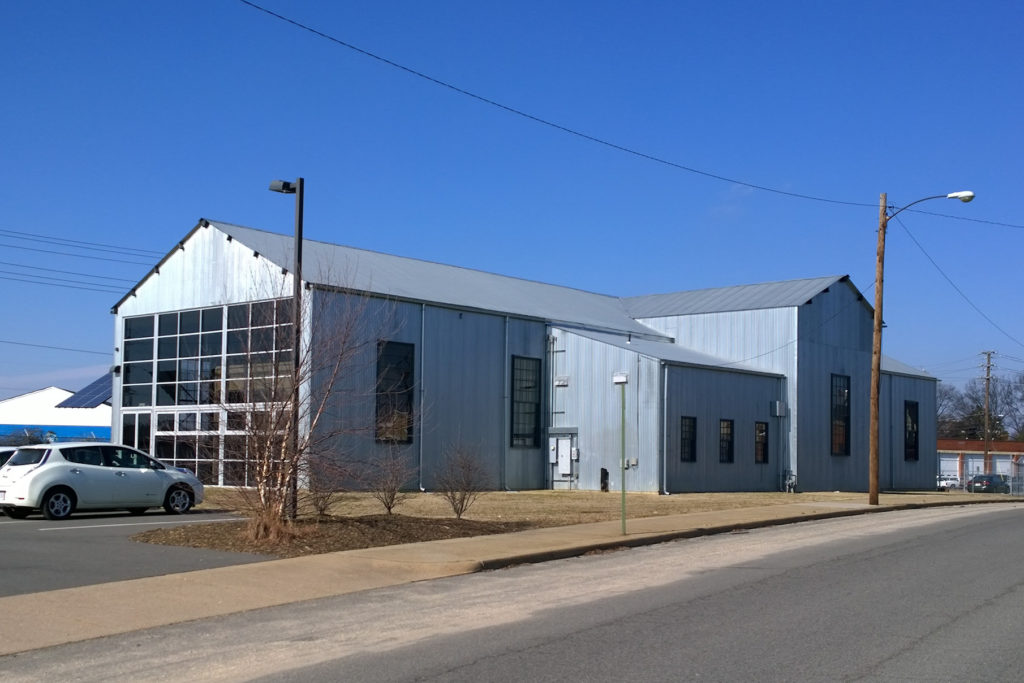
February 2014
The current owners plan to renovate the building and retain its industrial character. The building will be used for the storage of construction material and office space. The office space will be a primarily glass structure located at the southern end of the building. (VDHR)


Must-See RVA! is a regular series appearing on rocket werks – check it out!

