Downtown
Richmond mails 73,000 notices as it expands lead service line inventory
The city says the outreach meets new federal requirements and relies on predictive modeling, while verification and replacement timelines remain a work in progress.

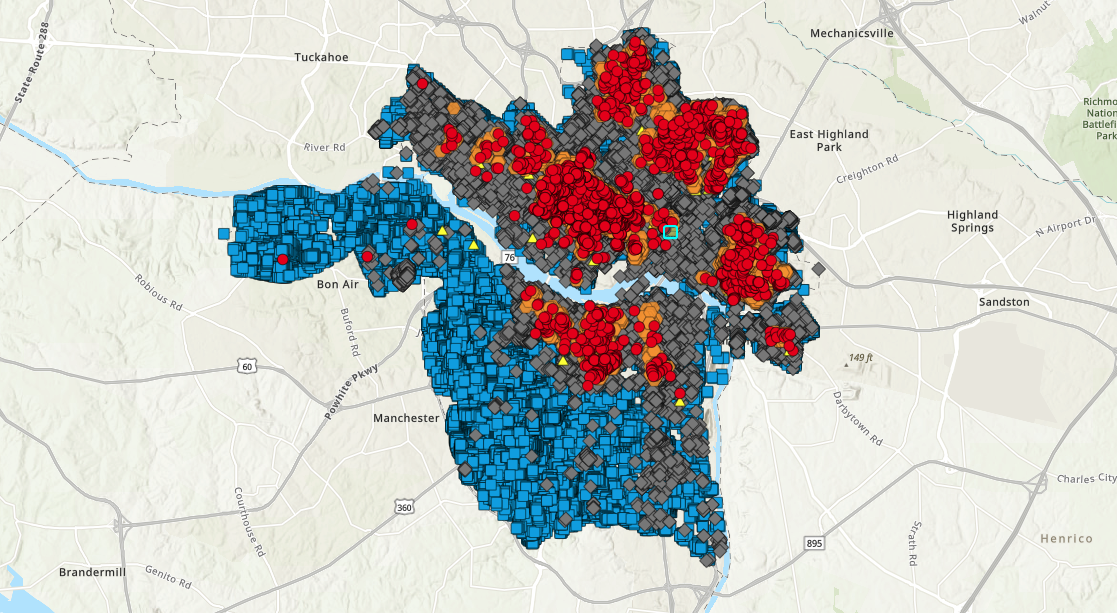
The City of Richmond Department of Public Utilities has mailed more than 73,000 service line notification letters to customers as part of an expanded effort to identify and remove lead service lines across the city.
The mailing, which DPU says is among the largest in its history, is required under updated federal drinking water regulations and is intended to bring Richmond into compliance with new service line inventory standards. City officials frame the effort as a step toward the stated goal of eliminating lead service lines by 2037.
This year’s notices point residents to an updated Interactive Service Line Inventory Map that relies in part on a predictive computer model approved by the Virginia Department of Health. According to DPU, the model uses factors such as a home’s age, construction records, and neighborhood plumbing patterns to estimate whether a service line is likely made of lead, including lines categorized as “unknown, likely lead.”
The approach allows the city to classify more properties without physically inspecting every line, but it also means many addresses remain unverified. DPU is asking residents to confirm the material of their service lines, a process that typically requires visual inspection or documentation. Portions of service lines are owned by the city and portions by property owners, which can complicate both confirmation and replacement.
DPU Director Scott Morris said the outreach is intended to keep customers informed and to encourage participation in the verification process. The department maintains that Richmond’s treated drinking water meets or exceeds state and federal standards for lead, noting that lead generally enters water through aging service lines or household plumbing rather than at the treatment plant.
Federal data and health guidance support the city’s position that corrosion control reduces risk, but public health experts have long cautioned that no level of lead exposure is considered safe, particularly for children. The effectiveness of corrosion control also depends on consistent chemistry and intact pipes, which is why federal regulators have shifted toward more aggressive identification and replacement requirements.
DPU says it conducts continuous water quality monitoring and submits monthly results to state regulators, with broader testing data published annually in the city’s Consumer Confidence Report. What remains less clear is how quickly lines identified as likely lead will be physically verified and replaced, and how costs will be shared between the city and property owners.
Residents can review the service line map and learn more about the Lead Free Water program through the city’s public utilities website or by calling DPU directly at 804-646-8600.



Photos: LEGO Holiday Workshop Clicking Together this Weekend

Get Ahead on Holiday Shopping this Saturday at Tip of the Season Art Market

Photos and Game Summary:

Bike Ride with Friends to Fight Hunger for Cranksgiving

Album Cover Sticker Art Show Opens Tomorrow

Flying Squirrels bring free Squirrel-O-Ween trick-or-treating to CarMax Park on Oct. 30

Steely Dan tribute and Louisiana zydeco close out October at the Cultural Arts Center at Glen Allen

RPD Reporting Arrests Made, Several Vehicles Recovered in Honda Theft Ring

Texas Inn marks 91 years with 91-cent hot dogs on Tuesday

Maymont’s Garden Glow opens Wednesday with a Firefly Field and a longer laser tunnel