Arts & Entertainment
Advocates warn library, museum funding cuts will impact communities
Virginia is beginning to see the impact of cuts for the Institute of Museum and Library Services, which provides funding for programs that serve families, students and learners of all ages.

By Jaila Hendricks
Virginia is beginning to see the impact of cuts for the Institute of Museum and Library Services, which provides funding for programs that serve families, students and learners of all ages.
An executive order issued by President Donald Trump would eliminate the agency, and places at risk millions of dollars in grants that support staffing, technology, resources and preservation efforts at libraries and museums. The order is an effort to reduce parts of the Federal bureaucracy that Trump has determined are unnecessary.
Library of Virginia Feels Impact
The Library of Virginia announced on April 8 that it had been notified by the National Endowment for the Humanities, or NEH, that three grants were terminated, although that number increased to four. These grants funded several projects, including collaborative efforts with nonprofits such as The JXN Project.
Although NEH and the IMLS are separate federal agencies, both face funding threats under the Trump administration. Some Virginia initiatives housed through the Library of Virginia have received support from both.
The JXN Project is a nonprofit focused on the historic preservation of the Black American experience within the Jackson Ward community. The organization’s goal is to allow Black Americans to retrace their roots back to Richmond, home of the nation’s first historically registered Black neighborhood, according to The JXN Project.
Co-founder and executive director Sesha Moon said they still plan to move forward.
“I believe our collaboration will still proceed, although at a reduced scale,” Moon stated in an email. “But as for The JXN Project as a whole, luckily, this grant does not interrupt the first phase of construction of the Skipwith-Roper Cottage and JXN Haus as part of “The Skipwith-Roper Homecoming.”
Dennis Clark, librarian at the Library of Virginia, expressed concern over the long-term implications. “We were working on a project with them to create an exhibit around the work of the understanding of what Jackson Ward was in that time frame and that also was canceled,” Clark said.
Because the project was nearly finished, there was minimal immediate financial impact, according to Clark. But there are broader concerns about staffing and recruitment. There could be a chilling effect on people who are interested in working in the library and archive museum sector, Clark said.
IMLS funds a number of different internship, recruitment and diversity programs for graduate students in the field, Clark said. However, the lack of funding will cut that as well.
If the funding disappears in federal fiscal year 2026, which starts in October, the library “will absolutely have to lay off people,” he said.
Staff will be difficult to keep because the library won’t be able to afford to pay them or fund the programs, Clark said.
The History of IMLS
The Institute of Museum and Library Services was created in 1996, although federal funding for libraries dates back to 1956. The agency supports more than 17,000 public libraries and 35,000 museums across the country, according to organizations calling on the public to contact their representatives against the executive order.
“You can imagine that it’ll leave a big hole if we can’t have these resources,” said Cindy Aden, who chairs the Master of Library and Information Science Program at University of Washington. “And for libraries who are doing these cool programs and learning these things, I will tell you it would be tough, but libraries are amazingly resilient and right now do more with less.”
Government support allows libraries and museums to invest in their communities, and encourages children, young adults and seniors to be more involved, Aden said.
Key Learning Resources Could Be At Risk
The Library of Virginia received over $4.3 million last year in Library Services and Technology Act funding, according to Lisa Varga, executive director of the Virginia Library Association.
This includes approximately $1.6 million s toward Find it Virginia, an electronic database that provides access to digital content and programs, according to Varga.
Federal cuts could jeopardize key resources that are available outside of school hours.
“I think this is going to impact our summer reading program materials,” Varga said. “There’s a youth services coordinator who helps to disseminate information and resources throughout the state that would likely be depleted.”
Programs like nature backpacks, which encourage families to explore the outdoors together, could also be impacted.
“It’s not really just about how this is going to affect our individual libraries,” Varga said “It’s the overall health of our communities.”
Varga encouraged supporters to contact federal lawmakers and oppose the executive order, but acknowledged options are limited.
“What everyone is really trying to do is educate their population on what it is that LSTA funding provides to their individual libraries, so that each of the residents and library users will understand the impact it will have,” Varga said.
Libraries have learned for decades how to operate efficiently, but even small cuts create ripple effects.
“The financial number may seem small in the big picture, $4.3 million to Virginia, but the impact that money has is actually incalculable for the good it does for Virginia citizens,” Varga said.
Richmond Public Libraries Boost Its Services
Scott Firestine, director of Richmond Public Libraries, said federal funds help support resources across the state.
Once the state receives IMLS funding, it assists public libraries in providing programs and services to their communities, according to Firestine.
The city of Richmond has also increased funding in recent years to support additional educational learning programs, staffing and materials.
“We have a story time at a branch location for preschoolers or any library location for preschoolers,” Firestine said. “That funding for that program is provided by the city and we’ve seen over the last five years, our budget has increased to provide more of that.”
Community Members Speak Out
Residents across Virginia could see impacts from proposed federal cuts at their local branches.
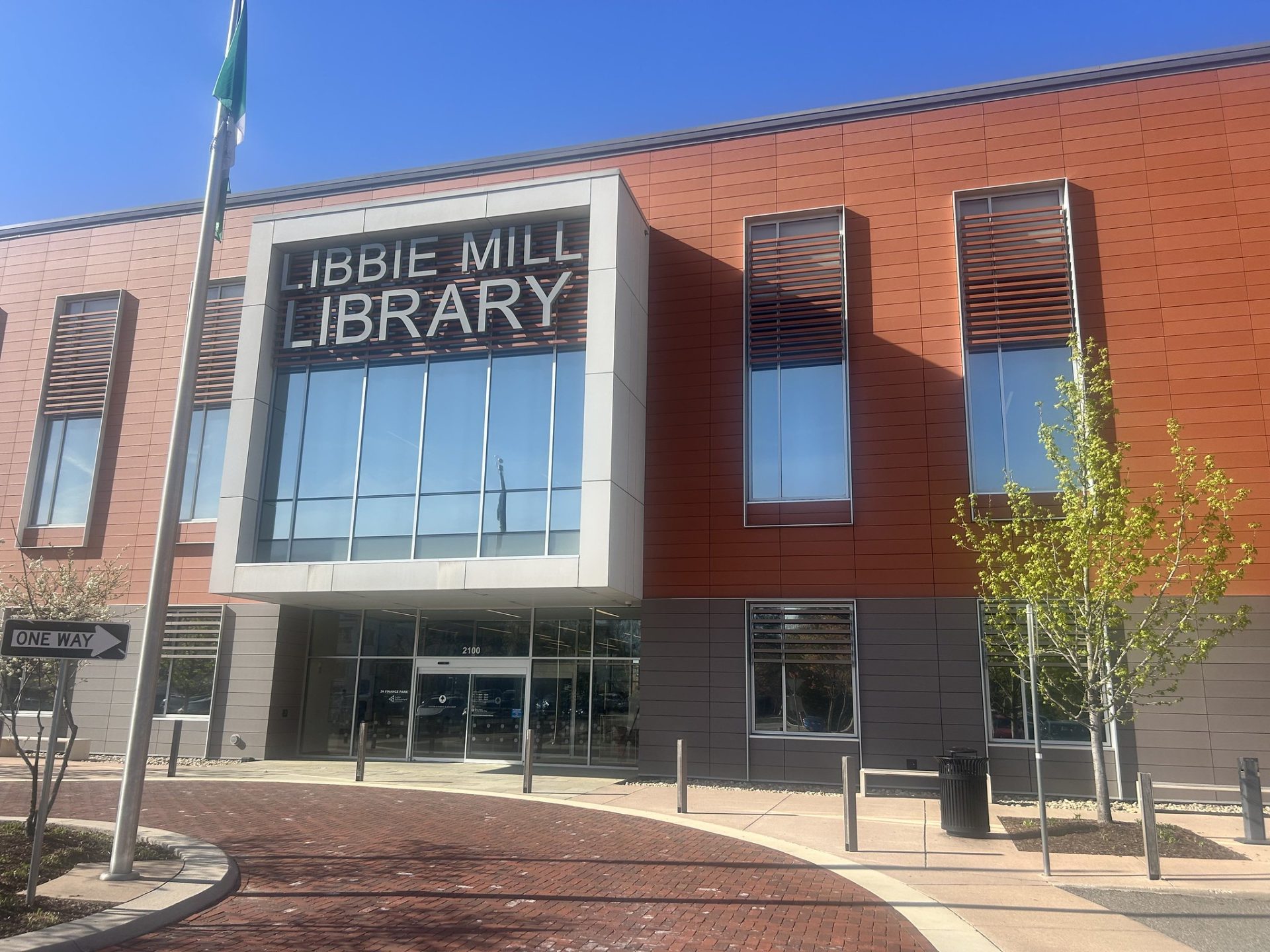
Liz Laboy, a mother and a Libbie Mill Library card holder, values what libraries offer and is worried about losing those resources.
“I think that public resources like the library are extremely important and I’m not OK with the current administration’s policies for defunding stuff like that,” Laboy said. “ I want the library to stay open.”
Institutions and advocates urge citizens to contact their congressional representatives and voice opposition to federal cuts that impact education and cultural programs in many communities. The American Alliance of Museums has a template to help individuals contact lawmakers. It is accessible here, on the AAM website.



Mayo Bridge Resurfacing and Lane Changes Start This Week

Eerie Canal Halloween Cruise Tickets Now on Sale

Reedy Creek Parking Lot Closed for 3 Days Starting Wednesday

Final Porch Night of 2026 Hits the Porches on Sunday

Steely Dan tribute and Louisiana zydeco close out October at the Cultural Arts Center at Glen Allen

WinterWorld tickets on sale now for CarMax Park’s first holiday season

Porch Night Bringing the Free Concerts this Sunday

Richmond Folk Festival Announces Full Performance Schedule

Richmond Folk Festival Reveal This Year’s Poster and Beer

Photos & Game Summary: Rain Delayed Game Ends in a Draw