Downtown
RVA Legends — Mrs. Jane King Ice, Coal, and Wood Co.
A look into the history of Richmond places and people that have disappeared from our landscape.

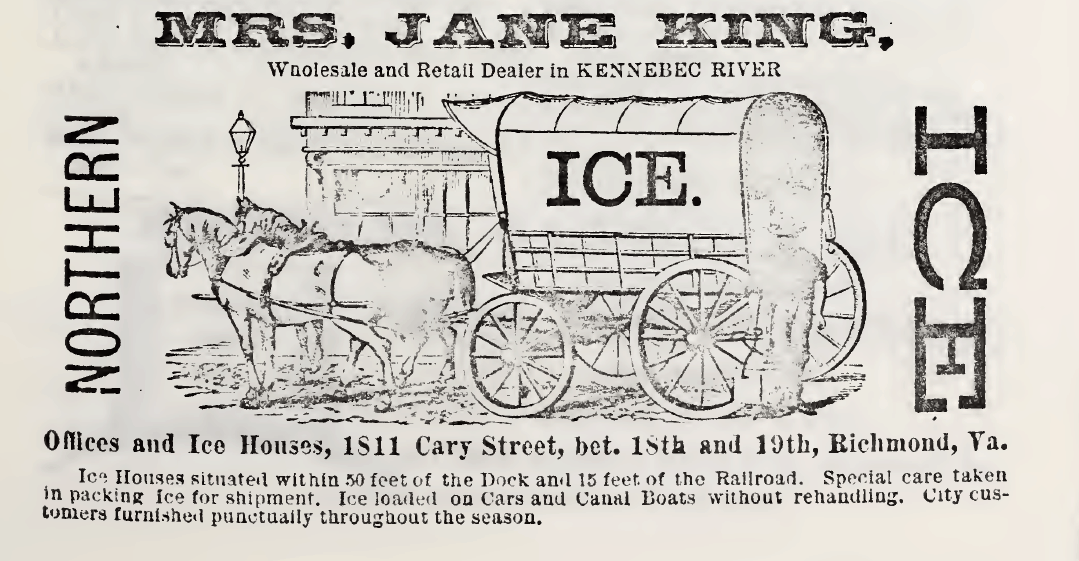
1811 East Cary Street
Built, 1856
Demolished, unknown
A chilling sequel to Richmond’s commercial ice story.
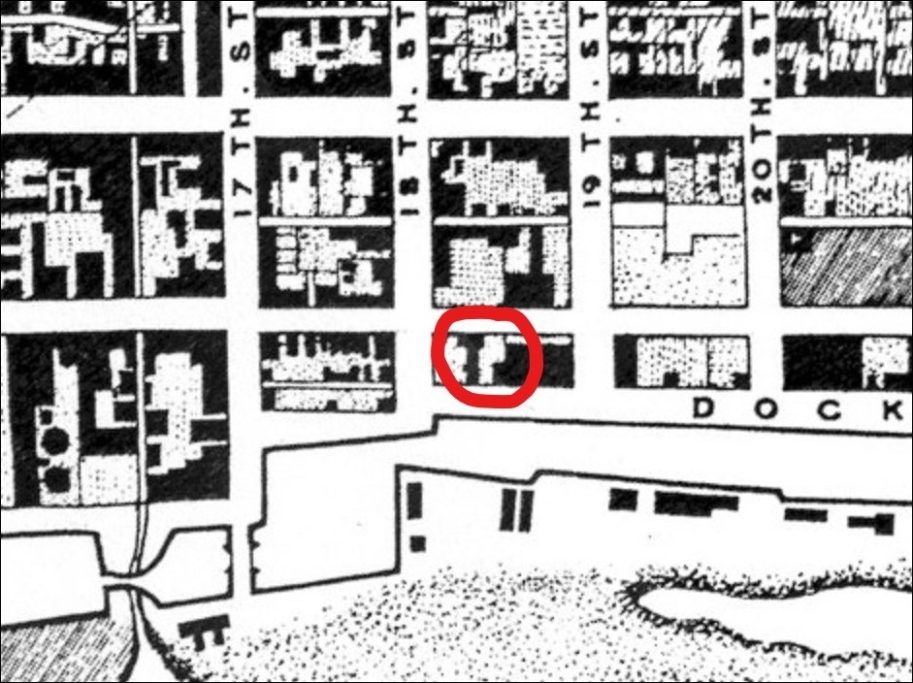
(Civil War Richmond) — 1867 U.S. Army Corps of Engineers Map of Richmond — showing location of ice house
Mrs. Jane King’s wholesale and retail ice, coal and wood establishment, at 1811 East Cary Street, has been a notable one of Richmond since 1873. It is in its thirty-sixth year. The house was founded in 1856 by her husband, David King, who was succeeded by John M. McGowan. [RVCJ93]
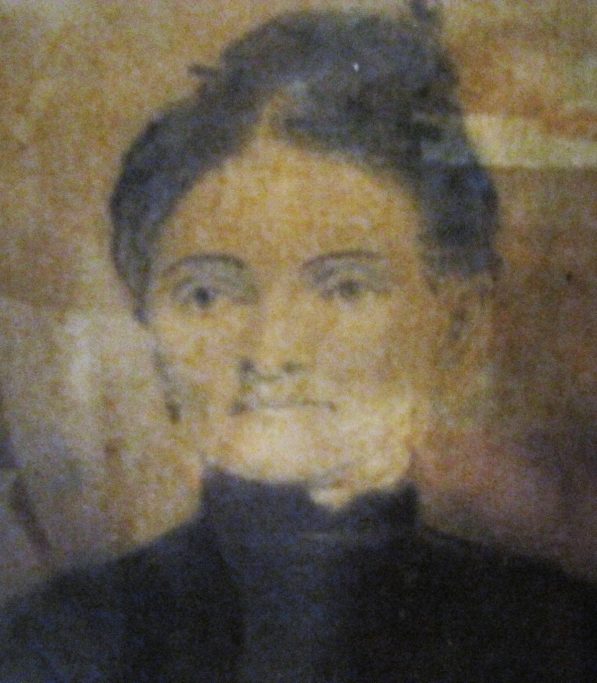
(Find A Grave) — Mrs. Jane King, AKA “The Ice Queen”
David died in 1873, and the following summer, Jane’s brother, who had started up the ice business again after the war, died suddenly at the peak of the summer season. John McGowan was buried on Sunday July 12, 1874, and that Monday, with her children and worldly belongings barely off the train, from Ohio, Jane opened the icehouse for business. When a schooner tied up that morning with a cargo of ice, it was met by the resolute 44 year old Scots-Irish widow, in billowing black and a stair step row of boys at her side. Schooner captains who said they’d be damned if they’d talk business to a woman, found that they wouldn’t be paid if they didn’t.
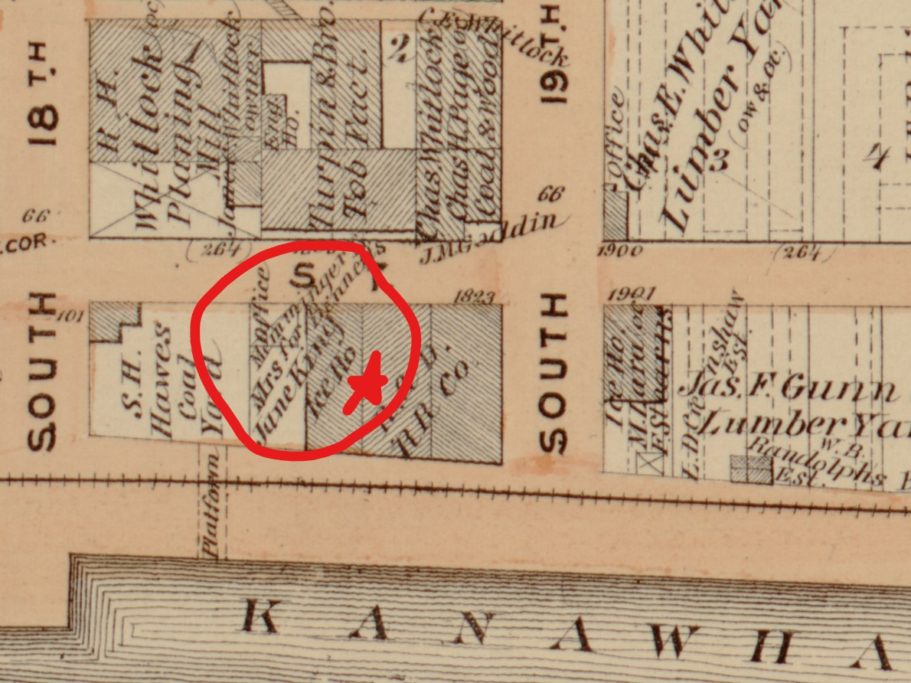
(LOC) — Beers Illustrated Atlas of the Cities of Richmond & Manchester, 1877 — Plate L — showing location of Ice House
Despite a nationwide depression and a large mortgage her brother had taken to expand the business, she pushed the business back into the black. After managing the ice house for five years, in 1879 she bought the business back from her late brother’s estate. The office and icehouse at 1811 East Cary Street ran a city block to Dock Street. She earned a reputation as an able and straight dealing merchant, in an era when women were not accepted out of the parlor, much less on the docks giving orders to seafaring men, longshoremen, and wagon drivers, as well as the 30 men with their 21 ice and coal wagons on her payroll.
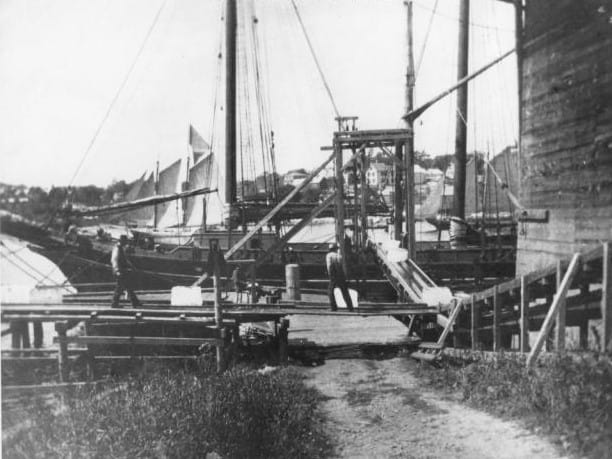
The crew of one schooner, rebelling at the embarrassment of unloading cargo under the orders of a woman, maliciously dumped varnish over her ice. The quiet lady in black was not intimidated, and simply deducted the cost of 20 tons of ice from the captain’s payment, and left him to discipline his crew. She earned the grudging esteem of her male business associates, against an almost inconceivable zealous opposition to allowing a woman to participate in business. In a world of mule-drawn horse cars, she embraced modernization. With retailing mastered she built up a railroad wholesale ice distribution business across Virginia, West Virginia, North and South Carolina.
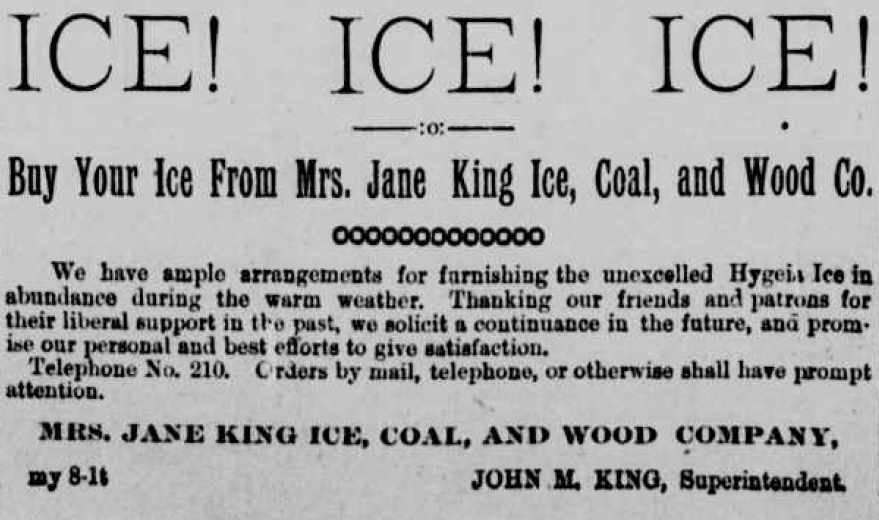
(Chronicling America) — Richmond Dispatch — Tuesday, May 8, 1894
When an experimental message service was introduced, called the telephone, she had one installed despite her experienced bookkeeper warning her not to waste her money on such gimmickry. She was the first woman in Richmond to have a telephone in her own name, and the only woman listed in the city’s first phone directory. She sent her sons Henry and James to open icehouse branches in Petersburg, Virginia in 1881 and later in Winston-Salem NC. In her fifties, she decided to diversify and used her trading contacts to build a coal and wood yard, to fill in the winter slump in ice sales. She turned a liability into an asset when in newspaper advertising she encouraged prospective customers to buy from “the only lady engaged in the Ice, Coal, and Wood business in the United States.”
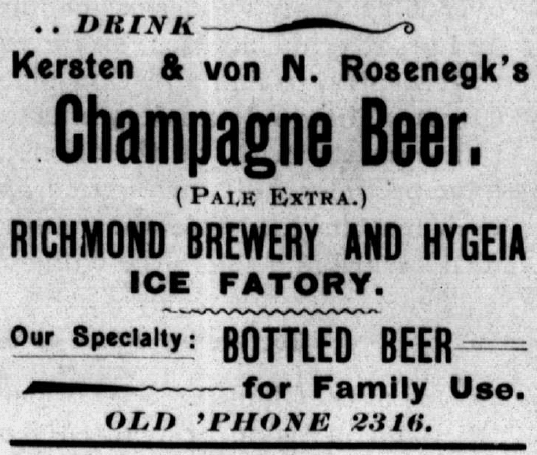
(Chronicling America) — The Jewish South — May 28, 1897 — showing the “ice fatory” (sic)
In the 1880’s she was a pioneer in direct mail advertising when she developed mailers with discount coupons and offered extended payment plans as a sales promotion to increase her market share. She innovated by developing and building an ice pond in the suburbs of Richmond (at King’s Hill) to try to produce low cost local ice. When a mechanical refrigeration ice plant opened in 1892 that would supply Richmond with ice cheaper than the natural ice from Maine, she recognized the end of the era of schooners and handling northern ice. Rather than quit, however, she contracted for the plant’s entire output. (Find A Grave)
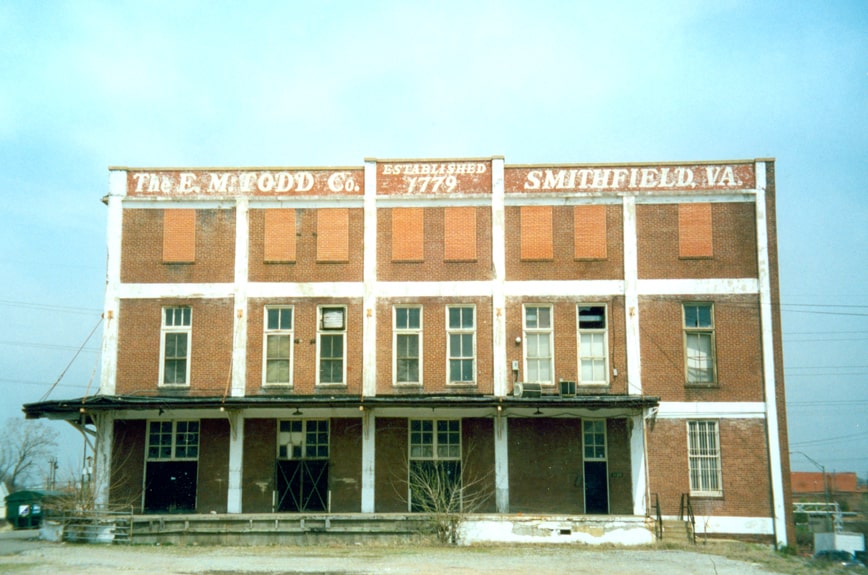
Richmond, Virginia: The City on the James was almost as effusive.
She has taken entire control of the output of one of the largest ice plants in the city (the Hygeia Ice Company’s), feeling convinced that the superiority of its product cannot but recommend it to all desiring pure and healthful ice, for this Hygeia ice is made from pure distilled spring water. The Hygeia’s plant is situated on the Richmond, Fredericksburg and Potomac Railroad, and shipments can be made from it to all parts of Virginia, West Virginia, North and South Carolina, without rehandling, and at short notice.
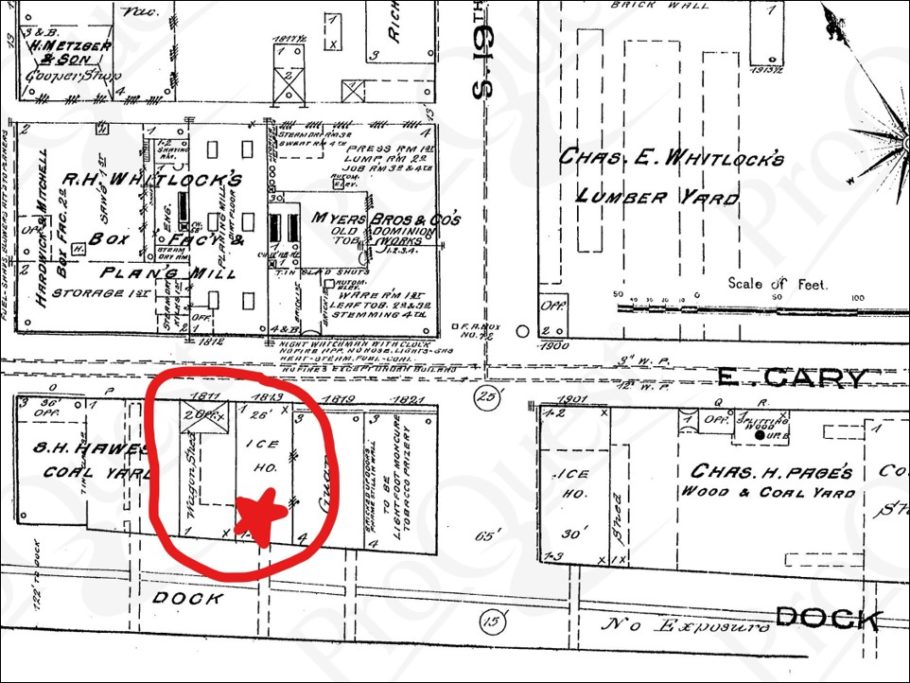
(ProQuest® Sanborn Maps Geo Edition™) — Sanborn Insurance Maps of Richmond (1886) — Plate 20
Mrs. King has associated with her in business her two sons, John M. and James N., who personally look after all the details of the business. Her success in the past is to be attributed to the promptness and care taken in all transactions with both city and country patrons.
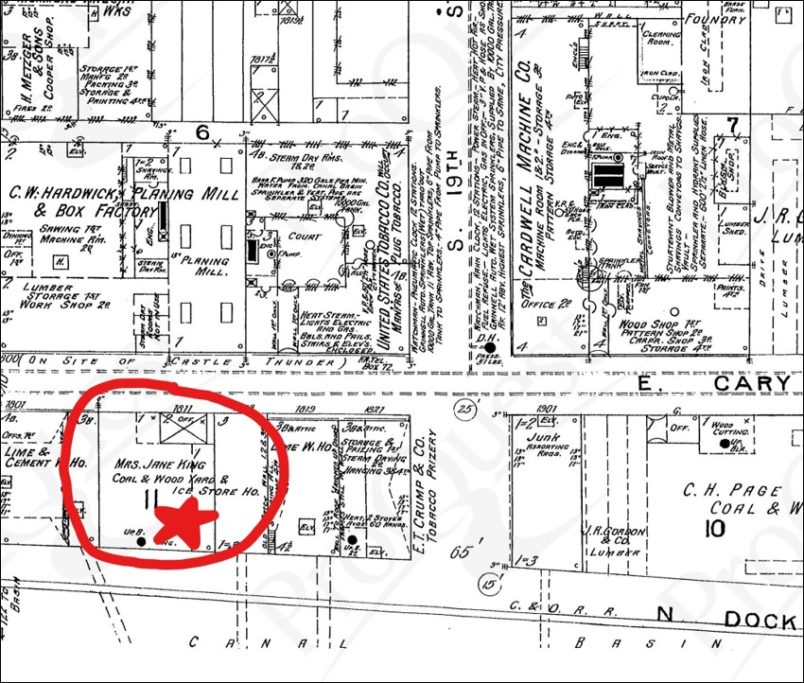
(ProQuest® Sanborn Maps Geo Edition™) — Sanborn Insurance Maps of Richmond (1895) — Plate 28 — showing expanded ice house facility
Mrs. King is the only lady in the United States who carries on so extensive a business in ice, coal and wood . Another notable feature of her business is, that Mrs. King’s house is the only one of its kind in Richmond that has not changed in name and management since 1875. [RVCJ93]
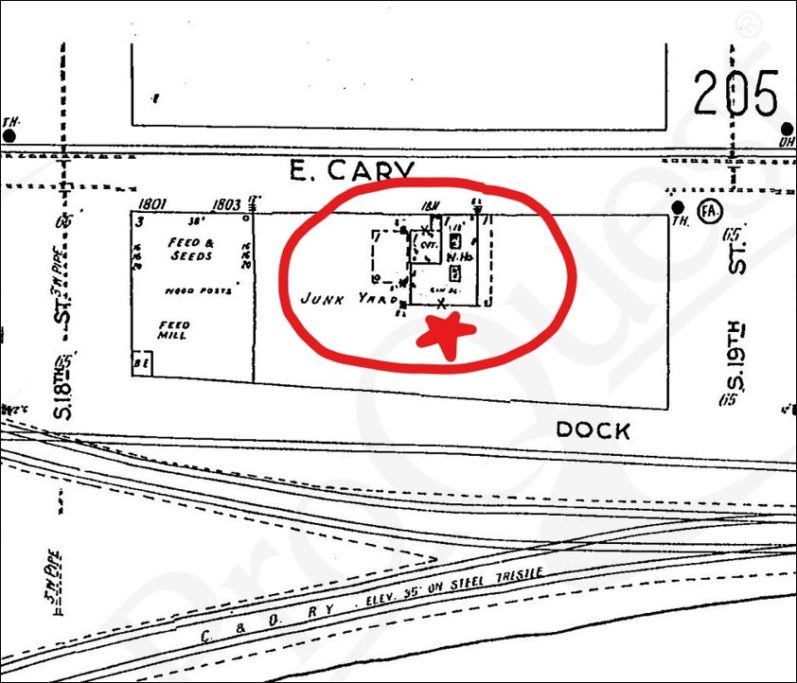
(ProQuest® Sanborn Maps Geo Edition™) — Sanborn Insurance Maps of Richmond (1952) — Plate 201 — showing a much-reduced state replete with junk yard
In 1895, at age 65, Mrs. King called it quits. She sold the ice business to her competitors (likely Richmond Ice Company, just a couple of blocks away), and turned the coal and wood business over to her sons. (Find A Grave) The building at 1811 East Cary became gradually more reduced until it no longer bore any resemblance to the original structure.
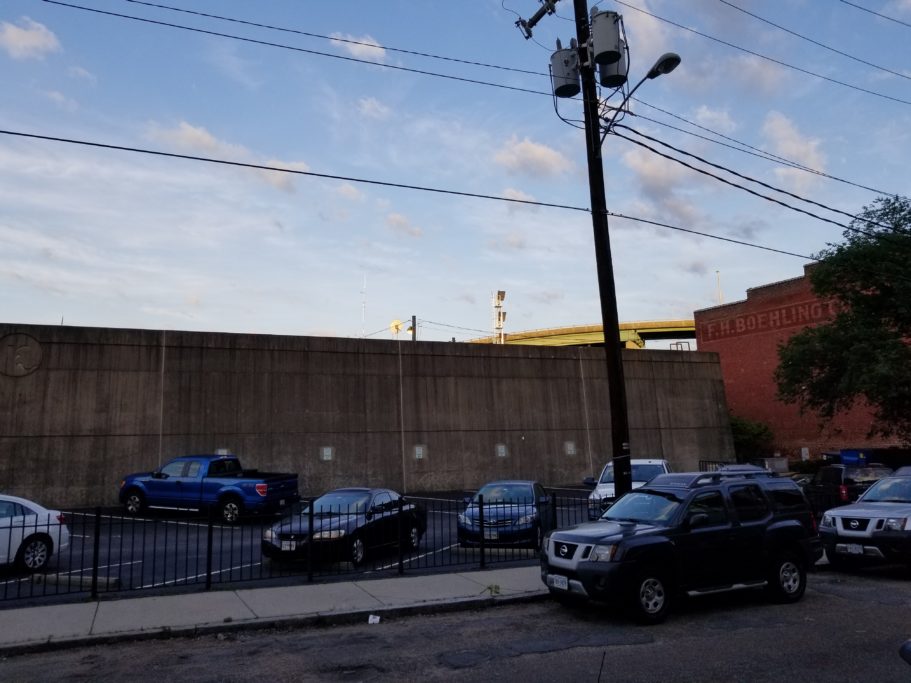
June 2018
Today, all traces of the former ice house and its related industries are gone, vanished with the advent of the Flood Wall, and the development of the former factory buildings along Cary Street into residential space. Considering the substantial drop in elevation from Cary Street to Dock Street, the original building must have been immense, a circumstance not reflected by the available 2D maps.
Despite this, Mrs. King’s legacy still lives on, her former domicile, the Pace-King House, prominently visible at 205 North Nineteenth Street, just a few blocks away from her place of business.

(Sunday Guardian) — Frank Capra
If there are any aspiring filmmakers out there in the audience, you could do a lot worse than this story. Just imagine the dramatic confrontations at the docks, the neverending fights for respect, the eventual grudging admiration, all neatly wrapped in a Gilded Age feminist narrative. You might discover that Mrs. King trained with a Chinese master of Kung Fu, who aided her in her quest to stuff the ice business down the throats of her male counterparts, and where might that lead you? If you’re interested, Rocket Werks is more than happy to sign on as a technical advisor, although he can’t swear to the Kung Fu stuff.
(Mrs. Jane King Ice, Coal, and Wood Co. is part of the Atlas RVA Project)
Sources
- [CDRVA] Chataigne’s Directory of Richmond, Va. J. H. Chataigne. 1881.
- [RVCJ93] Richmond, Virginia: The City on the James: The Book of Its Chamber of Commerce and Principal Business Interests. G. W. Engelhardt. 1893.

RVA Legends is a regular series
appearing on rocket werks – check it out!




Photos: LEGO Holiday Workshop Clicking Together this Weekend

Get Ahead on Holiday Shopping this Saturday at Tip of the Season Art Market

Photos and Game Summary:

Bike Ride with Friends to Fight Hunger for Cranksgiving

Album Cover Sticker Art Show Opens Tomorrow

Steely Dan tribute and Louisiana zydeco close out October at the Cultural Arts Center at Glen Allen

RPD Reporting Arrests Made, Several Vehicles Recovered in Honda Theft Ring

Maymont’s Garden Glow opens Wednesday with a Firefly Field and a longer laser tunnel

Texas Inn marks 91 years with 91-cent hot dogs on Tuesday

Richmond utility bills will be due in 25 days instead of 30 starting in December