Arts & Entertainment
Black History Museum embraces the past and looks to the future with Romare Bearden exhibition
The iconic artist’s exhibit, the museum’s largest to date, highlights its new, expanded space and its efforts to reach an even larger visitor base.


A new traveling exhibition opening today at the Black History Museum and Cultural Center of Virginia featuring iconic artwork unlike the museum has ever seen. “Romare Bearden: Vision and Activism” will include more than 50 works of art celebrating and examining the black experience.
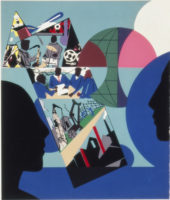 Bearden is recognized as one of the most important visual artists of his century and is especially known for collages depicting American culture. Many of them, created from cut and torn magazine photographs, make powerful statements on African-American life. His work has been displayed around the world.
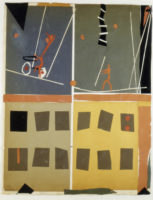 “Vision and Activism” will include limited edition prints, collages, ink drawings, oil and watercolor paintings. Several magazine covers will be on display that come directly from Bearden’s archive. Early works, such as, the original collage Jacob and the Angel Tree from 1961, and Soup Kitchen from 1935, rarely travel and will be a part of the exhibit. In all, 54 works will be on display.
“We’re proud to bring this important exhibition to Virginia,” said museum director Tasha Chambers. “Bearden used his unique template to discuss issues in society that continue to be relevant today. The museum will be a meeting place to continue this discussion.”
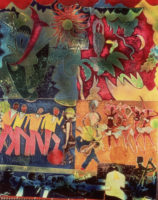 Chambers says the exhibit was slated to open at the museum back in May, but scheduling conflicts meant it had to be delayed. She says she hopes this will be the first of many larger traveling exhibits, many of which the museum couldn’t host before in their previous space. “Our old building wasn’t climate controlled, which was one of many limitations that prevented national exhibitions from coming in,” she says. “We’re also better funded now. We’ve never done anything to this magnitude.”
“His works are still very socially relevant today,” Chambers says of Bearden. “[His work] displays the struggles and triumphs of people of color; I hope visitors will be inspired by it. Not only do I want them to understand who he was as an artist, but I hope [the exhibition] will lead students and young back professionals to consider a career in the museum environment.”
— ∮∮∮ —
A 21st century museum experience
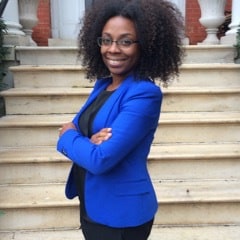
Tasha Chambers (Photo: Black History Museum and Cultural Center of Virginia)
Along with a state-of-the-art facility, the museum’s new space also employs a “digital first” strategy. Over 90% of the Black History Museum’s permanent exhibits feature large touch screen monitors that tell the story of people of color from Emancipation through the Civil Rights Movement, providing visitors with an up-close-and-personal experience that’s tailored to the next generation of museum-goers.
“It’s definitely a different experience,” says Chambers. “I think that differentiates us from other museums. It allows us to make updates very easily to our exhibits–we’re grateful and excited we’re able to update things at a much quicker pace.”
While reaching a younger demographic is key to most any museum’s longevity, the organization is also working to add more artifacts and non-digital assets to their permanent collections to further engage their core visitor base, which is still those over the age of 40.
Since opening, however, Chambers notes the museum has seen a sharp increase in the number of school field trips and summer camp visits. “We’re working on finding the medium–adding more artifacts but also embracing the new,” she says.
The Black History Museum opened in its original home at 00 Clay Street in 1991, not far from their current location in the former Leigh Street Armory. The house, built in 1832, was purchased by the Council of Colored Women, under the leadership of Maggie L. Walker, in 1922. A decade later, it became the Black branch of the Richmond Public Library and was named in honor of Rosa D. Bowser, the first Black female school teacher in Richmond.
The museum’s board of directors began looking at the current location after “Save America’s Treasures,” a national historical site preservation program, agreed to fund rehabilitation of the Leigh Street Armory, a surplus property of the City of Richmond which had suffered a fire and years of neglect. After having much of its exterior brickwork redone, new floors installed, a new roof put on, and a major addition constructed at the rear of the structure, the museum moved in and opened its doors in May of 2016.
— ∮∮∮ —
Keeping the momentum going
The Bearden exhibit, the largest to date, is just the first of many larger exhibits planned, Chambers says. “We want to change the perspective of what (the museum) is. We’re not a state funded museum. I see a lot of excitement with very young children, but we’re also trying to bring in younger donors. We hope to see more of that as we bring in more exhibitions with national recognition.”
Taking a page from the playbook of other local museums, she says the Black History Museum would like to bring in more fine art exhibitions and build excitement by hosting events centered around what today’s youth are most interested in. Expanded children’s exhibitions are planned as well.
“The museum world (in Richmond) has been great about contributing and collaborating,” Chambers says. Several of the Black History Musuem’s board members also serve on those of the Virginia Museum of Fine Arts and other area institutions.
— ∮∮∮ —
As part of the Bearden exhibit, which runs through December 13th, Dr. David C. Driskell, one of the world’s leading authorities on African-American art and a friend of Bearden, will host a discussion at the museum about the exhibit on September 20th from 6:00 – 7:00 PM. Driskell will talk about Bearden’s impact on society, along with personal experiences from their friendship.
The Black History and Cultural Center of Virginia is located at 122 W. Leigh Street in Jackson Ward and is open 10:00 AM – 5:00 PM Tuesday through Saturday and on Sundays by appointment only. Admission is $10 for adults; $8 for seniors and students with valid ID; $6 for children 4 – 12 years of age; and children 2 and under are free. Membership for the Black History Museum and Cultural Center of Virginia includes admission and starts at $35 per year. Visit the museum website to learn more.
Artwork courtesy of The Romare Bearden Foundation



Savory Grain Closing this Sunday

Virginia Opera brings Pagliacci to the Carpenter Theatre on Nov. 13 and 15

Photo of the Day: Where Eagles Dare

The War on Cars Strikes on Election Day

Squirrel-O-Ween Flies into CarMax Park on Friday

Richmond musicians pay tribute to Dolly Parton at Get Tight Lounge on Oct. 10

University of Richmond lands record $150 million gift as it launches $600 million campaign

Final Music in the Park is this Sunday with Studio One Project w/The Cables UPDATE: Cancelled Due to Weather

Hardywood and Starr Hill are officially one company, and neither brand is going anywhere

Richmond region visitor spending hits a record $4.1 billion in 2025